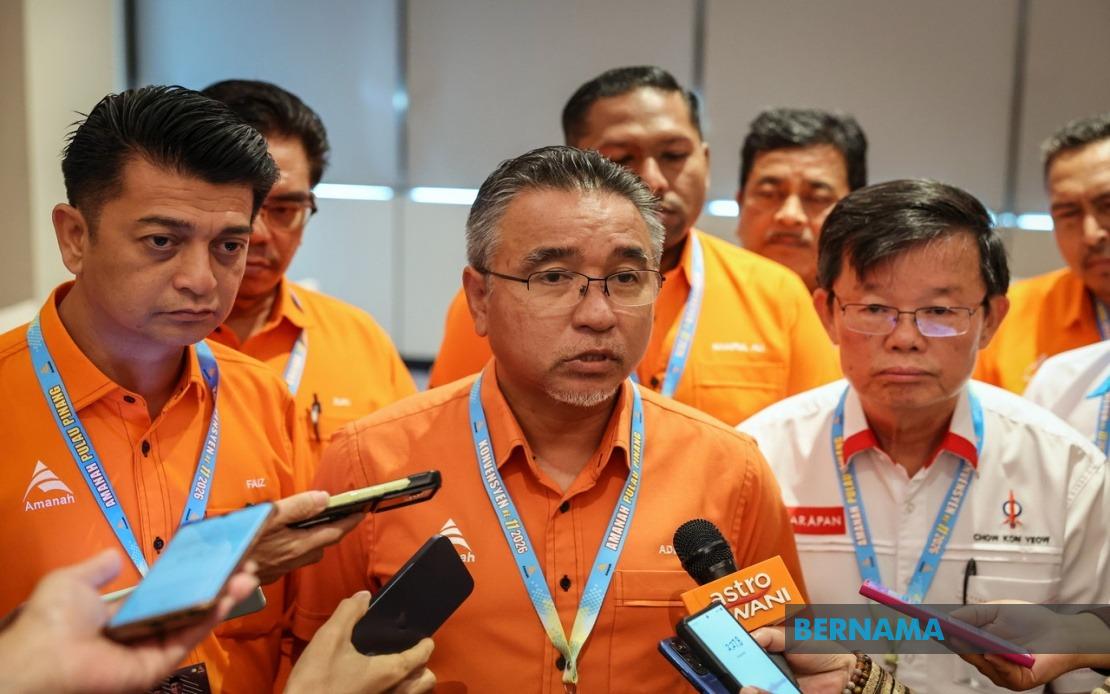
Pakatan Harapan leadership has doubled down on its commitment to values-based politics and competent governance, even as the coalition confronts mounting electoral pressure from both Barisan Nasional and Perikatan Nasional in Malaysia's fractured political landscape. Amanah vice-president Adly Zahari made the declaration while addressing party members at the Penang Amanah Convention in Bukit Mertajam, signalling that PH intends to maintain its foundational political philosophy despite recent setbacks that have eroded its parliamentary majority and state-level influence.
The timing of PH's reaffirmation comes immediately after yesterday's Negeri Sembilan state election delivered a stark reminder of the coalition's vulnerabilities. Barisan Nasional comprehensively dominated the contest, securing 18 of 36 seats and reasserting its traditional dominance in the state. Pakatan Harapan managed only 11 seats—a disappointing showing—while Perikatan Nasional captured seven, demonstrating that opposition unity remains fractured and that PH cannot take its electoral base for granted. This result compounds earlier losses in Johor, where BN reasserted control following years of PH governance.
Adly acknowledged that while PH's commitment to principled governance and administrative integrity must remain unwavering, the coalition cannot afford to ignore performance deficiencies and communication breakdowns that may be costing it electoral support. He emphasized that voters ultimately judge political movements through the lens of tangible outcomes: whether governments meaningfully address the rising cost of living, generate robust economic conditions, maintain quality education systems, and deliver efficient public services. This voter-centric assessment, he suggested, demands that PH demonstrate concrete results rather than merely articulating noble principles.
The Amanah vice-president signalled that PH would undertake rigorous self-examination through post-mortem analysis of its recent electoral performance. This introspection appears designed to identify specific operational and strategic failures rather than simply attributing losses to external factors or voter fickleness. Such analysis could prove crucial for understanding whether PH's messaging resonates with ordinary Malaysians, whether its policy initiatives genuinely improve livelihoods, and whether party machinery operates with sufficient effectiveness on the ground.
A critical area requiring attention, according to Adly, is PH's communication strategy. The coalition has struggled to effectively articulate government achievements and explain the rationale behind economic policies to a public increasingly concerned about household finances and employment prospects. This communications deficit represents a significant vulnerability, particularly as Barisan Nasional's well-established party machinery and media relationships allow it to control political narratives more effectively. PH's failure to counter-narrative competing claims or adequately publicize initiatives aimed at improving citizen welfare has plainly contributed to electoral erosion.
Penang Chief Minister Chow Kon Yeow, serving as Penang PH chairman, has scheduled a comprehensive coalition review meeting for August 8 to dissect both the Johor and Negeri Sembilan results and chart a reformed strategic direction. The urgency underlying this gathering reflects genuine anxiety within PH ranks about the possibility of an early general election. Federal Malaysian politics operates under conditions of substantial uncertainty, and if Prime Minister Anwar Ibrahim determines that an earlier election might improve PH's parliamentary position, the coalition must be organizationally and strategically prepared.
Chow's stated priorities for strategic recalibration centre on redirecting voter focus toward government performance metrics and service delivery outcomes. He highlighted the necessity of emphasizing PH's record on citizen welfare initiatives, job creation programmes, and demonstrable policy achievements. This represents implicit acknowledgement that PH's electoral brand has become detached from these practical concerns, and that voters require tangible evidence of government effectiveness rather than abstract commitments to reform and integrity.
The political context shaping PH's current predicament involves multiple adverse factors beyond the coalition's immediate control. The cost-of-living crisis that has gripped Malaysia since 2021 continues imposing severe pressure on household budgets, and government interventions to date have failed to satisfactorily address public anxieties. Economic growth remains fragile, unemployment among younger demographics persists, and urban Malaysians especially struggle with housing affordability and basic expenses. These macroeconomic headwinds create an environment in which incumbent governments, particularly those perceived as moderate or reformist rather than dynamic, face inherent electoral disadvantages.
Additionally, the three-way fragmentation of Malaysian politics between PH, BN, and PN complicates PH's path to power consolidation. Perikatan Nasional, despite its controversial origins and institutional vulnerabilities, continues mobilizing Malay-Muslim voters through populist messaging and religious nationalism. This dynamic has fractured the Malay vote in ways that advantage Barisan Nasional, which retains deeper institutional roots within rural constituencies and traditional party machinery. PH's appeals to multiethnic coalition politics and secular governance frameworks struggle to overcome these entrenched patterns.
The August 8 PH meeting assumes heightened significance given the potential for early dissolution of Parliament. Current political calculations suggest that Federal instability persists beneath the surface of Anwar Ibrahim's administration, and if PH perceives opportunities for electoral advantage through an early poll, the coalition may move decisively toward that option. Conversely, if strategic reviews conclude that PH requires additional time to consolidate its message and refurbish its electoral machinery, the coalition will likely advocate for maintaining current parliamentary arrangements.
PH's reaffirmation of values-based politics carries particular resonance for Malaysian civil society and observers committed to institutional integrity and democratic consolidation. The coalition's founding promise involved restoring institutional independence, combating corruption, and establishing governance premised on merit and accountability rather than patronage networks. Yet recent electoral disappointments raise uncomfortable questions about whether such commitments constitute sufficient political currency in an era of economic anxiety and identity-based mobilization.
Ultimately, PH faces a paradox: maintaining principled governance commitments while simultaneously demonstrating responsive competence on immediate voter concerns like employment and living costs. The coalition cannot sacrifice its foundational identity to chase short-term electoral advantage, yet it equally cannot ignore material conditions that drive voter behaviour. The August 8 strategic review meeting will reveal whether PH leadership has genuinely confronted this dilemma or merely engaged in rhetorical repositioning.

