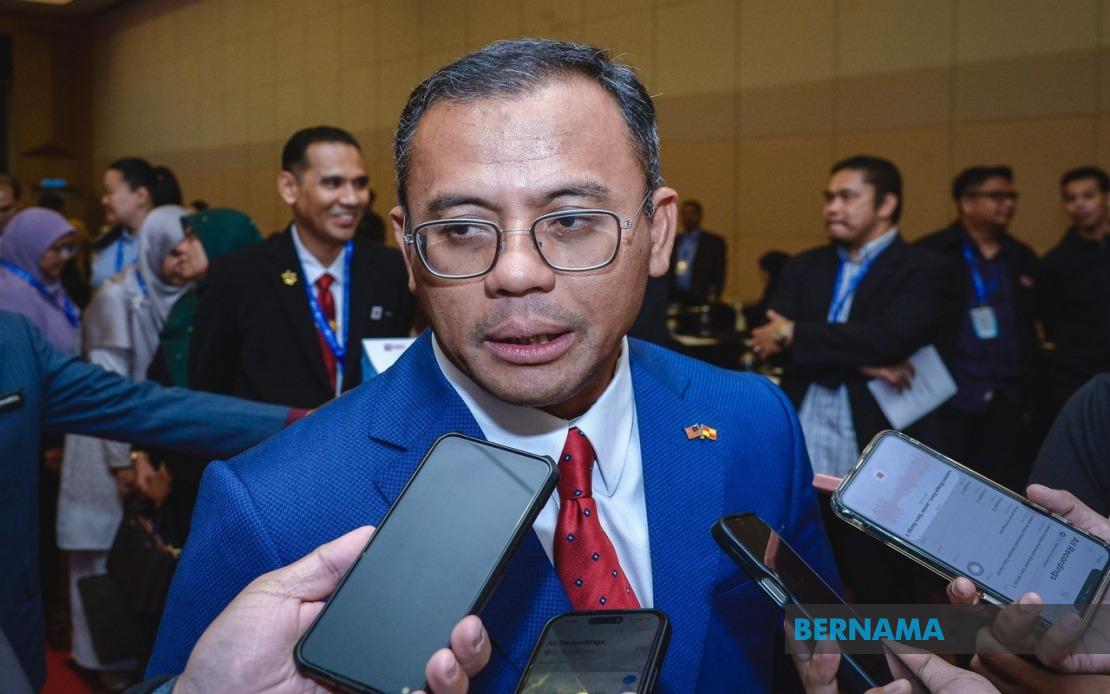
Pakatan Harapan has signalled a pragmatic approach to political cooperation, with senior coalition figures indicating that the door remains open to arrangements with rival factions provided core conditions are met. Speaking in Bangi, Datuk Seri Amirudin Shari, who holds positions as PKR vice-president and a member of PH's Presidential Council, emphasised that any political engagement would be evaluated strictly against two fundamental criteria: maintaining Malaysia's political stability and advancing the collective interests of ordinary Malaysians.
The Selangor Menteri Besar's comments reflect a notable shift in tone from PH's leadership, moving away from the entrenched adversarial positions that have characterised Malaysian coalition politics in recent years. By explicitly stating that cooperation is not limited to specific parties or blocs, Amirudin has effectively broadened the coalition's potential negotiating space. This approach suggests that PH leadership recognises the fluid nature of Malaysia's current political landscape, where rigid alliance structures may prove less viable than flexible, issue-based cooperation.
Denying recent speculation that Selangor's PH chapter had already entered into an understanding with Bersatu, Amirudin stressed that no formal discussions or commitments have materialised at the state level. However, his acknowledgement that external discussions and political realignments are occurring at the national level suggests that behind-the-scenes conversations about potential arrangements are likely ongoing. The distinction he drew between informal political chatter and formal party-level deliberations is significant, as it indicates that PH is monitoring developments without rushing into premature commitments.
The context for these remarks is crucial for understanding Malaysian politics in 2026. The confluence of several electoral flashpoints—including the looming general election and state elections such as the one in Melaka—creates incentives for political actors to explore new configurations. Reports earlier in August had suggested that Selangor PH might view collaboration with Bersatu as a mechanism to consolidate their respective positions ahead of these contests. Amirudin's carefully calibrated response neither confirms nor categorically denies such possibilities, instead establishing a framework within which such discussions could theoretically occur.
Central to Amirudin's position is his assertion that any major political decision cannot be made unilaterally at the state or regional level. By emphasising his shared responsibility with PH's central leadership, he has effectively shifted decision-making authority upward to the coalition's top echelon. This hierarchical approach protects against fragmentation and ensures that any inter-coalition arrangements would carry the weight of the entire PH structure. For Malaysian voters and observers, this is significant because it means that any cooperation involving Selangor—Malaysia's most populous state and a critical PH stronghold—would likely reflect broader strategic choices by the coalition's national leadership.
The principle-based framework that Amirudin articulated is noteworthy for its deliberate vagueness, which may be intentional. By defining cooperation in terms of abstract commitments to stability and public welfare rather than specific policy platforms or electoral mechanics, PH leaves itself maximum flexibility. Different factions within the coalition can read such statements according to their own preferences; those inclined toward cooperation with Bersatu can view the comments as opening a door, while those opposed can focus on the stringent conditions laid out.
For Malaysian politics more broadly, PH's positioning reflects the reality that no single coalition commands insurmountable majorities in all contexts. The 2022 general election produced a fragmented parliament where coalition-building and negotiation became essential governing tools. As Malaysia approaches further electoral contests, the ability to form functional working arrangements—whether formal or informal—with a broader spectrum of political actors may prove decisive. Amirudin's comments suggest that PH is thinking strategically about such possibilities rather than operating from a position of ideological purity.
The timing of these remarks is also telling. Coming in August 2026, approximately one year before a constitutionally mandated general election must occur, PH appears to be conducting preliminary soundings about the political landscape. By publicly establishing criteria for cooperation while denying imminent arrangements, the coalition signals both openness and caution. This posture may serve multiple purposes: reassuring their core supporters that PH is not abandoning principles, while simultaneously preparing political space for negotiations should electoral calculations shift.
The tension between PH's founding identity as a reform coalition opposed to the long-dominant Barisan Nasional and their current willingness to work with partners of uncertain democratic credentials is noteworthy. Bersatu, born from the remnants of the previous political order and currently aligned with Perikatan Nasional, represents precisely the kind of establishment-oriented faction that PH once defined itself against. Yet Amirudin's framing suggests that PH has evolved beyond such categorical distinctions, preferring instead to judge potential partners through the lens of immediate political utility and commitment to vague principles of stability and public good.
For Selangor specifically, this matters considerably. As Malaysia's economic engine and the residence of the federal capital region, Selangor's political direction has national implications. A PH-Bersatu arrangement at the state level could reshape the broader political balance and create precedents for cooperation elsewhere. Conversely, maintaining PH's current dominance in the state under existing coalition arrangements preserves what remains one of the opposition's most valuable political assets. Amirudin's careful language reflects awareness that any decision carries significant consequences.
Looking forward, Amirudin's comments suggest that Malaysian politics is entering a period of active recalibration. The old, relatively stable three-way contest between Barisan Nasional, PH, and emerging challengers is giving way to something more fluid and unpredictable. Whether this represents healthy democratic adaptation or merely tactical repositioning depends partly on whether any cooperation arrangements are genuinely motivated by policy alignment and public interest, or whether they are simply vehicles for political survival. Amirudin's emphasis on principles rather than personalities suggests PH wants voters to believe the former, even as the mechanisms remain opaque.

