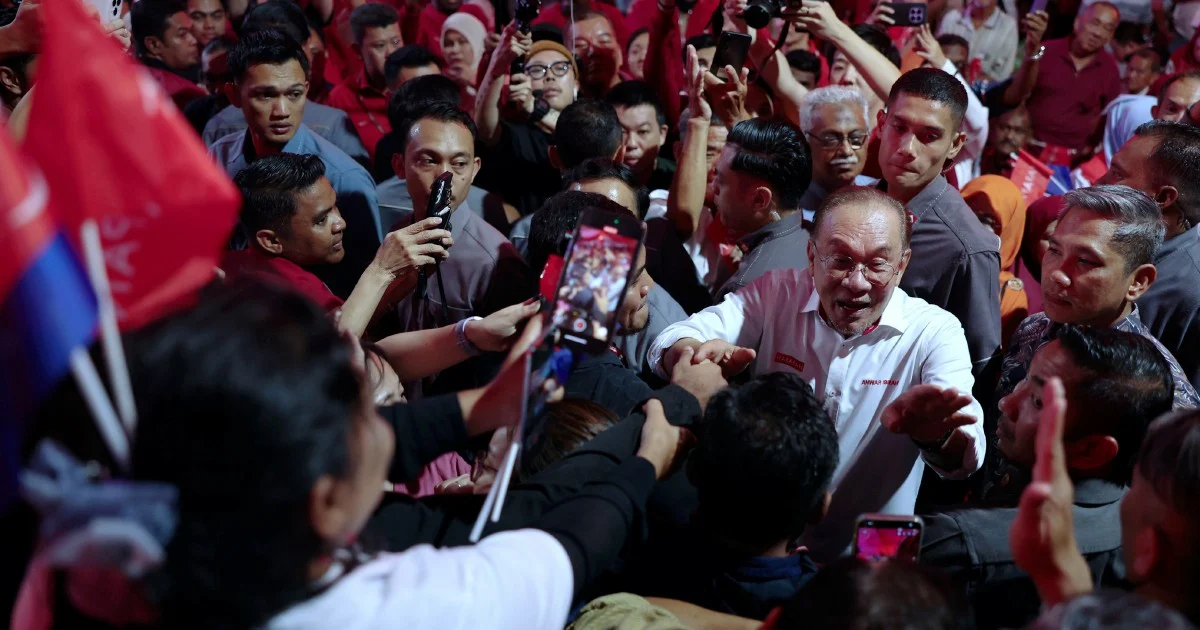
Pakatan Harapan (PH) unveiled its comprehensive roster of 56 candidates for the Johor state election on July 11, with coalition chairman Datuk Seri Anwar Ibrahim personally presenting the names at a ceremony in Tangkak. The announcement marks a critical juncture for the opposition alliance as it seeks to challenge the ruling Barisan Nasional's dominance in one of Malaysia's most economically significant states.
The timing of the candidate reveal comes as Johor prepares for what political analysts expect to be a tightly contested election. With 56 seats up for grabs across the state, the full slate represents PH's ambition to make substantial inroads in a region where the coalition has historically struggled to gain traction. The state remains a traditional stronghold for Barisan, making this electoral contest particularly significant for testing the opposition's organisational capacity and voter appeal beyond its established urban bastions.
Johor's strategic importance extends beyond state-level politics. As the southernmost peninsula state bordering Singapore, it serves as a crucial economic hub and demographic bellwether for national political trends. Control of the state government would provide PH with additional resources and administrative machinery while bolstering its narrative as a viable alternative government. The election outcome will also offer insights into voter sentiment regarding the federal administration and the broader political landscape heading into potential national polls.
Anwar Ibrahim's direct involvement in unveiling the candidates underscores the coalition's commitment to this particular contest. His visible leadership in the campaign signals to supporters and neutral observers alike that PH considers this election a priority battleground. The decision to conduct the announcement in Tangkak, a semi-rural constituency, may also reflect the coalition's acknowledgement that victory in Johor requires winning support not only in urban centres but across diverse demographic and geographic constituencies throughout the state.
The composition of PH's candidate list carries implications for internal coalition dynamics. The distribution of seats among member parties—primarily Democratic Action Party (DAP), Amanah, and PKR—will reveal how the coalition's leadership has navigated competing interests and factional pressures. Such arrangements often become barometers of coalition health, with any perceived imbalances potentially triggering tensions or demoralisation among rank-and-file members of disadvantaged parties.
For Malaysian voters, particularly those in Johor, the candidate slate presents a choice between incumbent management and opposition alternatives. The individuals selected represent the frontline of PH's campaign machinery and, if successful, would constitute the state legislative assembly membership. This makes the quality, track record, and local credibility of selected candidates crucial factors in determining election outcomes, as Malaysian voters increasingly scrutinise individual candidates' capabilities and constituency connections.
The July 11 date itself carries significance within Malaysia's electoral calendar. Scheduling state elections during the mid-year period has become standard practice post-pandemic, allowing authorities to manage logistical and health-related requirements while maintaining regular electoral cycles. The timeline provides both PH and Barisan with approximately two months for campaigning, allowing for substantive policy discussions and community engagement beyond superficial party branding.
Regionally, a strong showing by PH in Johor could reverberate across Southeast Asia's political landscape. As ASEAN's second-largest economy by nominal GDP, Malaysia's internal political stability and the nature of its electoral competition attract attention from neighbouring governments and international observers. An opposition coalition demonstrating competitiveness in traditionally ruled territories might signal broader democratic maturation and voter sophistication across the region.
The announcement also sets the stage for Barisan's own candidate reveal and campaign strategy. Malaysia's electoral competition typically involves opposition announcements triggering government responses, creating a cycle of political activity that structures public discourse around elections. How the ruling coalition responds to PH's slate—through counter-announcements, campaign themes, or administrative actions—will shape the election narrative over coming weeks.
For the broader PH coalition, this election represents both opportunity and risk. Success would provide momentum and institutional resources valuable for potential future national contests, while a disappointing result could undermine morale and invite internal recriminations about candidate selection, campaign execution, or broader political strategy. The stakes consequently extend beyond Johor itself to affect confidence levels within the opposition ecosystem.
As both coalitions prepare for the campaign proper, voters in Johor will evaluate these candidates across traditional considerations: local responsiveness, professional credentials, party affiliation, and perceived likelihood of constituency development under their representation. The interplay between national political narratives and hyperlocal community concerns will ultimately determine which PH candidates emerge victorious and whether the coalition can substantially alter its position in this economically vital state.