Pakatan Harapan has unveiled an election strategy for the 16th Johor State Election that deliberately fuses traditional community engagement with modern digital communication channels. The coalition's approach, announced as official campaigning commenced, reflects a recognition that contemporary political messaging must operate across multiple platforms simultaneously to effectively penetrate diverse voter segments. This integrated methodology signals PH's intent to compete vigorously in a state where electoral fortunes have fluctuated significantly in recent years.
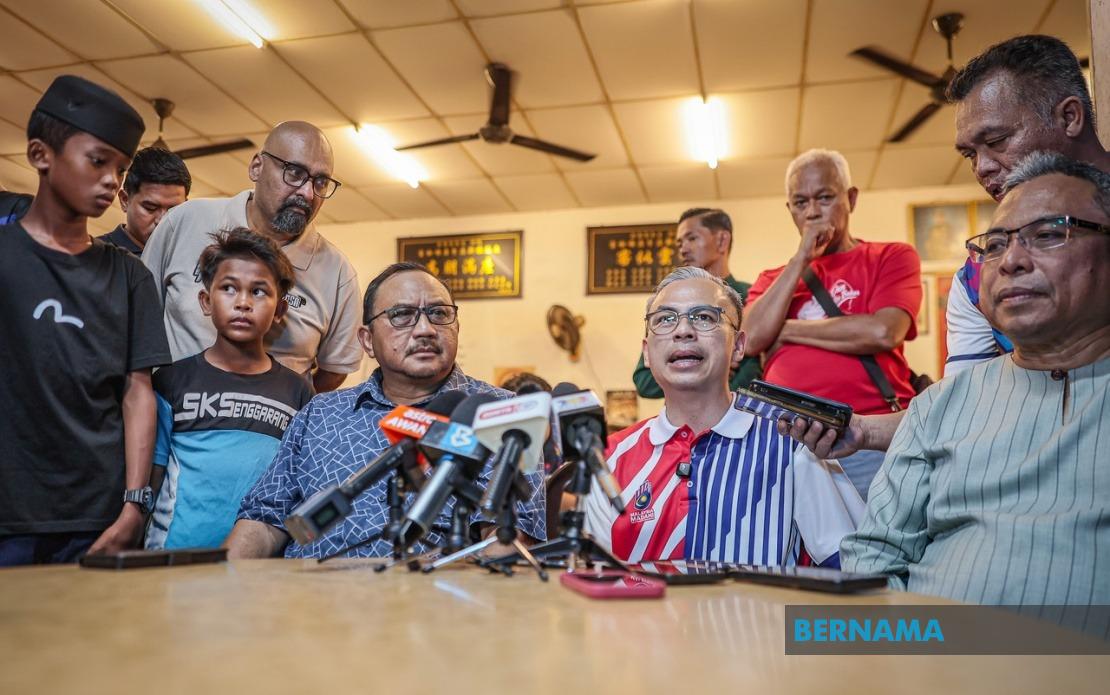
The strategic blueprint was detailed by Datuk Fahmi Fadzil, the coalition's communications director and Minister of Communications, during a press briefing in Batu Pahat following a community engagement programme. Fahmi emphasized that neither grassroots interaction nor digital outreach should be deployed in isolation; rather, their combination creates a comprehensive communication ecosystem capable of disseminating PH's policy platform and messaging to voters regardless of their preferred information sources. This recognition mirrors broader global trends in political campaigning, where successful parties must maintain presence across village ceramah events, WhatsApp networks, Facebook campaigns, and TikTok content simultaneously.
PKR, the largest component of the Pakatan Harapan coalition, is contesting 20 seats in the Johor election and immediately mobilized its campaign machinery following the conclusion of nomination procedures. The party leadership demonstrated hands-on engagement, with Fahmi himself attending nomination events in Semerah while PKR deputy president Nurul Izzah Anwar supported candidate Onn Abu Bakar at the Senggarang nomination centre. To operationalize their communication strategy, PH has established a dedicated official media group tasked with rapidly distributing information about its candidates, recognizing that in the contemporary information environment, speed and consistency in messaging significantly influence voter perceptions.
A critical component of PH's campaign philosophy centers on fact-based communication, a deliberate positioning that implicitly contrasts with accusations that have periodically surrounded Malaysian electoral discourse. By emphasizing accuracy and evidence-grounded policy proposals, the coalition appears to be staking a competitive advantage on credibility and substantive governance platforms rather than sensationalism or unverified claims. This approach assumes voter appetite for detailed policy engagement, though its effectiveness will ultimately depend on whether targeted demographics receive and process such information.
The coalition has also positioned itself as a partner to Johor's state administration in delivering developmental outcomes. Fahmi highlighted major infrastructure projects including the Rapid Transit System Link and the Johor-Singapore Special Economic Zone as evidence of productive federal-state cooperation. These initiatives represent the type of tangible economic benefits that Malaysian voters frequently cite as election priorities, and PH's framing of them as fruits of collaborative governance suggests an attempt to present itself as pragmatic administrators capable of transcending partisan divisions for constituent benefit.
PH's campaign narrative further draws on its governance track record in three peninsular states—Selangor, Negeri Sembilan, and Penang—where the coalition has implemented policies and presided over development over extended periods. This emphasis on proven performance in multiple jurisdictions serves to counter skepticism about PH's administrative capabilities, while specific candidate names such as Dr Maszlee Malik and Onn Abu Bakar are positioned as embodiments of this demonstrated competence. For Malaysian voters, particularly those in economically significant states like Johor, evidence of functional governance in comparable regions often carries substantial persuasive weight.
The coalition has committed to releasing a dedicated state-level manifesto for the Johor election, a signaling device that indicates substantive policy development tailored to local priorities rather than merely national platform repetition. State-specific manifestos have become increasingly important in Malaysian electoral competition, as voters increasingly expect candidates and parties to demonstrate detailed familiarity with local challenges, from water provision and traffic management to education facility accessibility and healthcare service quality. The promise of such a document suggests PH recognizes these localized concerns shape electoral outcomes.
Beyond PH's internal strategic preparations, the Malaysian communications environment during the election period will face institutional oversight designed to combat misinformation. The Malaysian Communications and Multimedia Commission has established a specialized task force incorporating the Election Commission, Royal Malaysia Police, and Malaysian Media Council to identify and suppress false information circulation throughout the campaign. This multi-agency coordination reflects acknowledgment that electoral periods create environments where rapid, unverified information spreads particularly quickly, potentially distorting voter decision-making and undermining democratic legitimacy.
From a broader Southeast Asian perspective, PH's campaign strategy demonstrates how regional political parties are adapting to technological transformation of political communication. The combination of physical community events—such as the wayang pacak screening of Blood Brothers that Fahmi attended in Senggarang—with systematic digital dissemination reflects understanding that different voter segments remain embedded in different information ecosystems. Older voters may remain primarily influenced by traditional media and direct candidate interaction, while younger demographics increasingly rely on social media and online platforms. A campaign architecture that fails to operate across this spectrum risks incompleteness.
The Johor election itself carries significance beyond the state's boundaries. As Malaysia's southernmost peninsular state with substantial economic importance and a voting population of approximately 3 million, Johor election results provide meaningful indicators of national political trajectories. PH's strategic sophistication in campaign design, resource deployment, and messaging discipline in this contest will likely influence both coalition confidence heading toward potential future national elections and opposition parties' perception of PH's organizational competitiveness.
The integration of grassroots and digital campaigning that PH is implementing also reflects maturation of Malaysian political competition more broadly. The days when elections could be decided primarily through either traditional organizational strength or nascent digital capabilities have clearly passed. Contemporary Malaysian voters, particularly in urbanized and semi-urbanized constituencies, expect political information from multiple credible sources and may dismiss campaigns that operate exclusively through single communication channels. PH's strategic recognition of this reality suggests the coalition has absorbed lessons from recent electoral contests and is adapting organizational practices accordingly as it competes for Johor's political control.

