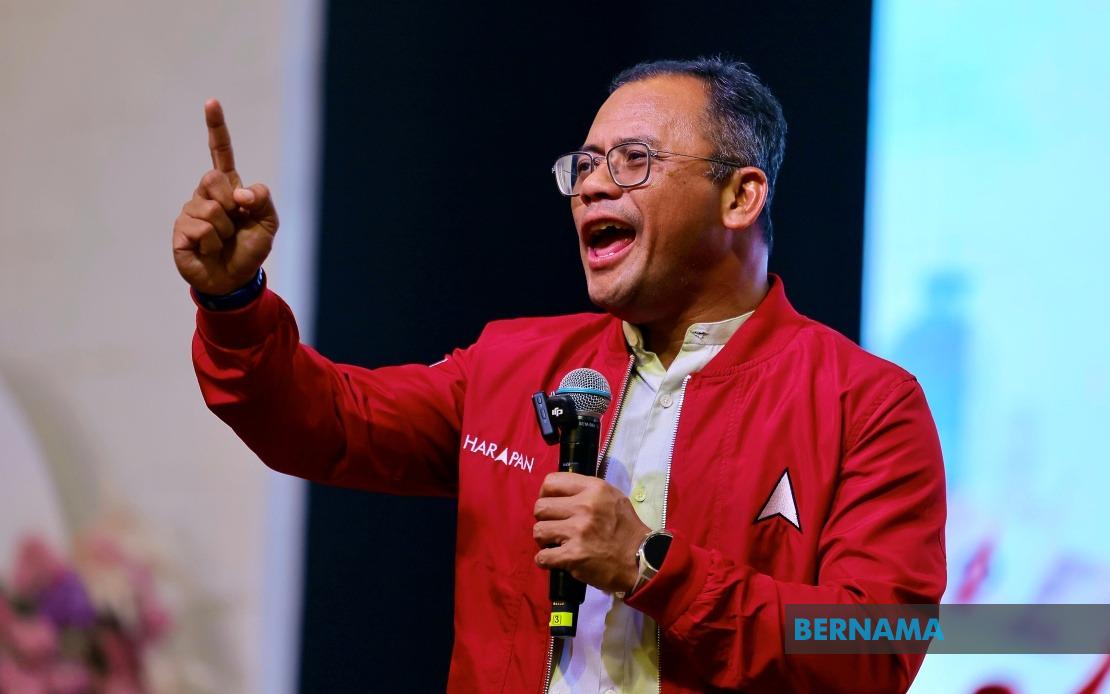
Pakatan Harapan formally unveiled its election manifesto for the 16th Johor state election on July 3, presenting what the coalition framed as a comprehensive policy platform designed to address the concerns of voters across Malaysia's second-largest state. The 'Johor For All' manifesto was introduced at a ceremony in Johor Bahru, marking a significant moment in the opposition coalition's campaign preparations as it seeks to build momentum ahead of what is anticipated to be a closely contested electoral battle.
The launch was spearheaded by Datuk Seri Amirudin Shari, a senior figure in the PH Presidential Council and PKR's co-election director, underscoring the significance the coalition places on the Johor campaign. His central role reflected PH's determination to coordinate a unified strategy across its component parties and candidates, positioning the manifesto as a collective commitment rather than a fragmented set of individual party pledges. This unified presentation strategy is particularly important in Johor, where the coalition has historically faced challenges in consolidating support across urban and rural constituencies.
The gathering brought together the leadership structure of PH's Johor operations, including Aminolhuda Hassan in his capacity as Johor PH chairman, Teo Nie Ching representing DAP's interests in the state, and Datuk Seri Dr Zaliha Mustafa, who leads PKR's Johor chapter. The presence of these party leaders alongside the coalition's slate of candidates served to reinforce organizational unity and suggested a disciplined approach to the forthcoming campaign. Such coordinated displays of leadership are often interpreted by observers as indicators of party cohesion and voter confidence in a coalition's ability to govern effectively.
Johor represents one of Malaysia's most politically significant states due to its substantial population, economic importance, and historical role as a battleground between ruling and opposition coalitions. The state's electoral dynamics have shifted considerably in recent years, with voters demonstrating a tendency to split their support across different parties at federal and state levels. This electoral volatility means that campaigns in Johor require messaging that appeals across diverse demographic groups, from urban professionals to rural agricultural communities, and from younger voters to traditional constituencies.
The 'Johor For All' branding itself carries deliberate political messaging, emphasizing inclusivity and universal benefit rather than narrow sectional appeals. This framing suggests that PH sought to position its policy agenda as transcending traditional ethnic, religious, or class divisions that have historically structured Malaysian electoral politics. Such positioning is strategically valuable in a state where demographic diversity and migration patterns have created increasingly mixed communities, particularly in urban centres like Johor Bahru and Iskandar Puteri.
The manifesto launch represents a crucial phase in PH's campaign cycle, as the coalition moves from organizational preparation to public communication of its policy platform. Manifestos serve multiple functions in Malaysian electoral politics: they provide substantive policy content for informed voters, offer talking points for campaign workers and party representatives, and signal the coalition's priorities to different voter segments. The decision to launch the manifesto formally at a dedicated ceremony rather than releasing it through routine channels indicates the coalition's view of its strategic importance.
For Malaysian voters and political observers, manifestos offer insight into how opposition coalitions would allocate resources and prioritize governance if given the opportunity to form state government. In the Malaysian context, where incumbency advantages and federal government resources create substantial structural benefits for ruling coalitions, opposition parties must clearly articulate alternative visions that resonate with voter frustrations and aspirations. The 'Johor For All' manifesto presumably addresses concerns that have emerged during the current state administration's tenure, though the specific policy proposals and commitments remain to be detailed through campaign communications.
The participation of PKR, DAP, and other PH component parties in a unified manifesto launch also signals efforts to manage intra-coalition dynamics that have occasionally created tension in Malaysian opposition politics. Coalition governments require buy-in from multiple parties with potentially divergent interests and voter bases, and manifesto development often involves negotiation and compromise. The visible coordination at the launch event attempted to project an image of a coalition that has resolved internal differences and is ready to govern as a unified team.
For Southeast Asian observers monitoring Malaysian political development, the Johor election carries implications beyond state-level politics. The state accounts for approximately one-fifth of Malaysia's population and serves as a testing ground for political trends that often ripple across the country. Election results in Johor have historically influenced perceptions of momentum and voter sentiment heading into subsequent federal elections. This connection between state and national politics means that both ruling and opposition coalitions treat Johor elections as proxies for broader political standing.
The manifesto launch also occurs within a broader context of political realignment in Malaysia, where traditional coalition structures have fractured and reformed multiple times in recent years. PH itself represents a coalition born from the political upheaval of 2018, though its subsequent experience in federal government and periods in opposition have tested its durability. Johor campaigns provide opportunities for coalitions to rebuild organizational capacity, strengthen party-voter relationships, and develop messaging that can be scaled nationally.
The presence of candidates at the manifesto launch ceremony served to ground the policy platform in concrete personalization, allowing voters to associate specific individuals with the coalition's commitments. In Malaysian electoral practice, voters often vote based on both party and candidate factors, and campaigns that fail to effectively connect manifesto commitments to individual candidate credibility and track records tend to underperform. The coordination of candidate presence alongside senior party leadership attempted to create these connections explicitly.
Moving forward, the manifesto will serve as a benchmark against which PH's campaign messaging and candidate promises can be evaluated for consistency and credibility. Voters increasingly scrutinize the gap between manifesto commitments and campaign rhetoric, and media fact-checking has become more rigorous in Malaysian politics. The specificity and achievability of commitments contained in the 'Johor For All' manifesto will likely influence both voter receptiveness and media coverage of the coalition's campaign.
The Johor election ultimately provides the PH coalition with an opportunity to demonstrate governance alternatives and rebuild political strength in a state where it faces institutional disadvantages. The manifesto launch represents the public beginning of this campaign effort, setting out the framework through which the coalition intends to persuade voters that it offers superior leadership and policy direction compared to the incumbent administration and other political competitors.

