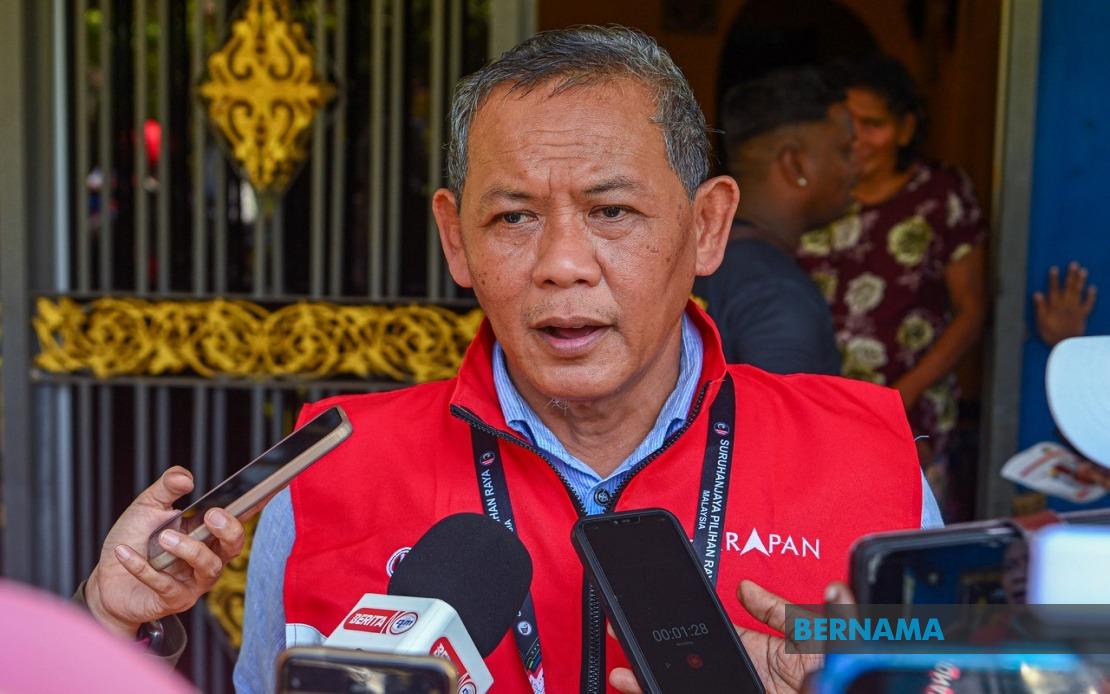
Pakatan Harapan has repositioned its electoral pitch for the upcoming Negeri Sembilan state election by announcing a manifesto that extends welfare and development initiatives across a wider income spectrum than previous campaigns. The 'Negeri Sembilan Kekal Harapan' manifesto, unveiled ahead of the August 1 polling date, encompasses ten substantial policy commitments designed to benefit both lower-income and middle-income households across the state, according to Datuk Seri Aminuddin Harun, the state PH chairman and incumbent Menteri Besar.
This strategic shift reflects a significant evolution in how the coalition frames its governance approach. Where previous manifestos concentrated welfare support primarily on the bottom 40 percent of income earners—the B40 category—the new platform consciously expands coverage to encompass the M40 group, representing households earning between RM4,850 and RM10,959 monthly. Aminuddin articulated this repositioning as an acknowledgement that effective social policy must address a larger cross-section of the population to generate meaningful improvement in living standards across the state.
The expansion carries particular relevance for Malaysia's political dynamics, where the M40 segment comprises a growing middle class often overlooked in traditional welfare architecture. By explicitly targeting this demographic, PH signals recognition that economic pressures extend beyond poverty alleviation to affect households navigating aspirational mobility yet facing substantial cost-of-living burdens. Education access represents a key area of extended commitment, with PH pledging to broaden educational initiatives to include children from M40 families, suggesting a comprehensive approach to human capital development rather than means-tested intervention.
Aminuddin emphasised that the coalition's credibility rests on demonstrated delivery rather than campaign rhetoric. He pointed to PH's governance record since assuming control of Negeri Sembilan in 2018 as substantiation of its capacity to translate manifesto promises into tangible policy outcomes. This assertion addresses a persistent challenge facing opposition and coalition governments alike—the credibility gap between election commitments and post-election implementation. By invoking five years of administrative stewardship, PH attempts to distinguish itself from parties offering pledges without track records of execution.
The timing of this manifesto reveals careful strategic calculation. The Negeri Sembilan State Legislative Assembly dissolution on June 5 initiated a compressed campaign period, with early voting scheduled for July 28 and general polling on August 1. Within this constrained timeframe, PH's decision to broadcast an expanded rather than narrowly targeted manifesto suggests confidence in its electoral positioning and an effort to capture swing voters and fence-sitters who may perceive traditional poverty-focused policies as insufficiently addressing their household circumstances.
Aminuddin's own electoral contest exemplifies the competitive intensity of the Negeri Sembilan contest. His defence of the Linggi state seat against Barisan Nasional incumbent Datuk Mohd Faizal Ramli and Parti Pribumi Bersatu Malaysia contender Zamri Md Said, 54, represents a three-cornered fight reflecting the fragmented opposition landscape. His dual role as state chairman, Menteri Besar, and Port Dickson Member of Parliament underscores the personal and organisational stakes invested in PH's performance in this election.
The manifesto announcement occurred during a community engagement programme with the Indian community at Sekang Estate in Linggi, highlighting PH's granular approach to grassroots communication. This venue selection carries symbolic weight in a state with significant Indian-origin populations concentrated in particular constituencies. By launching expansion of income-targeting policies during minority community outreach, PH connects broader policy messaging to localised constituency concerns, a tactic reflecting sophisticated electoral geography.
Aminuddin's appeal for a mature election campaign avoiding divisive social harmony issues merits examination within Malaysia's contemporary political context. Such appeals often mask real tensions over resource distribution, identity politics, and power contestation. Yet they simultaneously reflect legitimate institutional concern about electoral campaigns exacerbating communal sensitivities. The specific invocation of this principle in Negeri Sembilan suggests leadership awareness that electoral competition could activate dormant tensions, particularly around economic inequality and group-based benefit allocation.
The manifesto's emphasis on demonstrable delivery carries implications extending beyond Negeri Sembilan's borders. If PH successfully implements its expanded M40-inclusive initiatives, the state may serve as a laboratory for national policy frameworks addressing middle-income households—a constituency that federal governments increasingly prioritize but struggle to effectively support. Conversely, implementation shortfalls would reinforce public scepticism about politicians' capacity to deliver beyond election season.
For Malaysian voters evaluating PH's governance credentials ahead of this state election, the manifesto represents a recalibration of social policy ambitions. Rather than defending or incrementally expanding existing poverty programmes, PH proposes reconceptualising the breadth of beneficiaries for state resources. This reframing challenges conventional welfare state assumptions while potentially complicating the political coalition's message—broader benefit classes may reduce the intensity of support from core constituencies most dependent on targeted assistance.
The stakes of the Negeri Sembilan contest extend beyond determining which coalition governs Malaysia's smallest peninsula state by population. Results will influence national perceptions of voter sentiment regarding PH's post-2022 governance performance and signal whether Malaysian electoral preferences have shifted toward or away from the incumbent coalition. The manifesto's strategic positioning suggests PH leadership confidence in both the substantive appeal of expanded income-targeting and the electoral competence of its Negeri Sembilan organisation.

