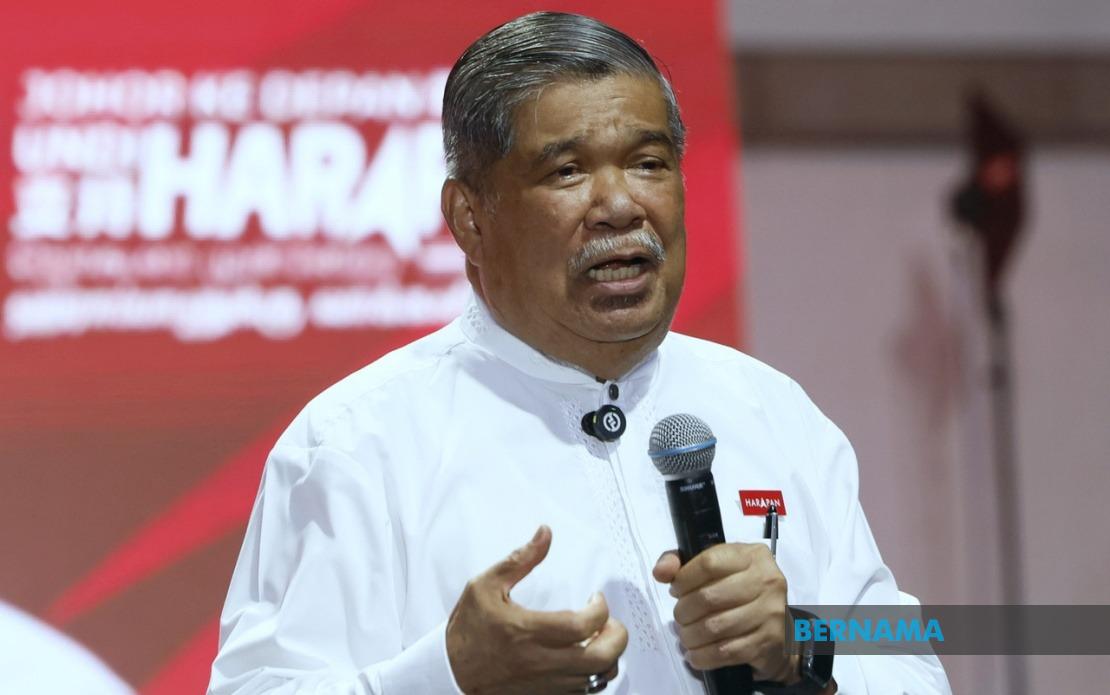
The Pakatan Harapan coalition remains steadfast in its electoral campaign despite a calculated move by PAS to channel its supporters toward Barisan Nasional candidates in seats where the Islamist party is not competing in the upcoming Johor state election. Speaking at a ceramah in Permas Jaya on July 1, Amanah president Datuk Seri Mohamad Sabu, who holds the ministerial portfolio for Agriculture and Food Security, declared that the PH machinery would continue its planned voter outreach without hesitation or deviation, treating the rival strategy as neither an impediment nor a cause for concern.
The directive from PAS represents a significant tactical manoeuvre in what has become an increasingly fragmented political landscape in Malaysia's southern state. By instructing its base to transfer votes to BN in contested seats, PAS effectively seeks to consolidate anti-PH sentiment whilst maintaining its own electoral presence elsewhere. Mohamad Sabu's dismissal of this approach, however, signals confidence within the PH camp that such calculations will not fundamentally alter voter behaviour or the party's organisational capability to mobilise its support base effectively across all 56 state seats.
Central to PH's messaging strategy is the emphasis on what party strategists view as their distinctive electoral proposition: a model of multiracial and multi-religious political cooperation. According to Mohamad Sabu, this foundational commitment to inclusivity serves as both the philosophical cornerstone of political stability and a practical engine for economic development. The implicit critique embedded in this framing suggests that PAS's sectarian approach to voter directives, organised along religious lines and contingent upon tactical alliances with BN, represents a retreat from the values of pluralism and unity that PH claims to champion.
The Amanah leader further urged Johor's electorate to transcend appeals rooted in racial or religious sentiment, instead evaluating candidates on the basis of their demonstrated competence, track record of delivering services, and genuine commitment to equitable governance. This formulation positions the election as fundamentally about administrative competence and merit-based governance rather than identity politics or ideological allegiance. By framing the contest in these terms, PH attempts to shift electoral focus away from constituencies where BN's established machinery and institutional advantages might prove decisive, toward alternative criteria where newer political coalitions can present a credible alternative narrative.
Alignment between state and federal administrations emerges as another strategic emphasis for the PH campaign, with Mohamad Sabu highlighting how unified governance could accelerate implementation of critical infrastructure and economic projects across Johor. He identified the modernisation of public transport systems, improvements to facilities at major international entry points, and efforts to attract foreign and domestic investment as priorities that would benefit from coordinated federal-state action. This argument carries particular weight in Johor, which serves as Malaysia's gateway to Singapore and hosts significant international trade and commerce infrastructure.
DAP strategic director and Deputy Finance Minister Liew Chin Tong introduced a demographic dimension to PH's campaign calculations, identifying youth voter participation as the pivotal variable in determining the election's outcome. His analysis of the 2022 Johor state election results provides instructive context: reduced overall voter turnout had systematically favoured the incumbent BN, a disadvantage compounded when many Johor voters employed in Singapore were unable to return home owing to COVID-19 travel restrictions. The implication of this analysis is that PH's victory prospects depend substantially upon mobilising younger voters and those with economic ties to Singapore who may wish for policy alternatives.
Liew's call for the second campaign phase to prioritise substantive policy discussions over purely partisan rhetoric reflects a strategic calculation that PH performs more effectively when elections centre on governance questions rather than identity narratives. Among the priority issues he identified were the creation of higher-wage employment opportunities capable of competing with Singapore's labour market, improvements to public transport infrastructure, flood management and drainage maintenance, preparation for demographic ageing, and expansion of childcare services. Each of these issues carries direct relevance to younger voters and working families who might otherwise be tempted to emigrate or accept employment across the border.
The centrality of infrastructure and economic development to PH's campaign messaging reflects recognition that Johor's voters increasingly evaluate political parties on their capacity to deliver tangible improvements to daily life and economic opportunity. The Johor-Singapore Special Economic Zone initiative, requiring close cooperation between federal and state governments, exemplifies the kinds of cross-border development projects that PH argues would benefit from unified political direction. By emphasising practical developmental outcomes rather than theological or ideological positioning, PH seeks to reframe electoral competition around metrics where governance competence and administrative coordination become decisive.
The strategic contrast between PAS's directive to supporters and PH's emphasis on competence-based evaluation reveals deeper fault lines in Malaysian politics regarding the primacy of identity versus performance in voter decision-making. PAS's manoeuvre assumes that religious and communal solidarity can be directed toward electoral outcomes through top-down instructions, whilst PH's counter-argument posits that voters increasingly prioritise tangible governance results. Whether this assumption reflects electoral reality or wishful thinking will become apparent when polling occurs on July 11, with early voting scheduled for July 7. The contest for all 56 seats represents not merely a state election but a significant test of competing theories about what determines voter behaviour in contemporary Malaysia.

