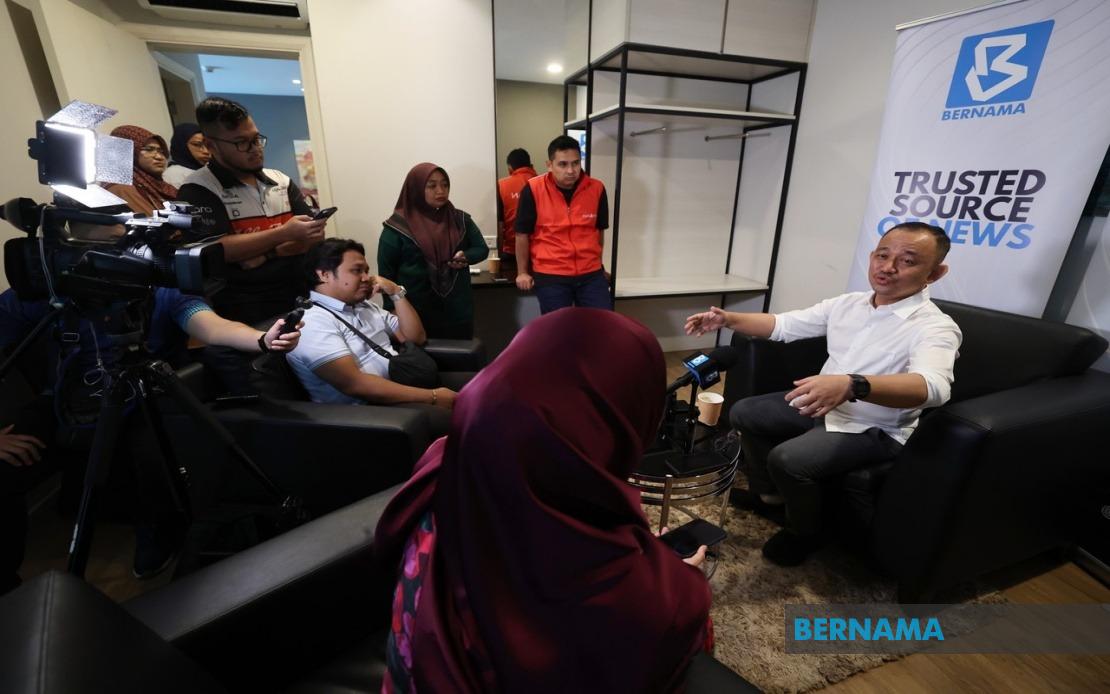
Pakatan Harapan has made clear that it will respect the Sultan of Johor's constitutional prerogative to appoint the next Menteri Besar should the coalition secure victory in the state election scheduled for July 11. The stance represents PH's formal acknowledgment of the sultanate's institutional role in state governance, a position underscored by senior coalition figure Dr Maszlee Malik ahead of the July 7 early voting period.
Dr Maszlee, who is contesting the Puteri Wangsa state seat for PH, told Bernama that the coalition has deliberately steered clear of internal discussions about the Menteri Besar post. This deliberate avoidance reflects a broader strategic choice to concentrate PH's campaign messaging on its capacity to deliver effective public services rather than focus on individual leadership appointments. The decision to refrain from pre-election positioning for the top state office also serves to prevent divisive internal jostling that could undermine campaign cohesion.
His comments arrived in response to persistent social media speculation that had emerged linking him to potential candidacy for the Menteri Besar position. Such rumours are not uncommon in Malaysian state elections, where observers and observers attempt to divine coalition preferences before official announcements. Dr Maszlee's clarification effectively closes off this line of discussion from the PH side, shifting focus toward the party's broader electoral pitch.
The constitutional architecture in Johor, as in other Malaysian states, vests appointment authority in the reigning Sultan rather than political parties. While parties naturally influence this decision through their electoral success and internal recommendations, the formal constitutional power remains with the palace. This distinction between de facto influence and formal authority has periodically generated friction in Malaysian politics, particularly when coalition partners have disagreed on preferred candidates or when surprise appointments have contradicted widely-held expectations.
PH's public positioning on this matter carries particular significance in the Johor context. The state has historically occupied an outsized political importance within Malaysia, and relations between political coalitions and the Johor sultanate have occasionally proven delicate. By explicitly deferring to the Sultan's judgment and declining to pre-announce its own preferences, PH is signalling respect for constitutional protocols while simultaneously protecting itself from potential criticism should the eventual appointment deviate from any informal expectations.
The coalition has opted instead to frame its campaign around what it characterizes as a cohesive and capable slate of candidates across the 56 state seats where it is contesting. Dr Maszlee's invocation of the "Avengers" metaphor to describe the team emphasizes collective strength rather than individual star power. This approach represents a calculated shift away from personality-driven politics toward institutional and programmatic messaging—a strategy that may resonate with voters concerned about governance competence.
By declining to stake out positions on the Menteri Besar appointment, PH also insulates itself from accusations of being overly fixated on patronage and power distribution before voters have even rendered their judgment. The coalition's messaging emphasizes service delivery and teamwork as its central campaign pillars, positioning the organization as fundamentally different from political competitors who might prioritize office-seeking over public benefit.
The timing of this clarification, coming roughly two weeks before polling day, serves as a useful reset of the campaign narrative. Rather than permit media discussion to gravitate toward internal coalition dynamics or leadership jostling, PH has used the opportunity to reassert its chosen framing around collective performance and constitutional propriety. This represents sound political communication practice in a context where internal contradictions or perceived entitlement can rapidly erode electoral support.
For Malaysian voters observing these developments, PH's stance demonstrates a recognition that excessive pre-election positioning on high office can appear presumptuous and risk generating backlash. The approach also reflects lessons learned from previous campaigns where internal power struggles became public distractions. The coalition appears intent on learning from these earlier experiences by maintaining discipline on messaging and deferring consequential decisions to appropriate constitutional actors.
The Sultan of Johor has historically exercised considerable authority within state affairs and maintains substantial public esteem. PH's deference to his prerogative thus carries both practical and symbolic weight—it acknowledges institutional realities while simultaneously positioning the coalition as a party that respects constitutional boundaries. This proves particularly important given Malaysia's constitutional monarchy system, where public perception of respect for royal institutions can materially affect electoral outcomes.
Looking ahead to July 11, PH will be hoping that its campaign discipline and emphasis on team-based governance proves persuasive with Johor voters. Should the coalition succeed in forming government, the actual Menteri Besar selection process will involve consultations between PH leadership and the Sultan's office, with various factors beyond simple seniority potentially influencing the ultimate decision. The public position staked out now by Dr Maszlee effectively signals that PH has accepted this reality and will operate within its boundaries.

