Pakatan Harapan is adopting a cautious stance heading into the Johor state election, particularly concerning the 23 constituencies where Perikatan Nasional has decided not to field candidates. The opposition coalition recognises that the absence of PN from these contests creates unpredictable electoral dynamics that could either benefit or harm its own prospects, depending on how voters currently aligned with PN choose to cast their ballots.
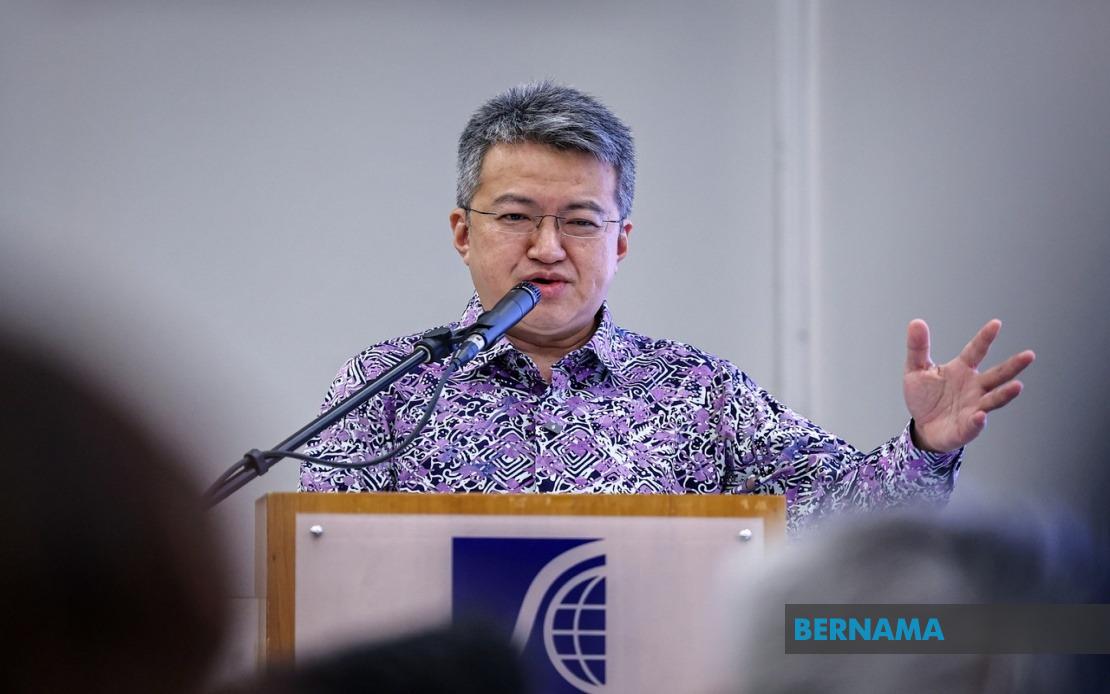
DAP Strategic Director and Deputy Finance Minister Liew Chin Tong highlighted a critical concern: whether supporters of Perikatan Nasional will redirect their votes toward other parties competing in those seats. This potential vote migration poses a particular threat to DAP candidates attempting to win in tightly marginal constituencies where every vote matters. The scenario underscores how Malaysian electoral contests have become increasingly complex, with voters no longer necessarily bound to vote predictably along established party lines.
Liew's candour about the risks reflects the mature political calculation within Pakatan Harapan. Rather than assuming that opposition to the governing coalition will automatically translate into votes for PH candidates, party strategists understand that voters in constituencies without PN presence may disperse across multiple options, including Barisan Nasional or smaller parties. This fragmentation could enable BN to capitalize on a divided opposition vote in seats it otherwise might struggle to retain.
The broader context here involves the complex three-way or multi-way contests that characterise contemporary Malaysian politics. The traditional binary framework of government versus opposition has given way to a more intricate landscape where regional political forces, ethnic considerations, and local issues create unpredictable voting patterns. For Pakatan Harapan, this requires moving beyond assumptions and instead relying on granular ground intelligence from each constituency.
In response to these uncertainties, Liew emphasised that Pakatan Harapan's strategy depends on vigilance, sustained campaigning, and offering compelling ideas to voters. This messaging suggests the coalition cannot take any seat for granted and must actively work to secure support rather than relying on anti-incumbency or default voting patterns. The approach reflects lessons learned from previous elections where seemingly safe seats shifted unexpectedly.
On a personal level, Liew announced he would not defend his Perling state seat, which he won in the 2022 Johor election. This decision aligns with DAP's principle opposing elected representatives from simultaneously holding parliamentary and state assembly positions. By stepping aside, Liew demonstrates the coalition's commitment to its stated principles, even at the cost of losing an experienced incumbent. The move also creates space for younger talent within DAP to develop at the state legislative level, potentially strengthening the party's long-term bench strength.
Liew has transferred his Perling candidacy to Alan Tee Boon Tsong, a former Senai assemblyman who represents DAP's efforts to field experienced, credible candidates across its target constituencies. This approach of fielding seasoned politicians in key seats reflects confidence in the ability of such candidates to navigate local complexities and earn voter trust. Tee brings his own electoral record and community connections to Perling, potentially easing any concerns about continuity.
The Perling seat itself represents a microcosm of broader Johor electoral dynamics. With 109,992 registered voters, it will host a three-cornered contest between Tee for DAP, Barisan Nasional's P. Pannir Selvam, and Boo Wei Han representing Parti Bersama Malaysia. The presence of Bersama, a smaller political force, adds another variable to an already complex race. In such multi-candidate contests, vote-splitting becomes critical, and the distribution of support among competing candidates often determines outcomes.
For Malaysian political observers, the Johor election scheduled for July 11, with early voting on July 7, represents a significant test of political sentiment in the country's southern region. Johor has traditionally served as a bellwether for national politics, and results here often signal broader trends affecting federal politics. The state remains economically vital and politically influential, making its election outcomes relevant beyond state-level governance.
The challenges facing Pakatan Harapan in Johor extend beyond the specific vote-transfer concerns Liew articulated. The coalition must contend with Barisan Nasional's entrenched position in the state, Perikatan Nasional's complicated relationship with local voters despite not contesting all seats, and the fragmenting effect of smaller parties drawing support from traditional constituencies. Each of these factors requires distinct strategic responses tailored to individual constituencies.
From a Southeast Asian perspective, Johor's election illustrates how Malaysian politics continues evolving away from simple bipolar competition. The proliferation of political parties, regional interests, and voter sophistication creates an environment where traditional electoral wisdom often proves unreliable. For regional observers watching Malaysian political developments, the outcome in Johor may provide insights into how other Southeast Asian democracies might navigate increasingly complex electoral landscapes.
Ultimately, Liew's measured acknowledgment of uncertainty reflects appropriate political humility. Elections, by their nature, contain variables that planning and analysis cannot fully anticipate. What Pakatan Harapan can control is its campaign intensity, the quality of its candidates, and the persuasiveness of its policy offerings. Whether these factors prove sufficient in the 23 seats where Perikatan Nasional's absence creates uncertainty will become clear after polling day.

