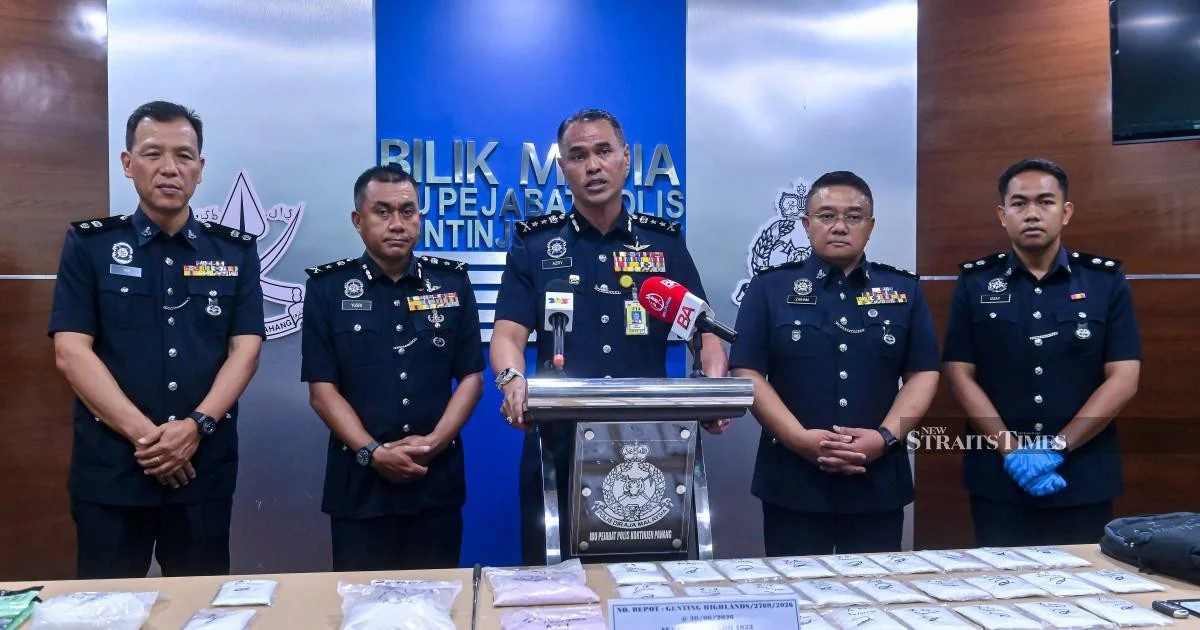
Law enforcement in Pahang has concluded a major three-day anti-narcotics sweep targeting known drug distribution centres across the state. The operation, dubbed Op Hawk, resulted in the apprehension of 333 suspects and the recovery of contraband and assets valued at more than RM500,000, according to authorities in Kuantan. The enforcement action methodically covered all 11 districts of the state, reflecting an attempt to disrupt drug trafficking networks operating across both urban and rural areas.
The coordinated campaign underscores the persistent challenge that controlled substances pose to Pahang's communities. Drug-related crime remains a significant concern for Malaysian law enforcement, with states like Pahang serving as transit points for narcotics destined for markets across Southeast Asia. By concentrating resources into short, intensive operations targeting multiple districts simultaneously, authorities aim to overwhelm trafficking infrastructure and prevent perpetrators from shifting operations between locations or coordinating responses to police activity.
The scale of asset seizure—encompassing drugs, currency, and motor vehicles—demonstrates the financial dimensions of trafficking in the region. The confiscation of vehicles is particularly noteworthy, as they serve as essential tools for drug distribution networks, allowing dealers to move between supply points and customer locations while maintaining operational flexibility. The recovery of cash reflects the substantial profits generated through narcotics sales, which in turn fund larger criminal enterprises and corruption.
Pahang's geography and infrastructure make it strategically important to both traffickers and enforcement authorities. The state straddles major transport corridors connecting the east and west coasts of Peninsular Malaysia, and its ports have historically featured in drug seizures. By deploying coordinated operations across all 11 districts rather than focusing on a single area, police aimed to prevent suspects from exploiting knowledge gaps between jurisdictions or relocating operations to less-monitored zones.
The three-day duration of Op Hawk reflects evolving police tactics in combating organised drug syndicates. Rather than sustained long-term operations that risk losing the element of surprise, concentrated bursts of enforcement activity across multiple fronts can disorient criminal networks and overwhelm their ability to conceal activities or warn associates of police presence. This approach also maximises the deployment of available personnel and resources during a defined window.
The arrest figures raise questions about the proportion of traffickers versus users and low-level dealers captured during the operation. Malaysian drug enforcement statistics typically show a higher proportion of arrests for possession and sale at street level rather than major distributors or manufacturers. Understanding this breakdown matters for assessing whether operations effectively target supply reduction at source or primarily intercept substances lower in the distribution chain.
For Malaysian regions beyond Pahang, particularly in Klang Valley and Penang where drug consumption rates remain high, the Pahang results offer both lessons and perspective. Inter-state coordination in drug enforcement remains imperfect, with trafficking organisations exploiting jurisdictional boundaries. The success of Op Hawk may prompt other states to launch similar operations, creating pressure across multiple regions simultaneously—a strategy that reduces the likelihood of dealers simply relocating rather than ceasing operations.
The international dimension also matters. Malaysia's position as a transit point for narcotics from the Golden Triangle region of Southeast Asia means that state-level operations have limited impact on overall supply chains. However, disrupting local distribution networks does affect street-level availability and can temporarily drive up prices, potentially reducing consumption among price-sensitive users. It also generates intelligence that may contribute to larger investigations targeting major traffickers.
The RM500,000 asset valuation likely includes both the street value of confiscated drugs and the assessed value of vehicles and cash seized. Drug street values often incorporate the markup that traffickers add before street-level sale, so the actual cost to criminal organisations may differ from this figure. The cash seizure component is particularly important, as it directly impacts the financial capacity of trafficking syndicates to fund future operations or pay informants.
Police operations of this scale demand significant coordination and planning. Simultaneous strikes across 11 districts require unified intelligence gathering, operational scheduling that prevents information leaks, and sufficient personnel deployment to execute raids while maintaining law enforcement presence in unaffected areas. The logistics alone—from transport to detention processing—represent a substantial commitment of resources that must be justified by results.
For residents and business communities in Pahang, such operations provide temporary respite from drug-related crime but raise broader questions about prevention versus enforcement. While asset seizures are quantifiable outcomes, longer-term success requires reducing demand through education and treatment, addressing social factors that drive addiction, and dismantling the financial incentives that make trafficking lucrative. Op Hawk represents enforcement action, but sustainability requires complementary approaches to drug control that extend beyond law enforcement.
The operation adds to a pattern of anti-narcotics activity across Malaysia in recent months, reflecting consistent police priorities despite resource constraints. However, the revolving nature of arrests and seizures—with traffickers replacing arrested colleagues and drug supplies reconstituting despite confiscation—underscores the entrenched nature of Malaysia's drug challenge. Op Hawk's success must ultimately be measured not merely by immediate arrest and seizure figures but by whether it achieves measurable longer-term impacts on trafficking infrastructure and street-level drug availability in Pahang.

