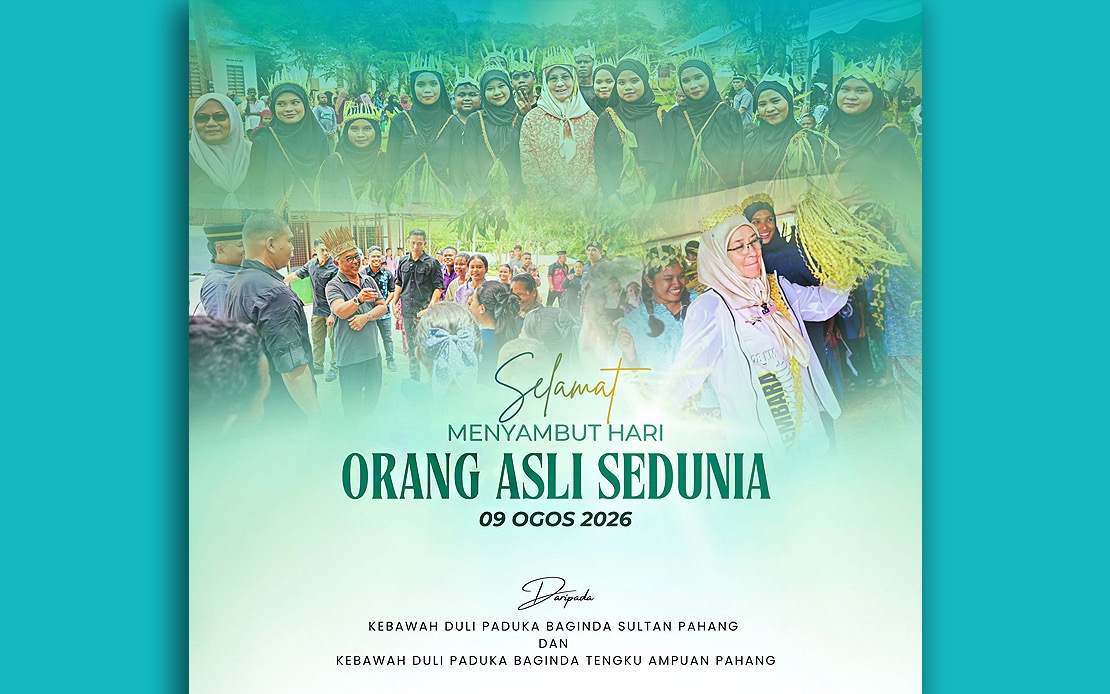
The Sultan of Pahang, Al-Sultan Abdullah Ri'ayatuddin Al-Mustafa Billah Shah, alongside Tengku Ampuan Pahang Tunku Azizah Aminah Maimunah Iskandariah, has issued a significant statement recognising the Orang Asli community's enduring contributions to Pahang's cultural landscape. Their acknowledgment, shared through official channels, underscores a formal commitment to celebrating indigenous traditions that have long been woven into the state's identity and social fabric.
The royal couple's message carries particular weight in Malaysia's constitutional framework, where rulers hold ceremonial and cultural authority. By explicitly commending the Orang Asli for enriching the state's customs and traditions, Al-Sultan Abdullah and Tunku Azizah have positioned indigenous heritage as integral to Pahang's collective identity. This formal recognition signals an important shift in how mainstream society acknowledges the indigenous population's role beyond peripheral or historical contexts.
A defining element of their statement involves a forward-looking agenda for the Orang Asli community. Rather than limiting themselves to cultural appreciation, the rulers articulated a vision encompassing education, economic development, skills training, and human capital advancement. This multi-sectoral approach recognises that cultural preservation alone cannot address the systemic inequalities many Orang Asli communities face. The emphasis on economic development particularly addresses long-standing concerns about marginalisation in employment and business opportunities, areas where indigenous Malaysians have historically lagged significantly behind national averages.
Education emerges as a cornerstone of the rulers' advocacy. Access to quality schooling remains a persistent challenge in many Orang Asli settlements, particularly in rural Pahang where infrastructure limitations complicate service delivery. By explicitly highlighting education within their call for improved opportunities, the royal statement suggests that closing educational gaps is essential to breaking cycles of poverty and enabling community members to compete effectively in the modern economy.
The rulers' emphasis on preserving identity and heritage while pursuing development reflects a nuanced understanding of indigenous development challenges. This dual focus acknowledges the tension between modernisation and cultural preservation that many indigenous communities worldwide navigate. For the Orang Asli, rapid economic change and urban migration have created pressures to abandon traditional practices and languages. The royal statement implicitly endorses the notion that progress need not require cultural assimilation, validating indigenous identity as a permanent feature of national life rather than a vestigial tradition.
The timing of this statement coincides with preparations for the 2026 International Day of the World's Indigenous Peoples, a United Nations observance gaining increasing traction globally. Malaysia's participation in such commemorations has historically been modest compared to other Southeast Asian nations. By connecting their message to this international event, Al-Sultan Abdullah and Tunku Azizah elevate the Orang Asli within a global indigenous rights framework, signalling Malaysia's alignment with international advocacy for indigenous populations and their rights.
For Pahang specifically, the statement carries practical implications beyond symbolism. With significant Orang Asli populations concentrated in the state's interior regions, state-level commitment can translate into targeted policy interventions. Regional governments wield considerable discretion over resource allocation, infrastructure development, and programme implementation in areas affecting indigenous communities. A public commitment from the state rulers creates political space for such initiatives and establishes accountability for implementation.
The call for unity, respect, and cooperation reflects broader concerns about inter-community relations. In Malaysian multicultural contexts, explicit appeals for harmony from respected authorities carry cultural resonance. The rulers' invocation of these principles while discussing Orang Asli advancement implicitly frames indigenous development not as a separate or competitive agenda but as integral to collective state prosperity. This framing can help counter zero-sum narratives that sometimes emerge in discussions of affirmative action or targeted development programmes.
Within Southeast Asia's indigenous rights landscape, Malaysia's approach historically has differed from neighbouring countries. While Indonesia and the Philippines have undertaken more explicit constitutional and legislative reforms recognising indigenous peoples, Malaysia's indigenous populations have relied more heavily on constitutional Article 8 protections and common law precedents. Royal statements like this one fill a gap, providing cultural and political legitimacy that can influence policy directions even without formal legislative changes.
The broader significance lies in how royal institutions engage with contemporary social justice issues. The statement demonstrates that Malaysia's traditional leadership structures can function as advocates for marginalised communities. This capacity matters particularly for indigenous peoples, whose historical marginalisation predates modern state structures and who often lack institutional resources to amplify their voices. When sultans and high-ranking royalty foreground indigenous concerns, they leverage considerable cultural capital and media attention.
However, translating royal sentiment into tangible policy change remains a persistent challenge. Malaysia has numerous statements and commitments regarding indigenous welfare dating back decades, yet measurable progress on key indicators—income levels, educational attainment, healthcare access—has often been incremental. The rulers' statement therefore represents both a genuine acknowledgment and a potential starting point for scrutiny regarding implementation mechanisms and accountability frameworks.
Moving forward, the effectiveness of this royal initiative will depend on coordination between Pahang's state government, federal authorities, and Orang Asli community representatives themselves. Sustainable development requires listening to indigenous perspectives on priorities and approaches, ensuring that external interventions align with community aspirations rather than imposing development models that fail to address actual needs. The rulers' willingness to spotlight these communities creates an opportunity for more participatory governance structures.
The statement ultimately reflects a recognition that Orang Asli communities are not merely historical custodians of cultural traditions but active participants in contemporary Malaysian society deserving equal opportunities for advancement. By articulating this vision at the highest level, Pahang's rulers have contributed to a narrative shift that may gradually reshape how mainstream institutions and society approach indigenous peoples' development, rights, and place within the nation.

