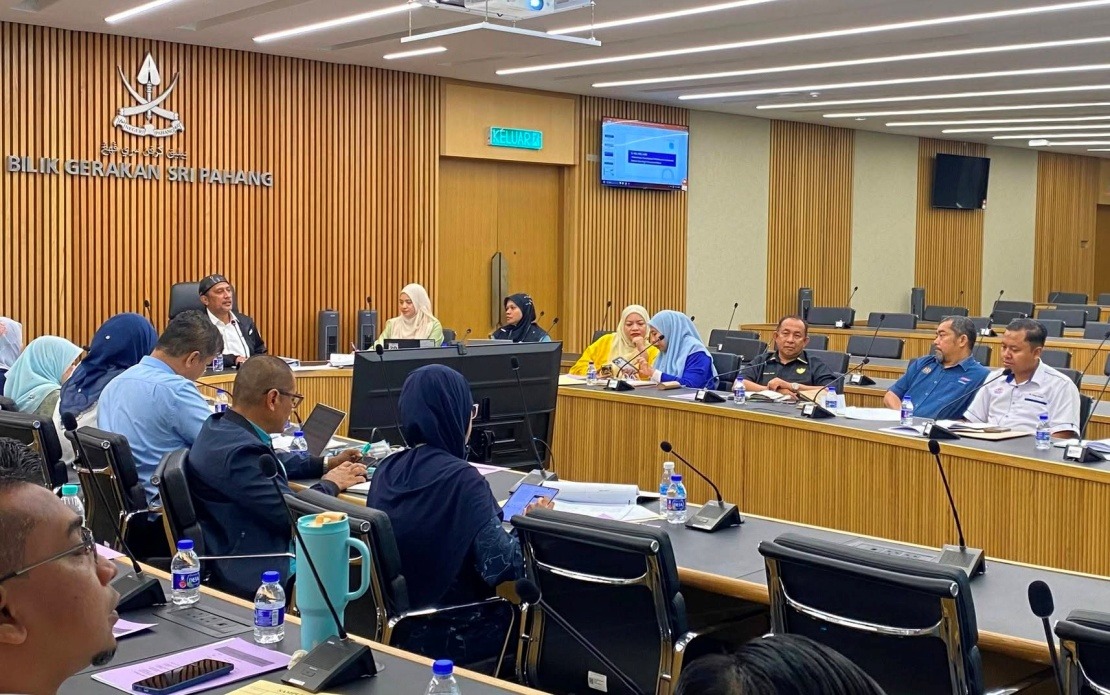
The Pahang state government has committed to undertaking a thorough examination of competing land claims affecting the indigenous Orang Asli population in Kampung Sungai Cot, located in the Maran district. The initiative will involve coordinated efforts between the Department of Orang Asli Development (JAKOA), the Pahang Land and Mines Office (PTG), and local land administration authorities to develop a workable resolution that respects both customary rights and legal frameworks.
Datak Seri Syed Ibrahim Syed Ahmad, the chairman of Pahang's committee overseeing Islamic religious affairs, rural development, and Orang Asli matters, emphasised that the state government intends to handle the dispute with careful consideration of established legal principles and through inclusive consultation with all stakeholders. His statement represents an attempt to clarify what the state characterises as misrepresentations of the situation by unspecified parties, suggesting the matter has become politically sensitive within both the state and national discourse on indigenous land rights.
The core dispute centres on overlapping claims to the same parcel of land. According to the state government's account, twelve Orang Asli individuals initially submitted formal claims to JAKOA for the land they were actively cultivating. However, the same territory was subsequently allocated to a private company through a decision made by Pahang's State Executive Council (MMK) on November 4, 2015. This temporal overlap, with the company's approval coming years after the indigenous community's initial engagement with authorities, underscores the administrative complexity frequently encountered in Orang Asli land disputes across Malaysia.
JAKOA has undertaken preliminary discussions with representatives from the affected Orang Asli community in an effort to narrow the scope of the dispute and identify common ground. These conversations have narrowed the field considerably: of the original twelve individuals, only six continue to actively pursue their land claims through official channels. During these discussions, the remaining claimants asserted their ancestral connection to the disputed territory, a position rooted in long-standing customary occupation and use patterns that are central to Orang Asli identity and livelihood strategies.
However, a significant impediment to resolving the dispute has emerged through the investigation process. The relevant government authorities have been unable to verify the claimants' historical and genealogical ties to the land based on existing documentation and factual records. This verification gap reveals a broader systemic challenge affecting Orang Asli land matters throughout Malaysia: the inadequacy of historical records and administrative databases in capturing the customary land use patterns of indigenous communities, whose relationship with land traditionally operated outside formal written documentation frameworks.
The broader context of Orang Asli land administration in Pahang demonstrates both progress and persistent gaps in protecting indigenous interests. The state currently recognises 264 Orang Asli villages with a combined registered population exceeding ninety thousand individuals. Of these communities, thirty villages have already achieved formal gazette status under the relevant sections of the Orang Asli Act 1954 and the National Land Code, conferring certain legal protections and recognition of their territorial claims. Additionally, the state government has approved formal land ownership grants to the Orang Asli community across sixteen villages under the provisions of the National Land Code, representing concrete state-level commitment to formalising indigenous land rights.
The pipeline of pending applications reveals substantial unfinished business in the state's Orang Asli land administration. A total of seventy-five applications for land gazettement on behalf of Orang Asli communities are currently being processed through various stages of the bureaucratic system. Of these, thirty-one applications have completed their technical assessment and now await consideration by an upcoming MMK meeting. The remaining forty-four applications have encountered complications stemming from territorial overlaps with other claims or allocations, a recurring pattern that suggests systemic issues in the initial allocation and registration of land throughout Pahang.
Beyond these geographically contentious applications, a further one hundred and forty-three submissions remain in the earliest measurement and data-gathering phase, conducted by JAKOA personnel. This substantial backlog indicates that the state's capacity to process and resolve Orang Asli land claims has not kept pace with the volume of applications, a constraint that affects communities throughout the peninsula seeking formal recognition and protection of their ancestral territories. The extended timelines required to move applications through successive administrative phases create prolonged periods of legal uncertainty for affected Orang Asli communities.
The Kampung Sungai Cot situation exemplifies the inherent tensions that emerge when customary land rights collide with modern state land allocation processes. The 2015 decision to approve corporate use of the disputed land occurred within a formal legal framework, yet it proceeded without apparent consideration of or coordination with the Orang Asli community members who had already submitted their claims to JAKOA. This administrative sequencing raises questions about inter-agency communication and whether sufficient due diligence was undertaken regarding potential indigenous claims before corporate approvals were granted.
For Malaysian policymakers and the broader Southeast Asian region, the Pahang government's commitment to mediated resolution through consultative processes offers a potential model for addressing similar disputes, which are replicated across multiple states. Rather than imposing unilateral administrative decisions, the multi-agency approach brings together technical expertise from land administration, indigenous affairs, and district-level governance to develop solutions that acknowledge legitimate interests on multiple sides. However, the success of this model will ultimately depend on whether verification challenges can be overcome through alternative methodologies, including oral history documentation and genealogical research that may complement incomplete written records.
The resolution of this dispute carries significance beyond the immediate parties involved. It will establish precedents for how Pahang handles future overlapping claims and may influence approaches adopted by other states grappling with Orang Asli land issues. The outcome will also signal to indigenous communities whether formal mechanisms like JAKOA claims provide effective protection, or whether legal gaps and administrative inefficiencies leave their land rights vulnerable to competing corporate or state interests. This balance between facilitating economic development and protecting indigenous tenure represents one of the defining challenges of Malaysian land policy in the coming decade.

