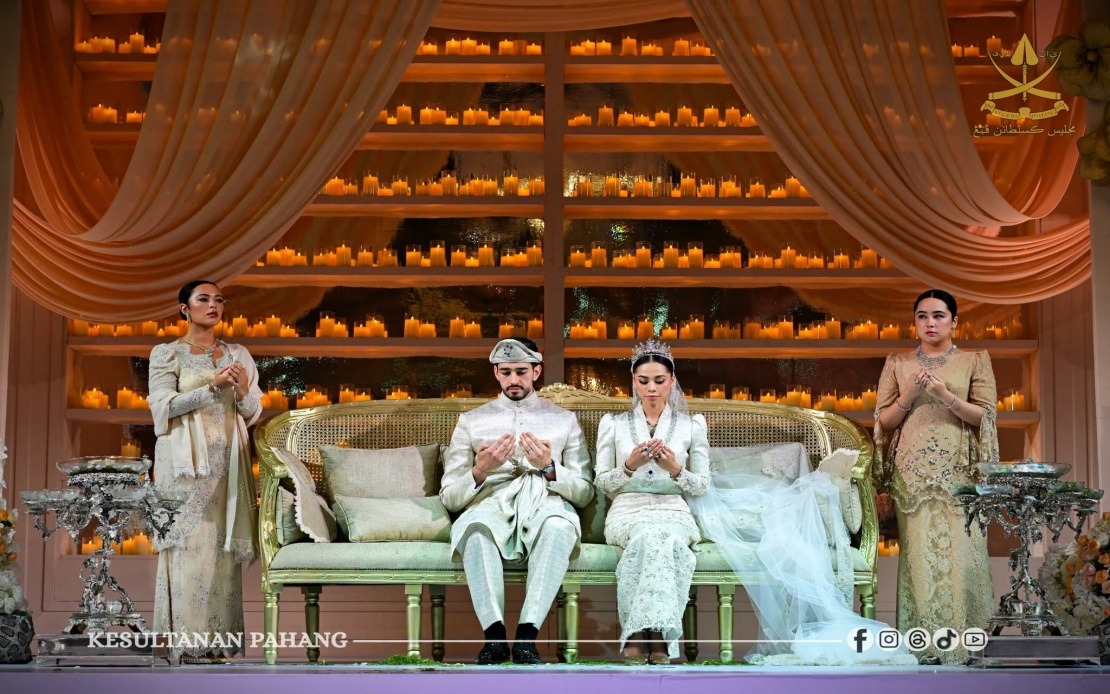
The Pahang royal household celebrated a significant milestone when Sultan Al-Sultan Abdullah Ri'ayatuddin Al-Mustafa Billah Shah attended the wedding reception of his daughter Tengku Puteri Raja Tengku Puteri Ilyana Alia and her husband Christopher Lionel Froggatt at a Kuala Lumpur hotel, marking a union that bridges Malaysian and international circles.
The Sultan's presence underscored the importance of the occasion within Pahang's royal family structure. Accompanying him were the Regent of Pahang Tengku Hassanal Ibrahim Alam Shah, along with his siblings and extended royal family members, reflecting the collaborative nature of Malaysia's constitutional monarchy where different branches of the royal household often participate in significant state and family events.
The reception drew notable dignitaries beyond the immediate royal circle. Pahang Menteri Besar Datuk Seri Wan Rosdy Wan Ismail represented the state government's formal recognition of the event, while Shaikh Mohammed Hamad Tahnoon Al Nahyan, representing the President of the United Arab Emirates, highlighted the international dimensions of the marriage and the diplomatic relationships maintained between Malaysia and the Gulf states.
The ceremony program reflected deeply rooted Pahang royal traditions that have been preserved across generations. The newlyweds occupied the dais as the focal point of proceedings, establishing them as the ceremonial centre of attention—a practice fundamental to Malaysian royal wedding protocols that emphasises the formal recognition of matrimonial unions within the palace hierarchy.
The Istiadat Menyuap Nasi Semangat ceremony, conducted by Tengku Puteri Seri Lela Wangsa Tengku Tan Sri Meriam Sultan Ahmad Shah, carried symbolic weight within the tradition. This feeding ritual represents blessing and the bestowal of good wishes upon the couple, performed by senior female members of the royal household to signify their acceptance and support of the marriage.
The Sultan's direct participation in the Istiadat Bersanding dan Merenjis demonstrated his role as both patriarch and ceremonial figurehead. His engagement in these rituals, followed by other family members, created a cascading blessing structure where authority and approval flow from the highest ranks downward, reinforcing the hierarchical nature of palace life while simultaneously democratising the occasion by involving multiple family generations.
The Istiadat Meletakkan Panca Bicara performed by Sultan Al-Sultan Abdullah represented perhaps the most significant ceremonial act of the evening. This ritual, which translates to the placing of the five pillars of wisdom, functions as a formal parental blessing that carries ceremonial and spiritual dimensions. By personally conducting this gesture, the Sultan ensured the newlyweds received the highest form of family endorsement available within Pahang's royal protocols.
The inclusion of a prayer recited by Pahang Mufti Datuk Dr Asmadi Mohamed Naim integrated religious and spiritual elements into the proceedings, reflecting how Malaysian royal ceremonies typically blend Islamic practices with customary traditions. This combination reflects the constitutional role of Malay rulers as protectors of Islam in their respective states, ensuring that major life events within the palace maintain spiritual grounding.
The wedding represents a contemporary moment in Malaysian monarchy where traditional ceremonies maintain their cultural significance while accommodating international dimensions. Christopher Lionel Froggatt's integration into Pahang's royal household through these established rituals demonstrates how the institution adapts to modern realities without abandoning core practices that define its identity and cultural continuity.
For Malaysian society more broadly, such royal occasions serve multiple functions beyond mere family celebration. They reinforce the visibility and cultural relevance of the monarchy, provide templates for how citizens might conduct their own celebrations, and demonstrate the ongoing vitality of traditional practices within modernising Southeast Asia. The attendance of government representatives and international diplomats signals that these ceremonies carry significance beyond family matters, touching on matters of state protocol and international relations.
The Pahang Palace's decision to document and share details of the wedding through official channels underscores how contemporary monarchies engage with public communication. By publicising the event's ceremonial elements, the palace maintains transparency about its activities while also educating the public about royal traditions that might otherwise remain opaque to ordinary Malaysians.
This wedding reception exemplifies how Malaysia's constitutional monarchies continue to function as custodians of cultural heritage while remaining embedded within modern governance structures. The gathering of officials, family members, and international representatives in one space illustrates the interconnected nature of Malaysia's political and social hierarchies, where personal milestones within royal families carry implications that extend into state administration and diplomatic relations.

