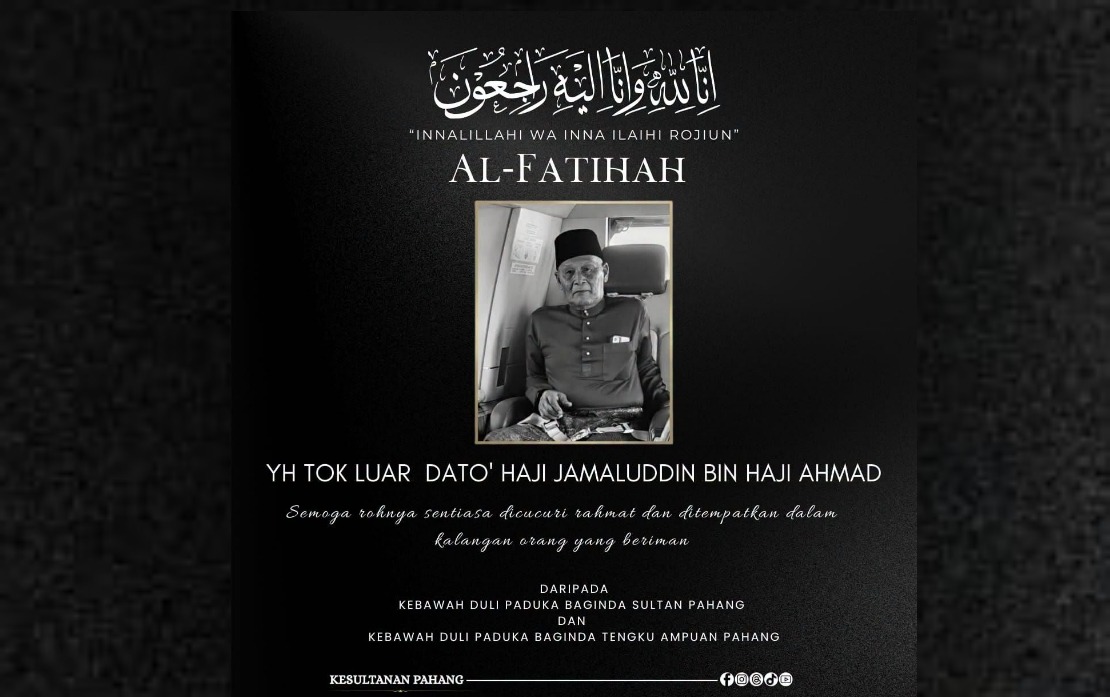
The royal household of Pahang has announced the death of Tok Luar Datuk Jamaluddin Ahmad, a figure described as a steadfast advocate for the state's Sultan institution. The prominent Pahang figure passed away on the morning of June 28 at Tengku Ampuan Afzan Hospital in Kuantan, with his passing marked by formal expressions of grief from the state's highest-ranking members of the royal family.
Sultan Al-Sultan Abdullah Ri'ayatuddin Al-Mustafa Billah Shah and Tengku Ampuan Tunku Azizah Aminah Maimunah Iskandariah released an official statement conveying their deep sorrow at Jamaluddin's death. Through the Kesultanan Pahang's official social media channels, the royal couple emphasised their personal sense of loss, highlighting the deceased's long record of service and unwavering loyalty to the Pahang monarchy and its institutions.
In their formal remarks, the Sultan and Tengku Ampuan offered spiritual supplications on behalf of the departed, seeking divine mercy and forgiveness for Jamaluddin's earthly transgressions. The statement reflected the Islamic traditions observed within Malaysia's royal households, invoking blessings upon his soul and requesting that his good deeds be recognised in the afterlife. Such public displays of religious devotion from the state's rulers serve to reinforce the deep connection between the monarchy and Islamic practice within Pahang's cultural fabric.
The passing of figures like Jamaluddin carries particular weight within Pahang's political and social hierarchy. Individuals who have earned the title of Tok Luar and achieved the rank of Datuk typically represent established networks of influence and loyalty within state institutions. Their deaths often prompt reflections on continuity within traditional power structures and the changing generation of custodians who maintain institutional memory and historical connections to the sultanate.
Tengku Ampuan Afzan Hospital, where Jamaluddin spent his final hours, remains one of Pahang's principal medical facilities and serves as a symbol of modern healthcare provision within the state. The hospital's prominence in this context underscores how contemporary medical infrastructure intersects with traditional hierarchies and the inevitability of mortality that touches all segments of society, regardless of status or historical significance.
The royal family's decision to issue a formal condolence statement through official channels demonstrates the importance placed upon acknowledging the deaths of those who have maintained long-term relationships with state institutions. In Malaysia's constitutional monarchy system, such gestures carry diplomatic and cultural significance beyond simple expressions of sympathy, functioning as markers of institutional continuity and recognition of service to the crown.
For Malaysian observers, the incident reflects broader patterns within the country's hereditary and institutional frameworks. The sultanates maintain intricate networks of titled individuals and loyalists whose contributions, while sometimes operating outside public scrutiny, remain valued within the formal structures of state governance and ceremonial life. Jamaluddin's decades of association with Pahang's royal establishment evidently positioned him as a notable figure within these circles.
The timing of official condolences from the Sultan and Tengku Ampuan, released promptly following the morning's death announcement, reflects established protocols governing royal communication during moments of loss. These procedures ensure that prominent community members receive appropriate recognition and that the state's ruling family publicly acknowledges their contributions to institutional stability and tradition.
As Pahang continues its development trajectory within Malaysia's broader regional framework, the passing of figures like Jamaluddin represents the cyclical nature of institutional succession. Each generation of loyal supporters and administrators eventually yields to the next, creating both challenges and opportunities for maintaining institutional coherence and adapting traditional structures to contemporary demands. The state's ability to honour such figures while simultaneously addressing modern governance imperatives remains a balancing act that encompasses much of Pahang's current political landscape.
The family of Tok Luar Datuk Jamaluddin Ahmad has been assured of the royal household's support during their bereavement, with the Sultan and Tengku Ampuan extending wishes that they find solace and fortitude in their moment of loss. Such expressions of collective grief, while formal in nature, reflect the interconnectedness that characterises relationships within Pahang's institutional and social spheres, where longevity of association often translates into reciprocal bonds of obligation and respect that extend beyond individual lifespans.

