The Sultan of Pahang, Al-Sultan Abdullah Ri'ayatuddin Al-Mustafa Billah Shah, has reinforced the state's commitment to maintaining mosques and suraus as the primary institutional framework for Islamic worship and community religious engagement. Working through the Pahang State Mufti Department and the Pahang Islamic Religious and Malay Customs Council, the Sultan's position underscores a principled stance against recent proposals circulating nationally to introduce Friday prayer facilities within commercial shopping centres.
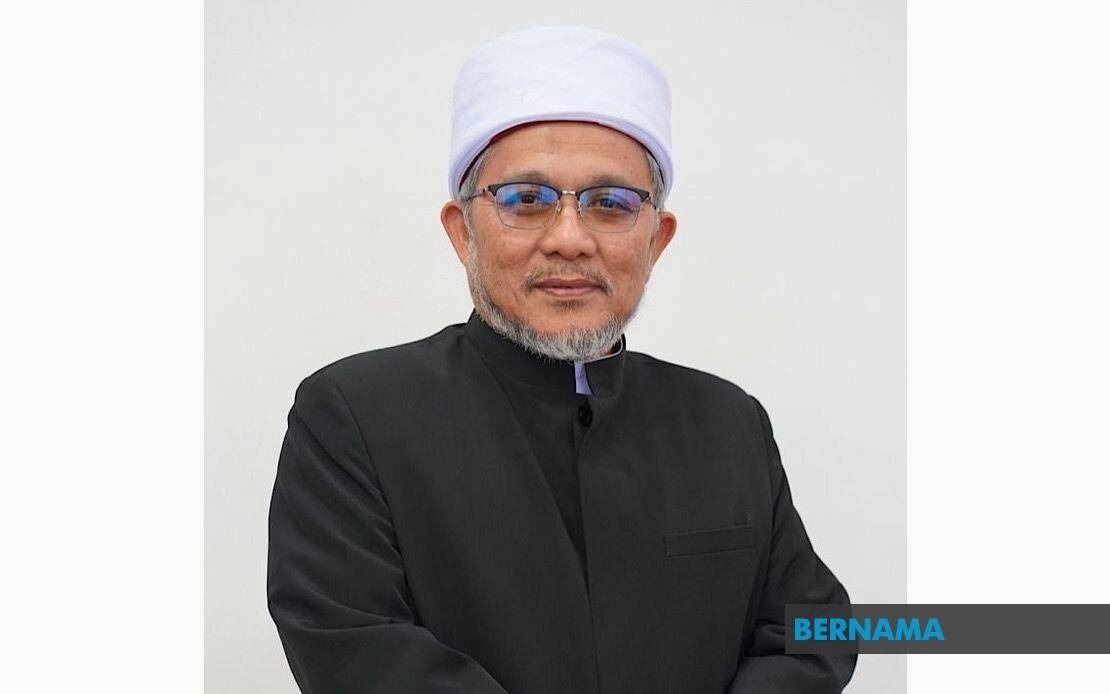
Pahang Mufti Prof Datuk Dr Asmadi Mohamed Naim articulated the Sultan's position in a formal statement, emphasising that the reaffirmation responds directly to mounting pressure to expand Friday prayer venues into non-traditional settings. The initiative reflects growing urbanisation and changing work patterns in Malaysia, where some state administrations have explored accommodating workers and shoppers who face logistical challenges attending conventional mosques during midday prayers.
Crucially, the Pahang position establishes that Friday prayers throughout the state must continue within mosques and authorised suraus designated specifically for congregational Friday worship, known locally as SKJ facilities. This categorical stance represents a constitutional assertion of state prerogative; under Malaysia's federal framework, religious affairs fall within state jurisdiction as outlined in the Ninth Schedule of the Federal Constitution. The Sultan's decree explicitly positions the state's Islamic council as the authoritative custodian of all mosque and surau facilities, reinforcing institutional hierarchy and accountability.
The Mufti's statement identifies several newly developed or planned facilities that exemplify Pahang's investment in traditional religious infrastructure. The Sultan Ahmad 1 State Mosque in Kuantan, the Tepian Putra Mosque, the forthcoming Bandaraya Mosque, and Al-Shafie Mosque in Kota SAS collectively demonstrate the state's strategy to enhance capacity through purpose-built, conventionally located venues rather than repurposing commercial spaces.
The religious requirements governing Friday prayers form the theological foundation underlying this administrative position. According to Syafi'i jurisprudence, the Islamic school followed in Malaysia, Friday congregational prayer must satisfy multiple conditions that render shopping mall adaptations impractical. The prayer requires performance during the Zohor time window, attendance by a minimum of forty congregants, delivery of two formal sermons beforehand, and designation of a specific venue. Critically, overlapping congregations in proximate locations violate established doctrine, creating canonical complications for mall-based facilities located within proximity of existing mosques.
This Pahang stance contrasts with recent federal openness toward innovation. Minister in the Prime Minister's Department (Religious Affairs) Datuk Dr Zulkifli Hasan had welcomed state-level experimentation with shopping mall Friday prayers following ostensibly positive outcomes reported from facilities operating in the Federal Territories. This ministerial position suggested a more permissive national framework accommodating modern workplace realities.
The divergence between federal encouragement and Pahang's categorical rejection illustrates the complexity inherent in Malaysia's constitutional division of religious authority. While federal authorities may advise or encourage, ultimate regulatory power resides with state authorities. The Pahang Sultan's reaffirmation effectively exercises this constitutional prerogative, establishing clear boundaries for religious practice within state jurisdiction regardless of federal enthusiasm.
The practical implications extend beyond theological abstraction. Shopping mall-based Friday prayer facilities would potentially fragment congregation cohesion, complicate wudu (ablution) logistics, and create administrative oversight challenges for state authorities responsible for mosque quality, management, and personnel. The Pahang framework prioritises institutional consolidation and regulatory clarity over dispersed, harder-to-monitor alternative venues.
For Malaysian religious governance more broadly, Pahang's position reinforces a conservative institutional approach at a time when other jurisdictions experiment with accommodating contemporary working patterns. The state implicitly argues that infrastructure expansion and scheduling flexibility within existing frameworks—rather than institutional rupture through new, non-traditional venues—represents appropriate modernisation strategy. This philosophy privileges maintaining strong, centrally-controlled religious institutions over fragmentary accommodation of secular workplace demands.
The statement's emphasis on community needs assessment demonstrates that Pahang's reaffirmation does not represent reflexive conservatism disconnected from practical considerations. Officials contend that existing mosques and authorised suraus, strategically distributed and recently expanded, already accommodate legitimate congregational demand. The planning rationale suggests that demand for mall-based Friday prayers reflects coordination and scheduling failures addressable through conventional means rather than architectural innovation.
For multinational companies and shopping mall operators in Pahang, the Sultan's decree establishes unambiguous regulatory boundaries. Unlike federal territories where commercial prayer facilities might receive tacit acceptance, Pahang explicitly restricts congregational Friday prayers to authorised religious venues. This clarity, while restricting commercial flexibility, provides certainty for business planning and eliminates regulatory ambiguity.
The reaffirmation ultimately reflects how Malaysia's constitutional architecture enables substantive variation in religious governance across jurisdictions. Pahang's sultanate exercises constitutional authority to shape religious expression within state boundaries according to institutional and theological preferences. As Malaysia continues navigating tensions between religious conservatism and modern secular demands, Pahang's model emphasises maintaining robust traditional institutions as the appropriate response to contemporary pressures rather than accommodating parallel alternative arrangements.

