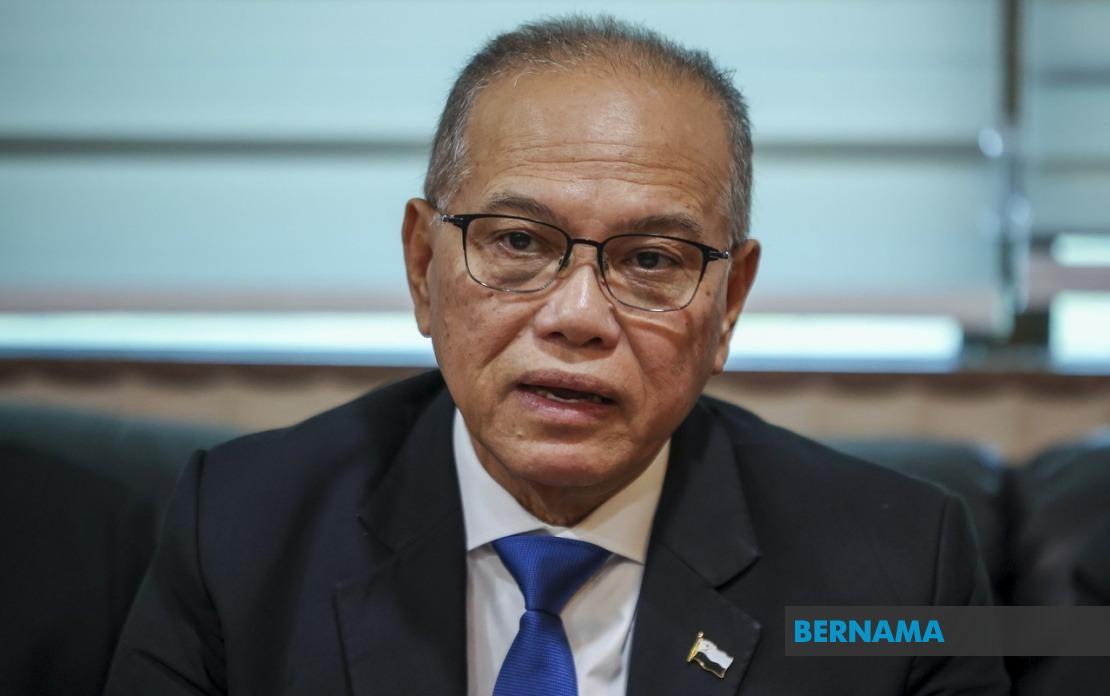
Pahang's fiscal performance through late August demonstrates the state is maintaining robust revenue collection momentum, with Menteri Besar Datuk Seri Wan Rosdy Wan Ismail confirming the accumulation of RM921.72 million in state revenue and affirming the government's trajectory towards meeting its full-year financial objectives. Speaking during the Pahang State Legislative Assembly sitting at Wisma Sri Pahang, Wan Rosdy indicated that the amount represents 72 per cent of the state's total revenue target of RM1.279 billion for 2026, positioning the state government to conclude the year in a position of fiscal strength.
The achievement carries particular significance for a state like Pahang, which has historically relied on resource extraction and agriculture but is increasingly diversifying its economic base. The strong revenue position reflects not merely improved tax collection mechanisms but underlying economic vitality that enables the government to fund development initiatives and social programmes. This level of collection performance, achieved with four months remaining in the calendar year, suggests the state is likely to exceed or comfortably meet its annual target, provided economic conditions remain stable and no unforeseen fiscal shocks materialise.
Wan Rosdy's statement underscores the interconnection between economic expansion and government revenue generation. The state's Gross Domestic Product expanded to RM71 billion in 2025 from RM68.8 billion in the preceding year, indicating sustained economic expansion that creates the commercial activity from which state revenues flow. This GDP growth rate, translating to approximately 3.2 per cent year-on-year expansion, places Pahang's performance in reasonable standing relative to national growth trajectories, though the state continues to diversify away from traditional sectors.
Investment commitments paint an equally encouraging picture of economic momentum building within the state. As of August 2026, Pahang had recorded RM11.47 billion in committed investments—pledges from companies and development entities to deploy capital in the state. However, the more telling figure involves realised investments, which had reached RM1.044 billion at the same point in the year. This distinction between commitments and realisations matters considerably, as the gap indicates both substantial pipeline projects that may generate future economic activity and a somewhat measured pace of actual capital deployment.
For Malaysian policymakers and observers tracking regional development disparities, Pahang's investment performance warrants scrutiny. The ratio of realised to committed investment suggests that while confidence in the state's business environment remains reasonable, actual capital has moved more slowly than project announcements. This pattern is common across Southeast Asia, where grand investment commitments often take years to translate into operational ventures. The state government's ability to accelerate this conversion from commitment to realisation will substantially influence whether the current revenue growth trajectory persists beyond the next fiscal cycle.
The state's financial capacity has enabled meaningful resource allocation to the Makmur Pahang Initiative, a flagship programme aimed at delivering direct benefits to residents. The initiative has received RM173.93 million across the 2024-2026 period, with allocations rising progressively from RM38.8 million in 2024 to RM50.54 million in 2025 and RM84.59 million in 2026. This escalating commitment reflects the state government's confidence in its revenue position and strategic prioritisation of citizen-directed spending as the state's economic fortunes improve. The near-doubling of allocation in 2026 relative to 2024 suggests recognition that electoral and social constituencies expect visible returns from improved state finances.
Wan Rosdy's announcement that the state government intends to increase Makmur Pahang Initiative allocation further through the upcoming state budget reveals governmental expectations of sustained or accelerating revenue growth. This forward-looking stance contrasts sharply with the caution many state governments have maintained post-pandemic, suggesting Pahang's administration believes current economic conditions are sufficiently durable to justify enhanced spending commitments. For Malaysian taxpayers and citizens living in the state, this trajectory offers the prospect of expanded services and direct assistance programmes, though implementation quality will ultimately determine whether increased spending translates to tangible improvements in living standards.
The fiscal performance also reflects broader governance priorities established through Wan Rosdy's administration. The state government has positioned itself as responsive to economic development opportunities while simultaneously maintaining traditional concerns with direct citizen support and social welfare. This dual emphasis on growth promotion and welfare provision remains central to regional politics across Malaysia, where electorates increasingly demand both progress and redistribution.
Within the context of Malaysian federalism, Pahang's revenue performance has implications beyond the state itself. As one of Malaysia's larger states by geographic area and among the more populous, Pahang's economic trajectory influences national aggregate figures and serves as a bellwether for regional development patterns. The state's continued growth, coupled with expanding investment pipelines, suggests that internal Malaysian capital is still gravitating towards the peninsula's eastern corridor, a pattern that has accelerated as Klang Valley property and construction costs have escalated.
The challenges ahead for sustaining this momentum are not insignificant. Global economic conditions remain uncertain, commodity prices that influence broader Malaysian economic performance continue volatile, and competition from other Malaysian states for investment remains intense. Selangor, Johor, and Sabah all pursue aggressive investment attraction strategies that can divert capital flows that might otherwise reach Pahang. The state's diversification from traditional primary industries towards services and manufacturing remains incomplete, leaving revenue and investment patterns somewhat vulnerable to external shocks in sectors like energy and agriculture.
For Southeast Asian observers, Pahang's performance offers lessons regarding sub-national economic management. The state demonstrates that reasonably solid fiscal discipline, coupled with consistent economic development promotion, can generate steady expansion even without major metropolitan centres or special economic zones comparable to other regional hubs. The RM921.72 million collected through late August represents not merely accounting figures but the material foundation enabling governance capacity and state legitimacy.

