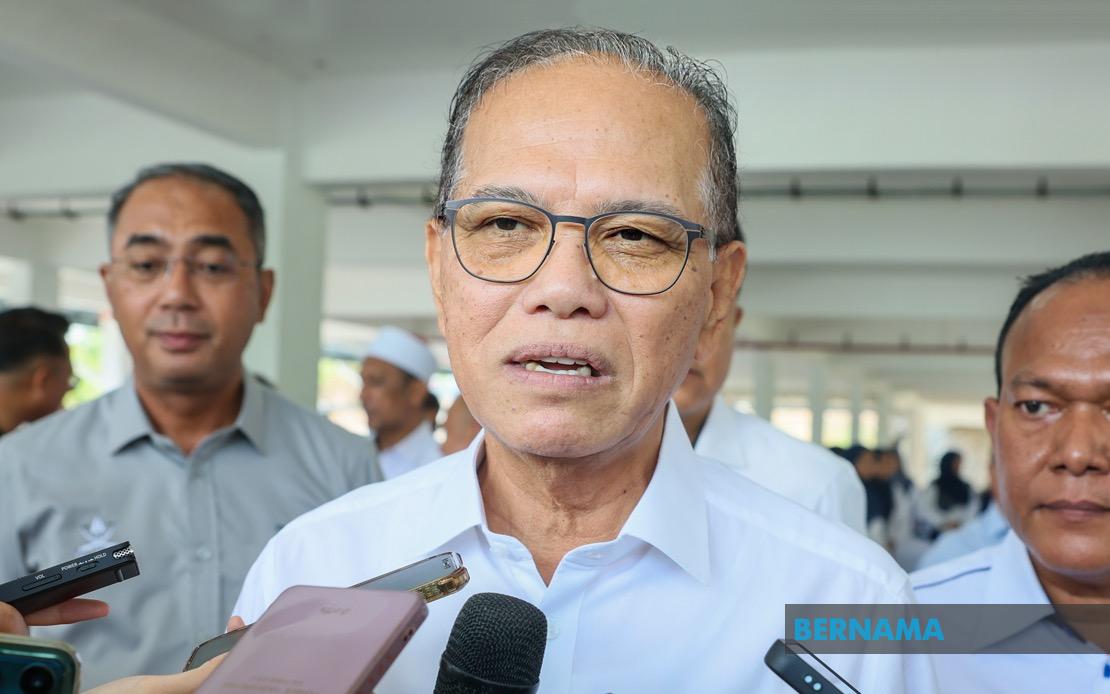
Pahang's top administrator is throwing weight behind a push to steer indigenous youth toward skills-based education and academic advancement, recognising that technical qualifications have become mainstream pathways rather than fallback options. Datuk Seri Wan Rosdy Wan Ismail made the appeal while presiding over a graduation ceremony in Kuantan, where he underscored the economic and social imperatives driving the initiative across a state that hosts approximately 90,000 Orang Asli residents.
The Menteri Besar's intervention reflects growing concern about educational outcomes within indigenous communities, where dropout rates remain a persistent challenge limiting access to decent livelihoods. By elevating TVET—Technical and Vocational Education and Training—to parity with conventional university pathways, policymakers are attempting to broaden the ladder available to young Orang Asli seeking to escape poverty cycles and precarious employment. The emphasis on skills development represents a recognition that not all meaningful careers require four-year degrees, yet the credentials must carry genuine market value.
The convocation event at Sultan Haji Ahmad Shah Silver Jubilee Hall marked the completion of training by 388 graduates across multiple programmes run by YP Advanced Skills. This scale of intake and throughput demonstrates the capacity emerging within the vocational ecosystem to absorb indigenous learners, provided they can be encouraged to enrol and persist through their chosen courses. The presence of a Menteri Besar at such an occasion signals political backing for institutional efforts that might otherwise struggle for recognition or resources in competition with traditional universities.
Wan Rosdy's remarks centred on a simple but powerful proposition: that graduates equipped with recognised skills qualifications occupy a distinct advantage in the labour market. Rather than presenting TVET as a consolation prize for those unable to pursue university entry, he framed it as a platform offering dual pathways—employment or self-employment—each capable of delivering respectable income and dignity. This reframing matters significantly for indigenous youth who may internalise stigma around vocational routes or come from family backgrounds where nobody has navigated formal education successfully.
Crucially, the Menteri Besar voiced explicit hope that YP Advanced Skills alumni would return to their villages and become ambassadors for continued learning within their communities. This grassroots multiplier effect—whereby successful graduates inspire peers and younger relatives to follow—remains one of the most potent mechanisms for shifting educational participation rates. Indigenous communities often place high stock in local examples and mentorship, and imported experts or distant institutions carry less persuasive power than someone from the same background who has visibly improved their circumstances.
The employability emphasis that Wan Rosdy highlighted reflects a broader conversation in Malaysia and across Southeast Asia about aligning education systems with labour market demand. Employers increasingly complain of skills shortages even as unemployment persists among the formally educated, suggesting a mismatch between what institutions teach and what industries need. By showcasing YP Advanced Skills graduates as individuals meeting high standards of both technical proficiency and professional character, the Menteri Besar was effectively endorsing a training model that does not compromise on rigour or conduct.
For Pahang specifically, this educational push holds economic significance. The state's economy depends partly on resource extraction, agriculture, and manufacturing—sectors where skilled trades remain in constant demand. Indigenous communities, often geographically peripheral and historically marginalised from economic opportunity, stand to benefit from pathways that translate education into stable wage work or business ownership. Enhanced participation in TVET could reduce dependency on informal or seasonal labour while building human capital that strengthens the state's competitive positioning.
The challenge, however, extends beyond rhetoric and graduation ceremonies. Access barriers remain formidable for many Orang Asli youth: financial constraints, information deficits, family circumstances that demand early income contribution, and educational preparation gaps stemming from primary and secondary schooling gaps all conspire to limit enrolment. Government and training providers must therefore couple motivational messaging with material support—scholarships, stipends, boarding facilities, and sustained academic guidance—if rhetorical calls are to translate into sustained participation gains.
Wan Rosdy's recommendation that graduates pursue further study when feasible—advancing from diploma to degree, or from foundation certificates to diploma—suggests recognition that the education system itself functions as a ladder where each rung creates opportunity for the next. This stacking of qualifications, where TVET credentials serve as stepping stones rather than termination points, could prove particularly powerful for indigenous learners who may lack family experience navigating multiple levels of formal education.
The broader policy implications warrant attention across Malaysia and Southeast Asia more widely. Indigenous populations across the region—in Thailand, Laos, Cambodia, and Indonesia—face similar patterns of educational exclusion and economic marginalisation. Pahang's experiment with TVET promotion, if rigorously documented and shared, could provide a replicable model for leveraging skills training as an equity tool. The willingness of state leadership to publicly champion such initiatives also matters; without political backing, training institutions struggle to secure consistent funding and policy prioritisation.
Ultimately, Wan Rosdy's message encapsulates a modernising approach to indigenous development that respects both immediate pragmatism and longer-term aspiration. Rather than settling for minimal intervention or paternalistic charity, it calls for systematic investment in capability, backed by institutional infrastructure and role models drawn from within affected communities themselves. Whether this commitment translates into substantive resource allocation and sustained policy action will determine whether the 90,000 Orang Asli in Pahang gain genuine momentum toward educational participation and economic participation.

