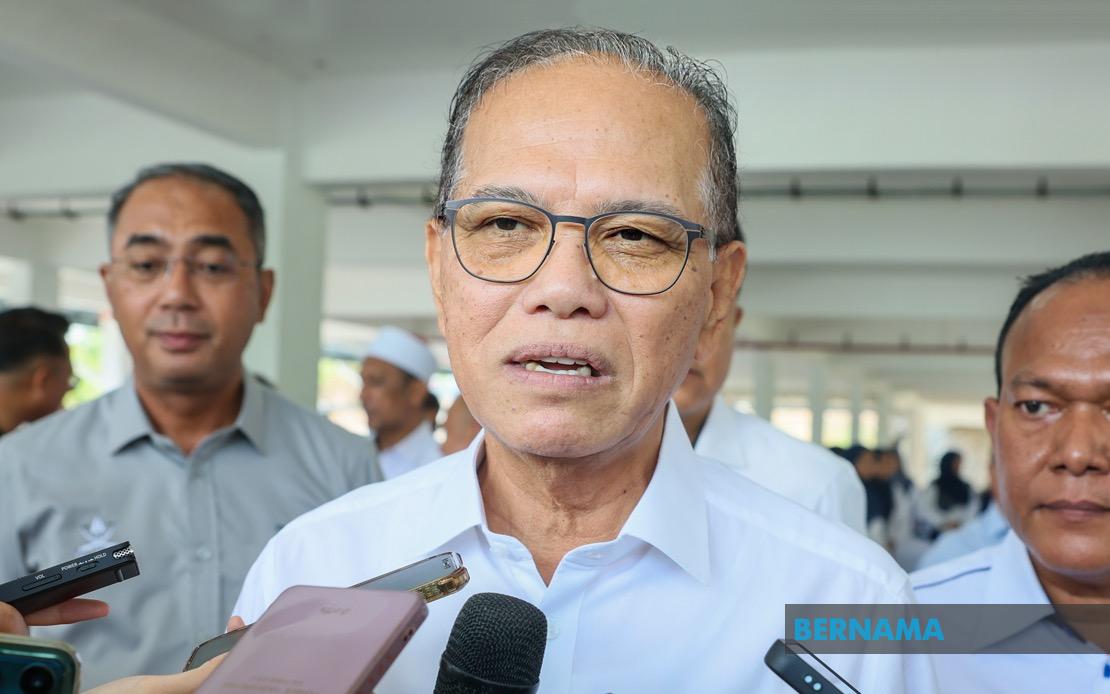
The Pahang state government has unveiled an ambitious sports development initiative worth RM3.5 million, signalling a determined push to elevate the state's profile in Malaysia's competitive athletic landscape. The funding allocation, announced during the closing ceremony of the Pahang 1st Netball League Championship at the Pahang Sports Complex (SUKPA) in Kuantan on July 5, represents a strategic investment in grassroots talent identification and cultivation across three distinct sporting disciplines. Menteri Besar Datuk Seri Wan Rosdy Wan Ismail framed the initiative as integral to positioning Pahang alongside established sports powerhouses that have long commanded the national arena through consistent championship performances.
The financial breakdown reveals the state's strategic priorities within sports development. Football has secured the largest slice at RM2 million, reflecting its dominant position in Malaysian sporting culture and the substantial infrastructure required to develop competitive talent pipelines. Netball receives RM1 million, while sepak takraw, the traditional Malaysian sport, claims RM500,000. This allocation structure acknowledges the varying developmental needs across sports with different participation bases and professional pathways. The emphasis on football aligns with Malaysia's broader sporting ambitions, though the inclusion of netball and sepak takraw demonstrates recognition of sports with passionate local followings that merit systematic cultivation.
Beyond the immediate funding figures, Wan Rosdy articulated a philosophical approach to sports development grounded in seriousness and comprehensive commitment. His emphasis on avoiding half-hearted implementation suggests acknowledgement that previous initiatives may have lacked sustained focus or adequate resourcing. The state government's willingness to commit substantial resources reflects understanding that competitive sports performance requires coordinated, long-term investment in talent pipelines rather than sporadic, reactive spending. This represents a departure from approaches that treat sports development as supplementary to core government functions toward viewing it as strategic infrastructure.
The netball sector particularly benefits from expanded commitments, with the state government agreeing to boost the allocation by an additional RM500,000 in the following year, bringing total netball funding to RM1.5 million annually. This escalation underscores growing confidence in netball's development trajectory and recognition of the sport's potential to generate national-level competitive success. For netball specifically, which has traditionally received less public attention than football, this increased allocation signals institutional backing that can accelerate athlete development and establishment of competitive structures.
Grassroots talent identification constitutes a critical dimension of the initiative. The state government explicitly prioritises discovering and nurturing emerging athletes from community level upward, acknowledging that national champions emerge from structured development at foundational levels. This approach contrasts with talent identification systems that rely primarily on competitive selection at established levels, which risk overlooking individuals from under-resourced backgrounds who might lack early exposure to organised sport. By emphasising grassroots engagement, Pahang attempts to expand its talent pool beyond those with privileged access to private coaching or well-established club structures.
The Pahang 1st Netball League Championship itself demonstrated the vibrancy of local participation, attracting 42 competing teams to the state tournament. Semambu's championship victory and RM10,000 prize money reflects both the quality of competition and institutional support for competitive excellence. Large-scale state championships of this nature serve multiple functions simultaneously: they provide competitive pathways for athletes, offer visibility to potential sponsors and talent scouts, and generate community engagement with organised sport beyond casual participation.
Wan Rosdy positioned sports development as a unifying social platform, asserting that athletic programmes foster unity, cooperation and discipline across community boundaries regardless of socioeconomic or ethnic background. This framing extends the government's sports investment beyond narrowly defined athletic objectives toward broader social cohesion goals. In the Malaysian context, where sports historically transcend communal divisions, this perspective resonates with policy frameworks that view recreational and competitive athletics as nation-building instruments. Structured sports environments provide controlled settings where diverse community members collaborate toward shared objectives, potentially strengthening social fabric.
Pahang's initiative arrives within a competitive national context where established sporting states continuously upgrade their development infrastructure. States such as Selangor and Kuala Lumpur have long maintained sophisticated sports academies and talent pathways, creating competitive advantages in national championships. By scaling up investment, Pahang responds to this competitive pressure while attempting to narrow developmental gaps that have historically limited the state's national sporting prominence. The allocation acknowledges that aspiring to elite national performance requires financial commitment commensurate with that of established competitors.
For Southeast Asian context, Malaysia's sports development architecture reflects broader regional trends toward state-sponsored athlete development systems. Countries throughout Southeast Asia increasingly recognise that international competitive success and regional sporting prominence require institutional investment in talent identification and long-term athlete development. Pahang's initiative, though regional rather than national in scope, mirrors these emerging priorities by committing public resources toward systematic athletic advancement rather than relying upon private club structures or individual initiative.
The timing and announcement of this initiative merit consideration within broader political and administrative cycles. The launch during a prestigious state-level netball championship suggests deliberate coordination between sports programming and governmental announcements, maximising visibility and demonstrating commitment to target communities. This strategy effectively connects financial commitments to tangible sporting events, reinforcing credibility through visible action rather than abstract budget allocations.
Successful implementation of this initiative will require sustained political commitment beyond the initial funding period. Sports development generates competitive results only across extended timeframes, typically requiring five to ten years of consistent investment before elite-level athletes emerge from grassroots foundations. The state government's agreement to increase netball funding suggests willingness for multi-year commitment, though maintaining political priority through electoral cycles remains an ongoing challenge for sports development programmes competing against other policy priorities.

