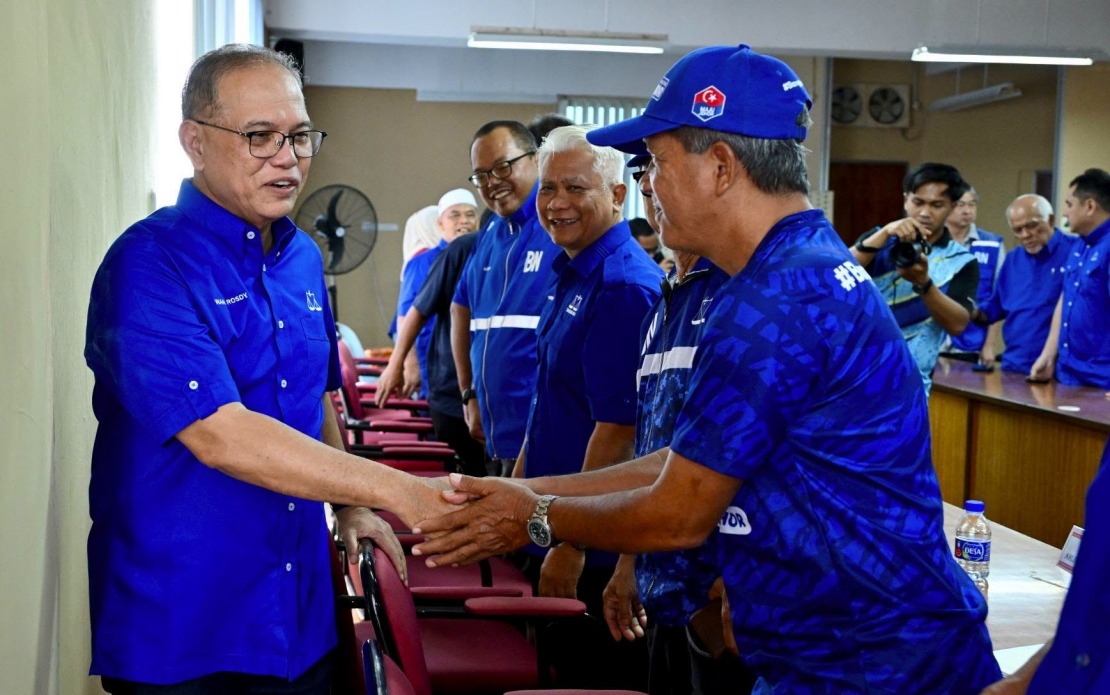
Pahang's Barisan Nasional machinery is lending significant manpower to boost the coalition's prospects in the imminent Johor state election, with party leaders coordinating deployment across four strategically important state constituencies. According to Pahang Menteri Besar Datuk Seri Wan Rosdy Wan Ismail, the assistance targets the Pekan Nanas, Pulai Sebatang, Benut, and Kukup seats—all situated within the Tanjung Piai parliamentary division—as the coalition seeks to consolidate its position in the peninsula's southern state.
Wan Rosdy's announcement underscores a broader pattern of inter-state coordination within Barisan Nasional's electoral machinery, revealing how the coalition mobilises resources across state boundaries to maximise electoral performance. The decision to concentrate Pahang's support on four specific constituencies suggests a carefully calibrated strategy rather than blanket campaigning, indicating that the party has identified these seats as either contested battlegrounds or as constituencies where additional ground support could secure narrow victories. This targeted approach reflects modern election planning that relies on data analytics and on-the-ground assessments to allocate finite campaign resources most effectively.
The Pahang Menteri Besar himself has committed to participating in the campaign trail, pledging to visit the FELDA areas in Segamat to strengthen the party machinery's presence on the ground. His willingness to travel to Johor during this critical campaign phase demonstrates the importance both the state and federal BN leadership attach to achieving a successful outcome in the election. Such high-profile participation serves dual purposes: it energises local party activists and conveys to voters that senior leadership is invested in their constituencies' development and representation.
Wan Rosdy expressed considerable optimism about Barisan Nasional's electoral prospects, citing both the internal momentum of party machinery and favourable feedback from voters during his recent visit to Johor. His three-day observation period, spanning from nomination day, provided him with direct insight into campaign conditions and volunteer enthusiasm. The party chairman's positive assessment carries weight within coalition circles, as senior leaders typically calibrate their public statements to reflect realistic expectations while maintaining morale among grassroots supporters. His observation that BN candidates demonstrate strong motivation to serve suggests the coalition is fielding candidates with genuine commitment rather than mere political appointments.
The competitive environment in Johor reflects the intensity of Malaysian electoral politics at the state level. With 172 candidates contesting 56 state seats, individual contests remain relatively open despite Malaysia's established two-party system. This candidate-to-seat ratio indicates fierce internal competition within parties for nomination, suggesting that selected BN aspirants have cleared significant hurdles to secure their party's endorsement. Each of the four targeted constituencies will likely witness robust campaigning from multiple parties seeking to capture the growing or shifting voter demographics in these areas.
The electoral calendar has compressed the campaign window substantially. With polling day scheduled for 11 July and early voting on 7 July, campaign teams must execute their strategies within a relatively tight timeframe. This compressed schedule favours parties with well-organised ground machinery and established voter contact networks, advantages that Barisan Nasional has historically enjoyed in peninsular states. The intensity of the final campaign phase typically determines outcomes in marginal constituencies, making the quality of execution during these final weeks disproportionately important.
The inter-state assistance arrangement reflects the federal nature of Malaysia's political system, where state-level Barisan Nasional organisations function both as independent entities and as components of a broader national coalition. Pahang's deployment of campaign support demonstrates the willingness of component parties to prioritise coalition-wide electoral success over narrow state-level concerns. Such cooperation has been crucial to Barisan Nasional's historical dominance, as it allows the coalition to concentrate resources in critical battlegrounds rather than spreading them evenly across all constituencies.
Johor's political significance extends beyond its 56 state seats. The state has traditionally served as a bellwether for broader peninsular electoral trends, and outcomes here often influence political calculations across other states. A strong Barisan Nasional performance in Johor would reinforce the coalition's narratives about voter confidence in its governance record, while underperformance could embolden opposition coalition partners and encourage anti-BN sentiment in other states. This high-stakes context explains why seasoned political figures like Wan Rosdy invest personal effort in Johor campaigning despite residing in Pahang.
The Tanjung Piai parliamentary constituency, encompassing the four targeted state seats, has experienced significant electoral volatility in recent federal elections. This history of competitive contests suggests that these particular constituencies house swing voters and emerging demographic groups whose preferences remain malleable. Barisan Nasional's strategic focus on these seats likely reflects analysis showing that modest gains here could substantially improve the coalition's overall Johor tally. The decision to deploy external support indicates that local machinery may require reinforcement to execute an effective campaign in these challenging constituencies.
Voter sentiment as observed by Wan Rosdy during his visit suggests that Barisan Nasional's governance record and policy positions remain sufficiently attractive to substantial portions of the Johor electorate. His emphasis on receptive voters and enthusiastic candidates frames the campaign as fundamentally about positive endorsement of BN performance rather than merely opposition to rival coalitions. This messaging strategy, if consistently executed across all campaign forums, may resonate particularly with voters concerned about economic stability and administrative continuity.
The participation of Pahang's political establishment in Johor's election campaign also signals the interconnectedness of state-level politics within Malaysia's federal system. Decisions affecting Johor's governance frequently influence policy coordination across the broader East Coast region, particularly regarding infrastructure development and resource sharing. Pahang leaders understand that a BN victory in Johor strengthens their own state's position within coalition discussions and resource allocation negotiations at federal and zonal levels.
As the campaign enters its final phase before polling day, the effectiveness of strategies like Pahang's targeted deployment will become evident through voter engagement metrics and campaign event attendance. The four targeted constituencies represent microcosms of broader Johor electoral dynamics, and outcomes there may preview the state's overall results. For Barisan Nasional, this election offers an opportunity to demonstrate that the coalition remains capable of mobilising voters and coordinating across state boundaries, capabilities essential to its continued relevance in Malaysian politics.

