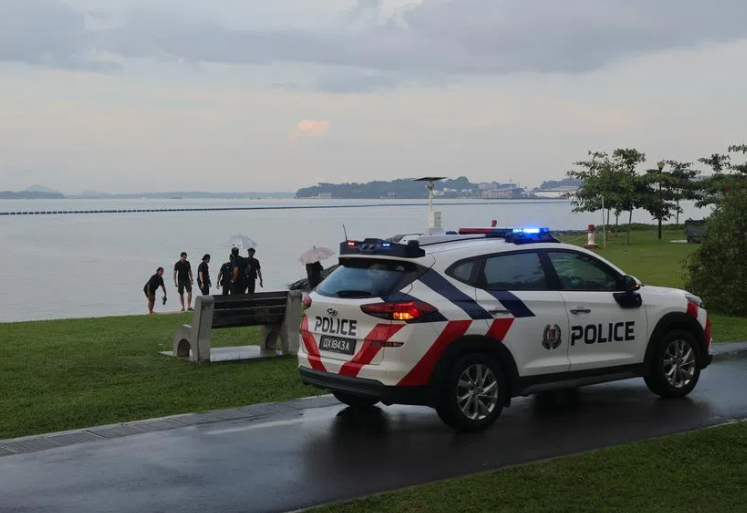
A paddleboarder lost his life after a lightning strike hit a group of water sports enthusiasts off Pasir Ris Beach in Singapore on Sunday, July 5. The 24-year-old victim was brought to hospital in critical condition but was pronounced dead shortly after arrival, making the incident a tragic reminder of the dangers posed by electrical storms in Southeast Asia's tropical waters. The police confirmed that six other people, ranging in age from 13 to 54 years old, were conscious when rescued and conveyed to medical facilities for treatment of injuries sustained in the strike.
Singapore's police force responded to an alert at approximately 4.50pm on July 5, receiving notification of the incident at 131 Pasir Ris Road. Officers initiated preliminary investigations immediately and found no indication of criminal activity or foul play in the circumstances surrounding the death. The investigation remains ongoing as authorities work to establish the precise sequence of events that led to the fatality.
The Singapore Civil Defence Force mobilised emergency services to the beach, transporting five victims, including one in an unconscious state, to Sengkang General Hospital. Two younger victims were taken to KK Women's and Children's Hospital, where they were treated for injuries related to the electrical exposure. The group had been engaged in water recreational activities, combining kayaking and paddleboarding sessions in the shallow waters near the popular public beach.
Eyewitness accounts provide crucial detail about the speed and severity of the strike. Muhammad Fairuz, a 40-year-old delivery rider who was fishing at the beach that afternoon, reported that the paddleboarders and kayakers were positioned approximately 100 metres from shore. The skies had appeared clear moments before the lightning descended, giving the group little warning of the impending danger. Fairuz described feeling an electrical current travel through his fishing rod as the bolt struck the water, a sensation that underscores the powerful electromagnetic discharge released during such weather events.
Fairuz heard distressed shouting from the group and quickly identified one man lying unconscious on his paddleboard. While other members of the group paddled their kayaks back toward land, Fairuz and another nearby individual took their own kayaks out into the deeper water to reach the stricken paddleboarder. Acting swiftly in a rescue attempt, they transported the unconscious man back to the beach, where emergency responders immediately began resuscitation efforts, visible in footage captured by an eyewitness at approximately 5.10pm. A Light Fire Attack Vehicle, colloquially known as the Red Rhino, and an ambulance were positioned on a nearby pavement to facilitate rapid medical transport.
The incident underscores the considerable frequency of lightning activity across Singapore and the broader Southeast Asian region. According to data from Singapore's Meteorological Service, the island-state experiences an average of 176 lightning days annually, where a lightning day is defined as any 24-hour period during which at least one lightning occurrence is detected at the Changi climate station. This substantial frequency reflects the tropical climate's predisposition toward severe atmospheric conditions during monsoon seasons and afternoon thunderstorms.
Recent years have witnessed multiple lightning-related incidents across Singapore's industrial and recreational zones. In May of the current year, a worker employed at a fish farming operation died following a direct lightning strike at his workplace. In December 2023, three workers required hospital treatment after lightning struck near their work site on December 28. These incidents collectively demonstrate that lightning poses a genuine occupational and recreational hazard requiring ongoing public awareness and safety precautions.
For beach and water sports enthusiasts across the region, the Pasir Ris incident serves as a sobering case study in weather vigilance. Malaysia, with climatic conditions broadly similar to Singapore's, experiences comparable lightning risk, particularly during the Southwest and Northeast monsoon seasons. Water sports practitioners in Malaysia, including paddleboarders operating along the coast or in inland reservoirs, should remain alert to rapidly developing weather patterns and avoid remaining in water during electrical storms, regardless of current sky conditions at the immediate moment.
The tragedy raises broader questions about public education regarding lightning safety during water-based recreational activities. While many people understand the general risk, fewer appreciate that lightning can strike from relatively distant thunderclouds and that clear skies overhead do not guarantee safety. Authorities in Singapore and neighbouring Malaysia may consider implementing improved warning systems and public information campaigns targeting water sports communities, particularly given the growing popularity of paddleboarding and kayaking as recreational pursuits throughout Southeast Asia.
The loss of life in this incident will likely prompt renewed discussions among water sports operators regarding safety protocols, group size limitations during threatening weather, and communication systems that allow rapid evacuation when conditions deteriorate. Insurance providers and recreational facility managers may also review their risk management frameworks to incorporate more sophisticated weather monitoring and early-warning procedures. As climate patterns continue to shift, understanding and respecting the power of tropical electrical storms remains an essential element of safe recreational practice in the region.

