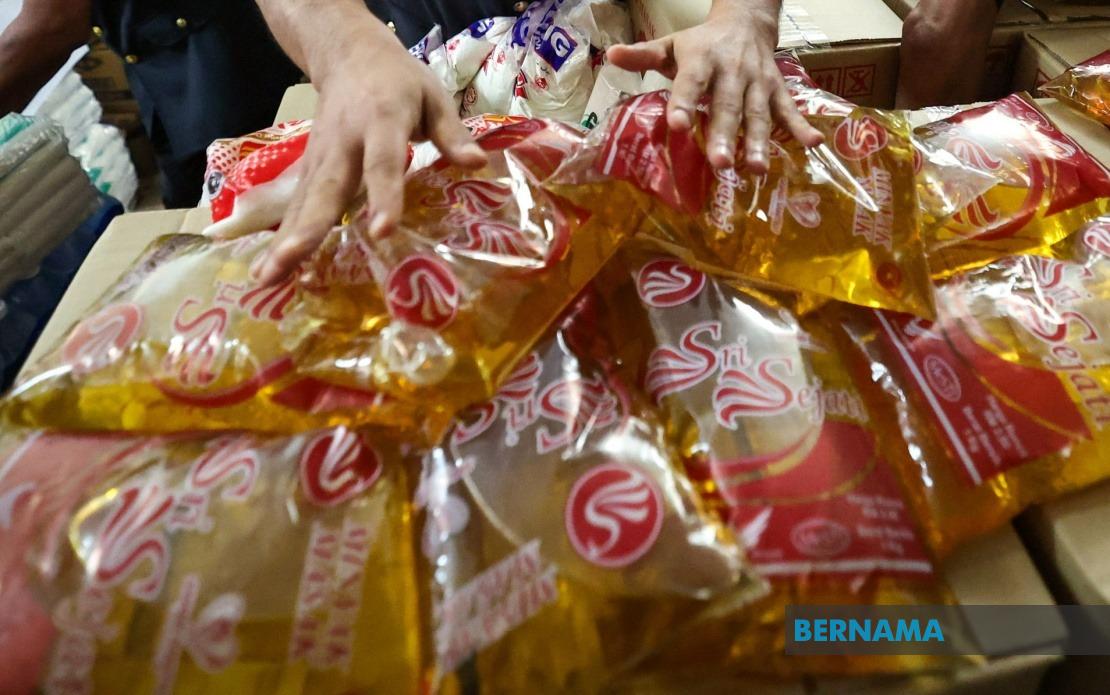
Malaysia's Public Accounts Committee has launched a scathing assessment of the nation's cooking oil price control and subsidy regime, calling for a comprehensive overhaul of the supply chain that has squandered billions in taxpayer funds. In testimony before Parliament, Deputy Chairperson Teresa Kok outlined eight major recommendations stemming from the committee's detailed investigation, which scrutinised years of mismanagement that allowed subsidised oil to flow to unintended recipients rather than vulnerable Malaysian households requiring assistance.
The investigation uncovered a structural imbalance between supply and actual need. The Cooking Oil Price Stabilisation Scheme currently distributes 60,000 metric tonnes of subsidised cooking oil monthly, yet evidence presented to the committee suggests Malaysians genuinely require between 19,000 and 30,000 tonnes during the same period. This massive surplus, more than double the genuine domestic demand, has created fertile conditions for abuse and diversion into informal markets and commercial operations. The absence of sophisticated targeting mechanisms means the government cannot ensure subsidised one-kilogramme packets reach intended low-income consumers rather than speculators, retailers engaging in black market activity, or migrant workers and foreign nationals ineligible for assistance.
The financial toll has been staggering. From 2019 through February 2025, the government channelled RM10.879 billion into cooking oil subsidies, yet a substantial portion of this investment failed to achieve its intended poverty-alleviation objectives. Instead of serving as a targeted safety net, the programme has functioned as an inefficient tool that enriches middlemen and enables regulatory arbitrage. Retailers have systematically engaged in conditional sales, hoarding inventory when market conditions favour speculation, and openly selling above the official RM2.50 control price with minimal enforcement consequences. This pattern suggests the regulatory framework has become largely symbolic rather than operationally meaningful.
Quality control deficiencies compound the waste problem. The committee discovered that packaging companies lack standardised operating procedures for managing spoiled or damaged cooking oil stocks. When oil deteriorates before reaching consumers, the government continues absorbing the full subsidy cost despite the product being unsuitable for human consumption. Two of nine packaging companies involved in the programme lack halal certification from JAKIM, raising serious questions about product integrity and government oversight of private sector partners entrusted with distributing subsidised goods. These gaps indicate weak coordination between relevant agencies and insufficient monitoring architecture.
The committee's investigation exposed concerning imbalances in the supply chain's ownership structure. Foreign corporations control 67 per cent of the refining quota, while government-linked companies including FGV and SD Guthrie account for merely 10.6 per cent. This concentration of capacity in foreign hands limits the government's strategic leverage and constrains the ability of domestic producers to participate in a critical food security subsidy programme. Local commercial operators fill the remaining portion, yet the committee found their involvement insufficient to offset the dominance of multinational interests, raising questions about whether subsidy design inadvertently favours external corporations over domestic enterprises.
Repackers receiving RM600 per metric tonne in subsidies appear to be capturing excessive margins relative to actual operational costs. The committee determined these profit levels far exceed genuine processing expenses, suggesting the subsidy formula was calibrated without rigorous cost-benefit analysis or competitive benchmarking against market rates. This design flaw transfers public wealth to private enterprises without demonstrable justification, effectively converting a social assistance programme into a corporate subsidy mechanism. The absence of periodic cost reviews has perpetuated this transfer year after year, accumulating billions in unnecessary expenditures.
To address these systemic failures, the PAC recommends the Ministry of Domestic Trade and Cost of Living undertake immediate reforms. The quota should be reduced by 60,000 metric tonnes monthly to align supply with evidence-based demand estimates, eliminating the surplus that fuels leakage and abuse. Subsidy rates paid to packaging companies require fundamental restructuring to reflect competitive market conditions rather than artificially inflated reimbursement levels. Critically, subsidy payments should be disbursed only for undamaged, quality-assured cooking oil stocks, ensuring public funds support goods actually reaching consumers rather than compensating companies for spoilage and waste.
Digital transformation offers perhaps the most promising path toward accountability. The committee urges acceleration of the transition to the eCOSS system, a fully digital cooking oil subsidy mechanism designed to verify recipient eligibility in real time and prevent unauthorised diversion. By replacing bulk distribution with targeted digital allocation, the government could theoretically restrict subsidised oil access to qualifying Malaysian citizens while creating comprehensive audit trails documenting fund flows. Such technological solutions address the fundamental targeting deficiency that has plagued the current system and offer potential for near-complete transparency regarding subsidy deployment.
The committee also recommends studying mechanisms to redistribute refining quotas toward competitive local companies, reducing foreign corporate dominance within the supply chain. This recommendation reflects concerns that the current structure entrenches dependency on multinational suppliers and undermines domestic capacity development in a strategically important sector. By prioritising efficient local enterprises, Malaysia could advance dual objectives of enhancing food security resilience while strengthening participation of domestic firms in a critical infrastructure.
For Malaysian consumers and policymakers, these findings carry significant implications. The cooking oil subsidy, originally designed as a poverty-alleviation instrument, has devolved into a sprawling transfer mechanism benefiting multiple unintended recipients—commercial operators, foreign corporations, and retailers engaging in market manipulation. Reform requires not merely administrative tinkering but fundamental restructuring of programme design, ownership participation, and beneficiary targeting. The RM10.879 billion invested since 2019 serves as a cautionary case study in subsidy programme design, demonstrating how well-intentioned price controls generate perverse incentives, regulatory capture, and economically inefficient outcomes when implementation lacks adequate targeting infrastructure and institutional safeguards. Successful reform hinges on whether KPDN possesses the political will and bureaucratic capacity to implement the PAC's recommendations comprehensively.

