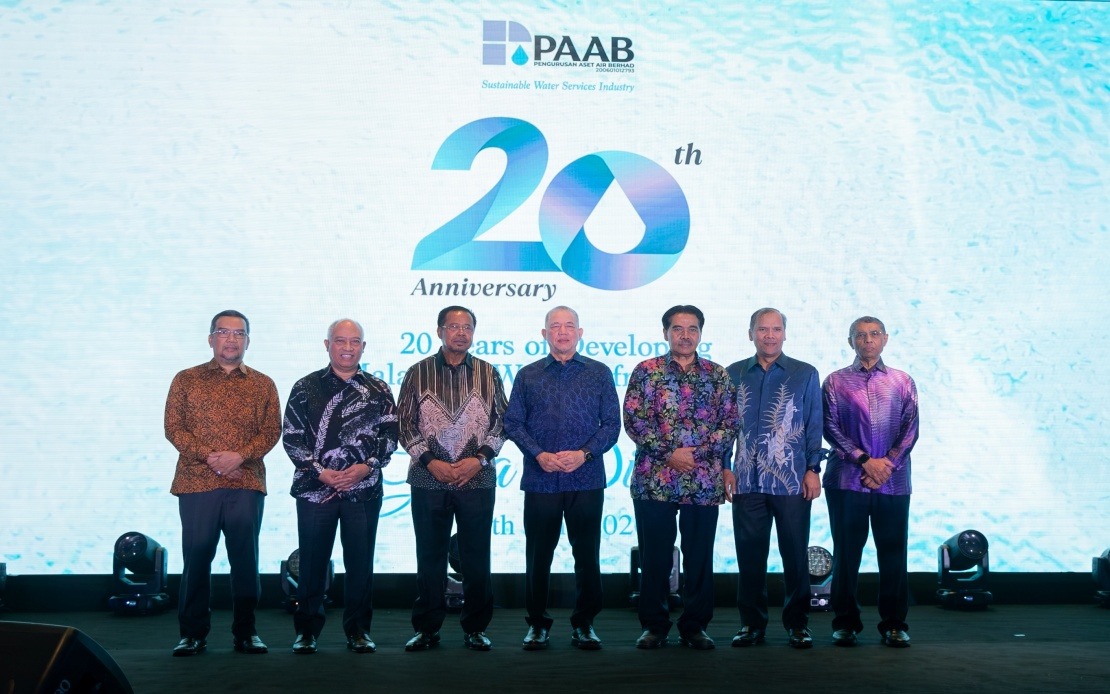
Pengurusan Aset Air Berhad (PAAB), a statutory body wholly owned by the Minister of Finance Incorporated, is commemorating two decades of orchestrating Malaysia's water sector transformation. Since its establishment on May 5, 2006, the organisation has become instrumental in restructuring how the nation manages its water services, channelling substantial resources into modernising infrastructure that affects millions of Malaysians daily.
The financial scale of PAAB's operations underscores the magnitude of the water sector's challenges and the government's commitment to addressing them. The organisation has assumed RM23.04 billion in water industry loans previously borne by individual states and water operators, effectively consolidating debt across the sector. Simultaneously, it has deployed RM23.84 billion in capital expenditure for infrastructure projects, bringing total financing and investment activities to RM46.88 billion. This dual approach—managing historical liabilities while funding future improvements—positions PAAB as a cornerstone of Malaysia's public infrastructure development strategy.
Deputy Prime Minister Datuk Seri Fadillah Yusof, who holds the portfolio for Energy Transition and Water Transformation, used the anniversary occasion to underscore the urgency of addressing non-revenue water (NRW) losses, which persist at approximately 40 per cent nationwide. His remarks reflect mounting frustration across government circles that despite decades of planning and billions in investment, nearly half of treated water continues to be lost through leakage, theft, and measurement inaccuracies before reaching consumers. Fadillah emphasised that waiting for long-term roadmaps extending to 2050 is insufficient when immediate action could protect water supplies for households and industries relying on stable provision.
The timing of this plea carries particular weight given Malaysia's economic positioning. The nation is aggressively competing for foreign direct investment in capital-intensive sectors such as data centres, semiconductor manufacturing, and advanced technology hubs. These industries demand not merely adequate water supply but reliable, uninterrupted provision at scale. A nation losing 40 per cent of its water transmission capacity presents a vulnerability that sophisticated investors assess carefully when evaluating long-term operational security. Fadillah's framing of NRW reduction as essential to economic competitiveness reflects this strategic calculation.
Progress under the National Water Services Industry Restructuring Plan demonstrates what coordinated investment can achieve, even as significant challenges remain. As of December 2025, ten states have signed onto this framework, which underpins PAAB's strategic approach. The completed infrastructure represents substantial physical capacity: 21 operational water treatment plants providing 2,085 million litres of water daily, 42 storage facilities holding 783 million litres, and 3,263 kilometres of upgraded or newly laid pipeline. These assets represent the foundation upon which Malaysia's water security rests, yet they operate within a system where nearly half the output vanishes before generating revenue or reaching taps.
PAAB's implementation strategy extends across four phases spanning four decades, reflecting the systemic nature of water sector reform in Malaysia. The Migration phase (2008–2020) involved transferring historical debts and establishing governance frameworks. The current Stabilisation phase (2021–2030) focuses on consolidating operations and reducing losses. Future Consolidation (2031–2040) and Full Cost Recovery (2041–2050) phases anticipate improving financial sustainability by ensuring water tariffs adequately reflect service delivery costs. This phased timeline acknowledges that transforming entrenched practices across multiple jurisdictions requires sustained commitment rather than rapid overhaul.
The composition of capital expenditure reveals how funds have been deployed across the sector's maturation stages. Of the RM23.84 billion invested to date, RM8.33 billion has been channelled into completed projects now transferred to water operators for management. A further RM1.84 billion finances projects currently under construction, expected to come online within the next few years. The largest tranche, RM13.67 billion, remains committed to projects still in design and planning phases, indicating that the most intensive phase of physical infrastructure development lies ahead. This allocation pattern suggests the sector is transitioning from foundational project completion toward expansion and modernisation.
The complexity of reducing NRW illustrates why addressing water losses demands coordinated effort across federal and state governments, local authorities, and water operators. Leakage stems from ageing pipes in older urban districts, inadequate maintenance protocols, and insufficient monitoring technology. Illegal connections tap significant volumes in underserved areas where residents lack formal access. Metering inaccuracies prevent accurate accounting of distributed water. Each problem requires different interventions—some requiring capital investment in new pipes, others demanding workforce training, still others needing digital monitoring systems. No single entity controls all variables, necessitating the integrated approach Fadillah advocated.
For Malaysian businesses and households, PAAB's evolution carries direct implications. Improved water infrastructure underpins productivity in manufacturing and services sectors, directly affecting competitiveness and employment. Households in areas receiving new treatment plants and pipelines experience both improved supply reliability and water quality. However, the long timeline for achieving full cost recovery suggests that water tariffs will likely increase incrementally as PAAB transitions from government-subsidised operations toward self-sustaining pricing models. This trajectory requires public understanding that affordable water cannot persist indefinitely when 40 per cent is lost in transit.
PAAB Chairman Datuk Seri Jaseni Maidinsa framed the organisation's success metrics beyond conventional financial measurement. The true measure, he suggested, involves tangible improvements in the quantity, cleanliness, and reliability of water reaching households and businesses. This philosophy recognises that infrastructure investment's ultimate justification lies in public welfare and economic enablement rather than accounting metrics. Yet delivering on this vision requires closing the gap between infrastructure capacity and actual service delivery—the central challenge that NRW represents.
Looking forward, PAAB's next phase will test whether Malaysia can sustain momentum in water sector transformation while addressing the urgent pressures Fadillah articulated. The organisation has demonstrated capacity to mobilise vast capital, coordinate across jurisdictions, and deliver physical infrastructure at scale. The remaining challenge involves translating that capability into operational improvements that shrink NRW significantly within the decade rather than waiting until 2050. Malaysia's water security, industrial competitiveness, and public health outcomes increasingly depend on success.

