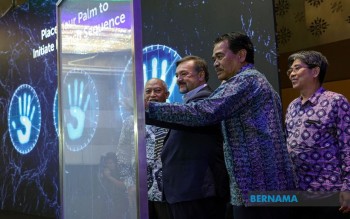
Pengurusan Aset Air Bhd (PAAB), a wholly owned entity under the Minister of Finance (Incorporated), has unveiled a landmark Sustainable Islamic Finance Framework, establishing three significant national firsts for Malaysia's financial landscape. The framework represents the country's inaugural sustainable Islamic finance initiative, the first to integrate blue finance mechanisms, and the sole framework to achieve Platinum Rated certification status. This development signals a strategic pivot towards merging environmental stewardship with Islamic financial principles in addressing Malaysia's water security imperatives.
The framework was developed collaboratively with Maybank Investment Bank Bhd serving as the primary sustainability structuring adviser, whilst RAM Sustainability Sdn Bhd provided independent validation as the second party opinion provider. This collaborative approach ensures the framework meets rigorous international sustainability benchmarks whilst remaining aligned with Islamic finance standards. Through its comprehensive platform, PAAB intends to direct financing activities toward internationally recognised sustainability principles whilst maintaining fidelity to Islamic finance values. The framework creates a pathway for forthcoming sustainable sukuk and blue sukuk issuances specifically designed to support water-related asset infrastructure and environmentally conscious projects across the nation.
The financial scale of PAAB's commitment becomes evident when examining its investment trajectory. As of December 31, 2026, the group's total migrated and committed investments in Malaysia's water services industry reached RM46.88 billion. This substantial capital deployment reflects the federal government's determination to overhaul water service delivery across the country. PAAB chairman Datuk Seri Jaseni Maidinsa emphasised that these investments have yielded concrete infrastructure improvements benefiting Malaysian households and industries alike. The group has completed 21 water treatment plants with combined daily processing capacity of 2.085 billion litres, establishing critical treatment infrastructure to support growing population demands.
Beyond treatment facilities, PAAB's investments extend to storage and distribution networks essential for reliable water supply. The group has constructed 42 reservoirs offering aggregate storage capacity of 783 million litres, addressing seasonal variability and drought resilience. Simultaneously, 3,263 kilometres of pipeline infrastructure have been installed or upgraded, targeting the persistent challenge of non-revenue water losses that plague Malaysian water systems. These pipeline replacements address ageing infrastructure whilst simultaneously improving distribution efficiency, reducing leakage, and enhancing supply reliability to consumers across the nation.
Water security represents an increasingly pressing concern throughout Southeast Asia, as urbanisation, climate variability, and industrial demand converge to strain existing supply systems. Malaysia's water challenges differ regionally—some areas experience chronic shortages whilst others contend with quality concerns—making coordinated infrastructure investment essential. PAAB's comprehensive approach tackles infrastructure deficiencies systematically whilst simultaneously innovating financing mechanisms. By embedding water asset investments within Islamic finance frameworks, Malaysia positions itself at the intersection of environmental sustainability and faith-based financial ethics, a positioning that could attract international capital seeking both returns and impact alignment.
Finance Minister II Datuk Seri Amir Hamzah Azizan, who officiated the framework launch ceremony, disclosed that PAAB intends to issue its inaugural blue sukuk during the third quarter of this year. This blue sukuk represents a global innovation, incorporating a water-specific taxonomy jointly developed by Maybank, RAM Sustainability, and the Securities Commission Malaysia. The taxonomy framework provides standardised criteria for identifying eligible water-related assets, ensuring transparency and consistency in asset selection. This structured approach to asset classification represents a methodological advance for Islamic finance, establishing rigorous standards that other institutions might subsequently adopt for their own blue sukuk programmes.
The blue sukuk mechanism itself introduces a novel approach to asset securitisation within Malaysia's financial ecosystem. Rather than traditional financing where water assets remain tangential to funding arrangements, the blue sukuk directly links sukuk repayments to water asset performance and cashflow. This structure creates a direct financial incentive for efficient asset management and operational excellence, as investor returns depend directly upon the underlying assets' productive capacity. For Malaysia's water sector, this innovation potentially unlocks investment pathways previously unavailable, channelling capital toward infrastructure that might otherwise struggle to attract institutional funding at competitive rates.
Minister Amir Hamzah articulated the strategic imperative driving this financial innovation. Insufficient investment in water assets poses multifaceted risks to Malaysia's economic development, public health, and social stability. Regional water stress increasingly constrains industrial expansion, agricultural productivity, and urban growth trajectories. By creating financial instruments that render water infrastructure investment attractive to institutional and retail investors, Malaysia expands the capital pool available for sector modernisation. The blue sukuk innovation particularly appeals to investors motivated by sustainability considerations, potentially attracting capital from international funds increasingly screening investments through environmental, social, and governance criteria.
The framework's international significance extends beyond Malaysia's borders. Southeast Asia confronts profound water security challenges, with many nations grappling with competing demands from agriculture, industry, and households against finite freshwater resources. Malaysia's pioneering blue sukuk mechanism could establish a template for other regional economies seeking to mobilise Islamic finance for water infrastructure. The Platinum Rated certification further legitimises the framework internationally, signalling that Malaysia's approach meets or exceeds global standards for sustainable finance architecture. This credential positioning might encourage other Southeast Asian nations to consider similar frameworks, potentially catalysing a regional movement toward Islamic green and blue finance.
The framework also reflects Malaysia's broader positioning within global sustainable finance movements. International climate commitments and the United Nations Sustainable Development Goals increasingly emphasise water security and infrastructure investment. By anchoring water infrastructure financing within both Islamic finance principles and international sustainability standards, PAAB demonstrates how Malaysia integrates religious values, environmental responsibility, and economic development. This integration potentially strengthens Malaysia's appeal to global investors and development institutions increasingly scrutinising how capital flows support climate resilience and water security.
Datuk Seri Jaseni Maidinsa's remarks emphasised that PAAB's achievements demonstrate sustained federal government commitment to modernising Malaysia's water infrastructure systems. The scale of investment and infrastructure delivery outlined—2.085 billion litres daily treatment capacity, 783 million litres storage, thousands of kilometres of replacement pipelines—represents tangible progress toward a water-secure nation. These metrics translate directly into improved household access, enhanced supply reliability, and reduced service disruptions that previously characterised Malaysian water delivery. For Malaysian citizens and businesses, these improvements translate to predictable water access underpinning economic productivity and quality of life.
The launch of this framework carries implications beyond immediate infrastructure financing. It establishes Malaysia as an innovator in faith-based sustainable finance, potentially positioning the nation as a hub for Islamic green and blue finance development. As global capital increasingly seeks investments aligned with sustainability objectives whilst respecting religious and ethical considerations, Malaysia's framework could attract international headquarters, research institutions, and talent focused on this emerging financial segment. The Platinum Rated certification and global first status of the blue sukuk taxonomy establish Malaysia's credentials within this space, differentiating the nation within ASEAN and the broader Islamic finance landscape.

