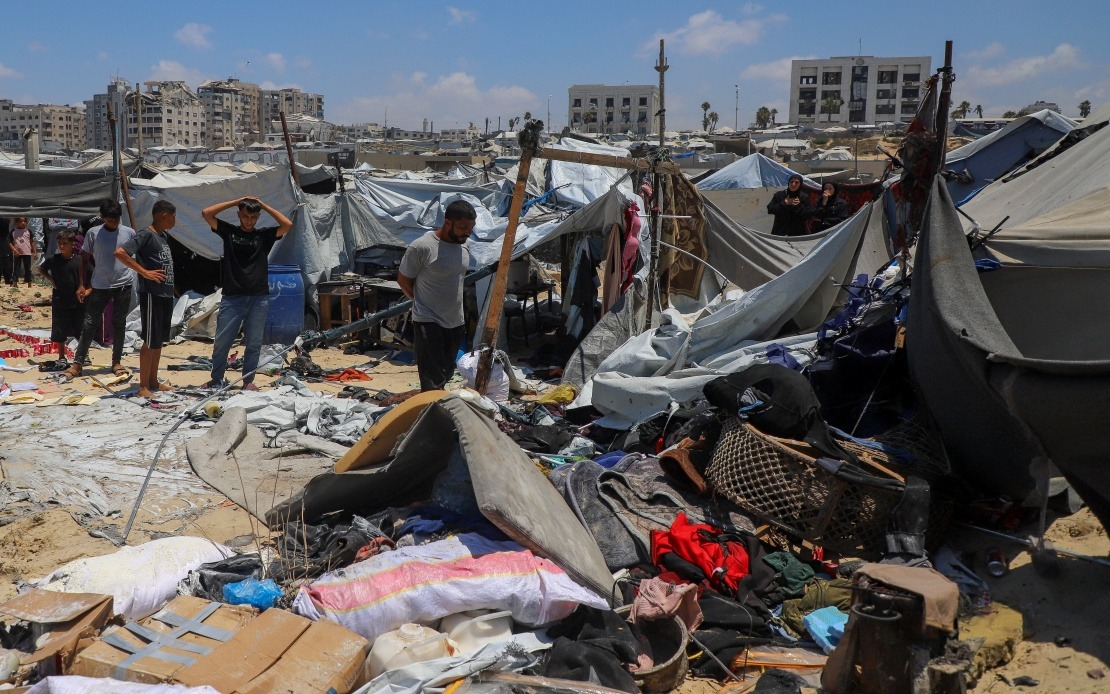
The scale of destruction across the Gaza Strip has reached catastrophic levels, with the Palestinian Government Communication Centre reporting that Israeli military operations have demolished more than 90 per cent of the enclave's infrastructure and built environment. The assessment, released through the Prime Minister's Office on Monday, also indicates that Israeli occupation forces now maintain control over approximately 80 per cent of Gaza's land area, consolidating their territorial dominance following months of sustained military operations.
The situation assessment, compiled from local sources and observations covering the period from June 29 to July 6, documents an escalation in military activities concentrated across several key population centres. Khan Younis, Rafah, and Gaza City experienced particularly intensive operations during this week-long window, resulting in documented fatalities among Palestinian civilians. Medical sources working in the territory recorded eight deaths directly attributable to these operations, though the actual toll may be considerably higher given the challenges facing healthcare providers in accessing all affected areas.
Beyond the immediate casualties, the report highlights the systematic destruction of residential infrastructure that has left thousands displaced from their homes. Israeli occupation forces, according to the Palestinian government account, have continued shelling civilian neighbourhoods and systematically razing residential structures, forcing families to abandon their properties and seek shelter in increasingly crowded displacement camps. This pattern of destruction extends beyond military targets to encompass homes, hospitals, schools, and other civilian infrastructure essential to normal community functioning.
The military pressure is not confined to Gaza alone. Concurrent operations across the occupied West Bank reveal a broader security approach characterised by raids, forced entries into homes, arbitrary detentions, and movement restrictions that severely constrain Palestinian freedom of movement. Cities and towns including Ramallah, Nablus, Hebron, Bethlehem, Jenin, Qalqilya, Tulkarem, and East Jerusalem have all experienced intensified military incursions during this reporting period. These operations restrict Palestinians' access to employment, healthcare, education, and commercial activities, undermining the basic functioning of Palestinian society.
Parallel to official military operations, Israeli settler militias have undertaken what the Palestinian government characterises as coordinated attacks against Palestinians and their property. These civilian-led actions have included arson attacks on Palestinian-owned businesses, physical assaults on Palestinian shepherds attempting to access grazing lands, attempted livestock theft, and systematic blockading of village entrances. The involvement of settler groups operating alongside or with tacit permission from military authorities raises questions about whether these actions form part of a broader strategy or occur outside official command structures.
The agricultural sector faces particular vulnerability under this security environment. The Palestinian Ministry of Agriculture's weekly briefing documents a dramatic escalation in actions specifically targeting Palestinian farming communities and agricultural production. The deliberate destruction of productive assets represents a systematic approach to undermining Palestinian economic self-sufficiency and livelihoods across the West Bank's rural regions.
The scale of agricultural destruction during this single week is substantial. Ministry documentation records the uprooting, burning, or damage of 2,559 olive trees, with the Salfit, Jenin, and Nablus governorates bearing the heaviest losses. Olive cultivation represents a cornerstone of Palestinian rural economics and cultural identity, with olive groves often passed down through generations. The targeting of these trees thus carries significance beyond immediate economic loss, representing an assault on Palestinian heritage and agricultural continuity.
The human impact extends directly to farming families dependent on agricultural income. At least 125 farmers were directly affected by documented incidents during this period alone, losing productive assets and facing disrupted access to their land. The Palestine Ministry of Agriculture quantified the direct economic losses resulting from these incidents at approximately US$11.78 million for just this single week's reporting period. Extrapolating such losses across the entire year reveals the scale of economic damage inflicted on Palestinian agricultural communities.
For Malaysian policymakers and observers, these developments carry implications for regional stability and the precedents they establish for conflict and occupation. The scale of destruction and control described in the Palestinian report exceeds the typical parameters of military occupation, suggesting a transformation in the nature of territorial control that may influence how regional powers conceptualise sovereignty and humanitarian obligations. The targeting of agricultural infrastructure and civilian economic assets raises questions about long-term sustainability of populations under such conditions.
The convergence of extensive territorial destruction, military occupation of most accessible areas, parallel settler militia activities, and systematic targeting of economic infrastructure describes a comprehensive reconfiguration of Palestinian territorial control and economic capacity. These elements, viewed collectively, suggest an approach extending beyond conventional military objectives toward restructuring Palestinian territorial and economic arrangements. Understanding these dynamics remains essential for Malaysia and other regional states monitoring the situation's trajectory and its potential implications for broader Middle Eastern stability.

