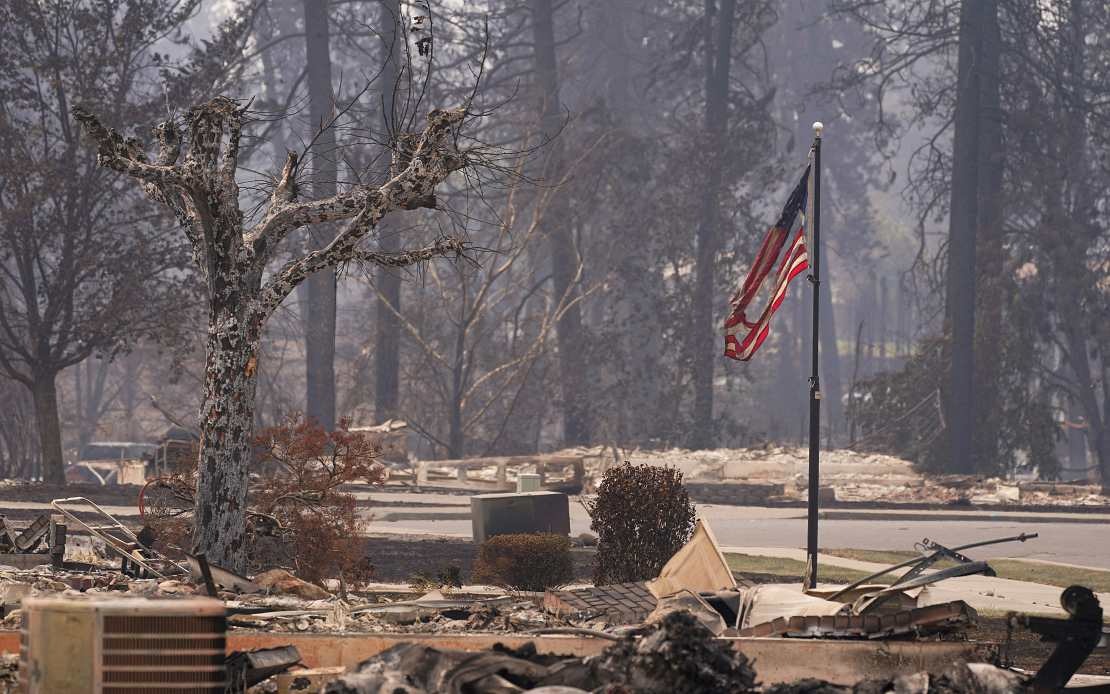
The Pacific Northwest faces one of its most severe wildfire emergencies in recent memory as multiple blazes tear through Washington state, displacing tens of thousands of residents and consuming hundreds of structures. The American Red Cross confirmed on Monday that approximately 65,000 people have abandoned their homes, representing a humanitarian crisis of considerable scale for the region. Preliminary damage assessments indicate that more than 700 residences have been destroyed, with the majority concentrated in Spokane County, though firefighters warn that final tallies may climb significantly as suppression efforts continue and burned areas become accessible for detailed surveys.
Law enforcement has made a critical arrest in connection with at least one of the conflagrations. Spokane County Sheriff John Nowels announced that Aaron F. Farinacci, 37, was taken into custody on Monday afternoon on a first-degree arson charge and is currently held on a $1 million bond. Nowels linked the suspect to the Old Trails Fire, one of several active blazes plaguing the county. The arrest suggests that at least some of the current fire threat stems from human activity rather than natural causes, though officials have not yet revealed details regarding the alleged circumstances or motive behind the suspected arson.
The fire situation across Washington presents a complex, multi-front disaster. Data from InciWeb, the interagency incident management system, shows that fires near Spokane and Stevens counties have charred 8,026 acres—approximately 3,248 hectares—since Saturday, yet crews have achieved zero containment on these blazes. The relatively modest acreage in the immediate Spokane area belies the urban density and structural damage in that zone, demonstrating how wildfire intensity and proximity to populated areas determine human impact as much as raw burned acreage. Meanwhile, the larger Sinlahekin fire represents an exponentially graver territorial threat. Ignited by lightning on July 26, this blaze has expanded to 85,000 acres across 34,398 hectares, with more than 820 firefighting personnel deployed but similarly at zero containment as of the latest reports.
Further west, the Little Giant Fire near Leavenworth has torched 51,298 acres—20,759 hectares—within the Okanogan-Wenatchee National Forest, adding yet another massive conflagration to the state's firefighting burden. The coordination required to battle multiple fires of this magnitude simultaneously strains available resources across the Pacific Northwest and potentially beyond, with crews likely rotating through different fire complexes as conditions and priorities shift. The sheer geographical spread of these incidents means that smoke impacts, evacuation logistics, and resource distribution present cascading challenges for emergency managers.
Optimism exists regarding near-term containment prospects. The Spokane Complex Fire Incident Management Team reported that improving meteorological conditions are enabling ground crews to make tangible progress along fire lines. Cooler temperatures, increased humidity, and more favourable wind patterns can dramatically accelerate suppression efforts, particularly in protecting remaining structures at the wildland-urban interface. However, given the current zero-containment status across all major fires, any deterioration in weather conditions could rapidly reverse gains achieved during this window of opportunity.
Governor Bob Ferguson has provided a measured but incomplete accounting of the human toll thus far. Authorities have reached nearly all individuals who requested assistance, though Ferguson disclosed that officials are still attempting to contact 14 people to verify their whereabouts and safety. The governor was careful to distinguish these 14 individuals from missing persons, characterising them instead as people with whom authorities wish to establish contact to confirm their welfare. As of the governor's most recent statement, no confirmed deaths have been reported from any of the fires, a testament to the relative speed and effectiveness of evacuation procedures despite the scale of displacement.
For Malaysian and Southeast Asian observers, the Washington wildfires underscore the growing interconnection between climate patterns and extreme weather events affecting distant regions. Transpacific atmospheric circulation can transport smoke and particulates across ocean basins, occasionally affecting air quality in East and Southeast Asia. More broadly, these events highlight how resource-rich developed nations with substantial emergency management infrastructure still struggle with modern wildfire intensity, a pattern increasingly evident globally. The coordination required to evacuate 65,000 people, deploy hundreds of firefighters, and manage multiple active incidents simultaneously requires robust governance structures that many developing nations lack.
The role of arson in triggering at least one major fire also reflects a persistent challenge in wildfire prevention. While much public discourse emphasizes climate change and natural ignition sources as primary drivers of modern fire seasons, human negligence and criminality remain significant contributors to wildfire initiation. The arrest of Farinacci suggests that regardless of broader environmental conditions, individual decisions can trigger catastrophic consequences affecting tens of thousands of lives. Prosecutors will need to establish whether the alleged arson constituted reckless conduct during a high-risk fire season or deliberate intent to cause destruction, a distinction that may influence sentencing recommendations should conviction occur.
The economic dimensions of this disaster extend far beyond the 700 destroyed homes. Evacuation expenses, firefighting operations, temporary housing and social services for displaced residents, infrastructure repairs, and foregone economic activity during evacuation periods impose substantial costs on local and state budgets. Insurance coverage for wildfire damage varies considerably, and many homeowners face significant uninsured losses. Agricultural areas within the affected regions also suffer from livestock evacuations, equipment damage, and potential long-term soil degradation from intense heat exposure.
Looking forward, the critical variable determining whether this crisis escalates further remains weather. Forecasters will be monitoring atmospheric conditions closely to determine whether the current favourable window persists or whether conditions deteriorate, potentially re-energizing the blazes and complicating containment efforts. Simultaneously, evacuation operations must remain fluid, with officials prepared to expand no-entry zones should fire behaviour shift unexpectedly. The 65,000 currently displaced represent families, businesses, and community institutions that cannot return home until authorities declare areas safe, a timeline that remains uncertain given the current lack of containment across all major fires.

