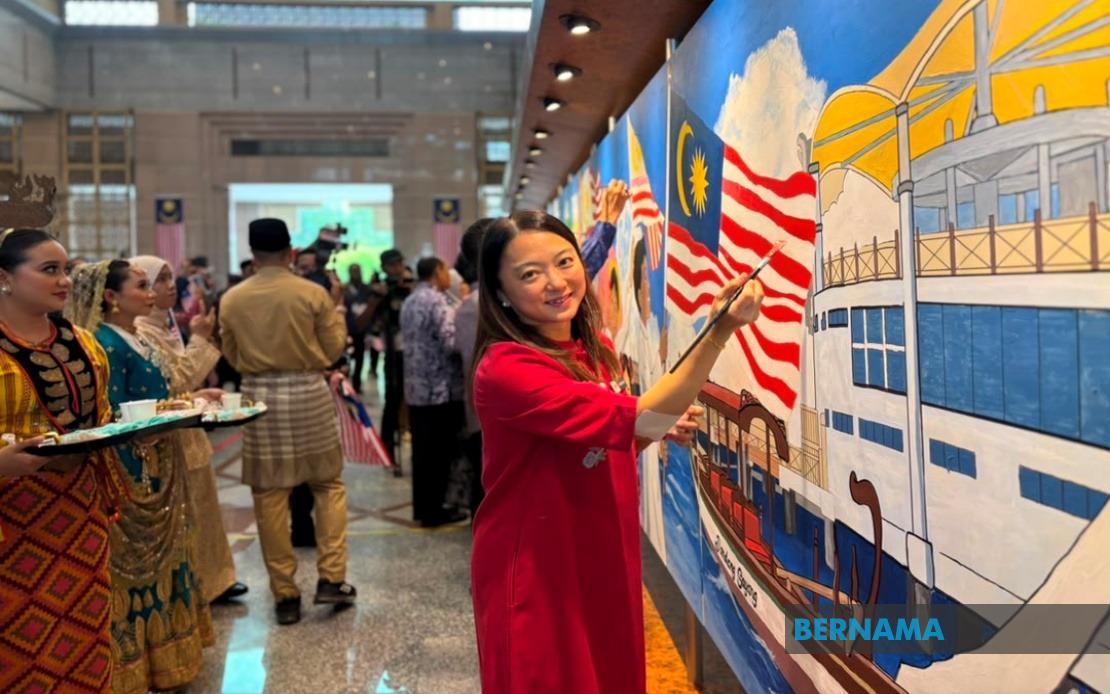
The Federal Territories have received more than 62,000 national flags as part of a coordinated push to bolster patriotic displays ahead of the 2026 National Day and Malaysia Day festivities. Since the start of August, officials have been strategically placing 62,386 Jalur Gemilang flags throughout Kuala Lumpur, Putrajaya and Labuan, with placements concentrated along ceremonial routes and across neighbourhoods and commercial zones.
Hannah Yeoh, the Minister in the Prime Minister's Department overseeing the Federal Territories, unveiled the scale of the initiative while emphasising a parallel message about flag etiquette. Speaking after the Aspirasi Jalur Gemilang: Mural Kemerdekaan programme in Putrajaya, she stressed that the distribution reflected a broader national effort to encourage Malaysians to express their patriotism visibly, both in physical spaces and through digital channels including social media platforms.
A core element of the government's messaging has centred on removing barriers to flag display. Yeoh acknowledged that some citizens harbour concerns about whether they understand the correct protocols for hoisting the national flag, and the government has responded by making instructional materials freely accessible online. Rather than fostering apprehension, officials want to cultivate an environment where displaying the Jalur Gemilang feels natural and encouraged, rooted in civic pride rather than regulatory anxiety.
The emphasis on proper display procedures reflects institutional concerns about flag mishandling. Yeoh called upon corporate entities and government agencies to invest in training their staff, ensuring that anyone responsible for raising or positioning the Jalur Gemilang understands the relevant guidelines. She further recommended that supervisory personnel conduct quality checks before flags are publicly displayed, preventing avoidable breaches of protocol that could otherwise undermine the dignity of the national symbol.
Educational reinforcement forms another pillar of the campaign strategy. Yeoh noted that inculcating respect for the flag should commence during childhood and consolidate through schooling, embedding patriotic practice as a natural reflexive behaviour rather than an obligation imposed from above. This developmental approach suggests that the government views flag etiquette as inseparable from broader civic education objectives.
The Federal Territories Department and Putrajaya Corporation, represented by director-general Datuk Muhammad Azmi Mohd Zain and corporation president Datuk Mohd Sakeri Abdul Kadir respectively, coordinated the distribution logistics alongside the ministerial office. Their involvement underscores the multi-agency nature of the commemorative effort, requiring coordination across federal administrative structures.
On the symbolic level, authorities marked the campaign with the completion of a monumental Independence Mural stretching 25.40 metres across Menara Seri Wilayah in the capital. The artwork synthesises visual representations of each Federal Territory—Kuala Lumpur, Putrajaya and Labuan—alongside the Jalur Gemilang, creating a singular composition that interweaves geographic and national identity. Yeoh personally participated in the mural's finalisation, signalling executive commitment to the patriotic messaging.
The timing of the 2026 campaign arrives as Malaysia approaches a significant commemorative year. Both National Day and Malaysia Day assume heightened resonance as the nation continues navigating contemporary political and social complexities. Flag campaigns function as mechanisms for channelling collective identity, and authorities are evidently attempting to capitalise on forthcoming celebrations to reinforce national cohesion.
For Malaysian businesses and property owners, the initiative creates both opportunity and responsibility. The wide availability of flags removes logistical obstacles to participation, whilst the accompanying guidance mitigates concerns about inadvertent non-compliance. Yet the government's consistent messaging about correct protocol suggests that instances of improper flag display have warranted official attention, indicating that visual patriotic expression requires careful calibration.
The distribution across residential, commercial and ceremonial zones reflects deliberate demographic reach. Rather than concentrating flags solely at government buildings or ceremonial sites, the strategy encompasses everyday spaces where ordinary citizens reside and work. This diffusion strategy aims to normalise flag presence and encourage decentralised participation in national commemoration.
Social media integration represents a contemporary extension of traditional flag-flying practices. By explicitly inviting citizens to share images of their flag displays online, the government attempts to amplify the campaign's visibility beyond physical space, creating digital echoes of patriotic expression. This dual-channel approach acknowledges how modern Malaysians experience national identity through both tangible and virtual environments.
Looking forward, the success of the HKHM 2026 campaign will likely be measured not merely in flags distributed but in their visible presence across the Federal Territories come celebration time. The government's substantial investment in distribution combined with sustained messaging about proper protocol suggests confidence that citizens will participate meaningfully. Equally, the emphasis on accessible guidance and institutional buy-in indicates an understanding that patriotic display functions best when citizens feel empowered rather than scrutinised.

