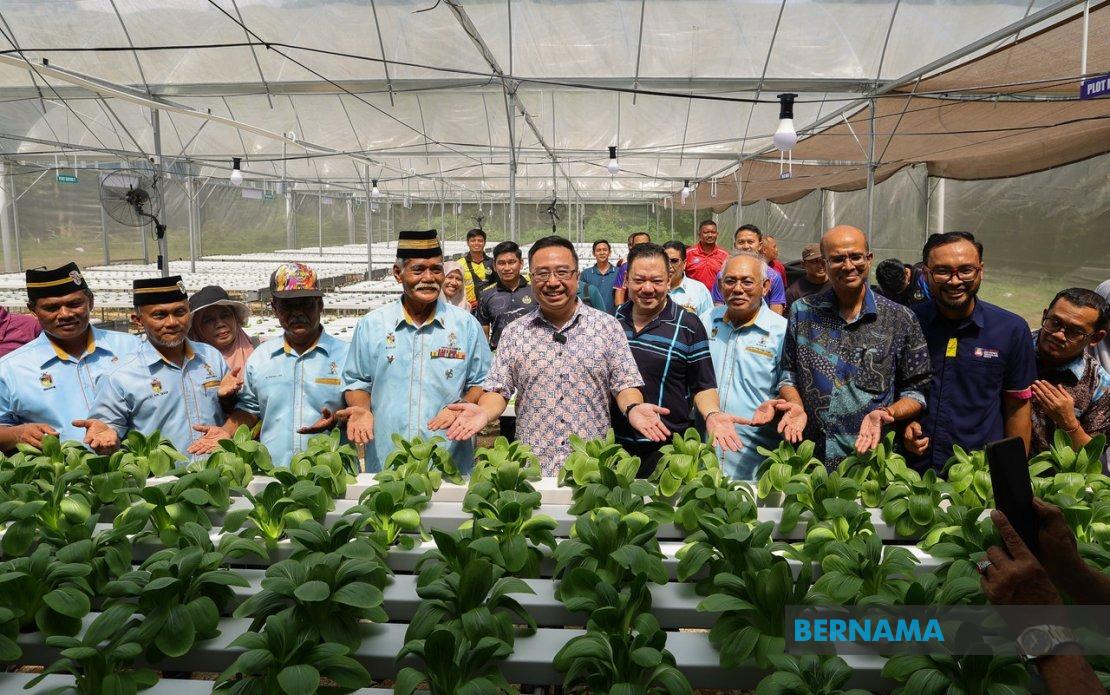
The Malaysia Social Innovation Programme (MyIS Komuniti) has emerged as a significant vehicle for community development, having directly benefited over 6,700 individuals through 67 separate initiatives that have collectively invested RM13.97 million since 2021. The programme, overseen by Yayasan Inovasi Malaysia (YIM) since its inception in 2015, represents a strategic approach to embedding sustainable technology within communities across the nation, addressing dual imperatives of technological adoption and socioeconomic advancement. The latest milestone was marked at the launch of a dedicated aquaponics project site in Pasir Panjang, Port Dickson, where Science, Technology and Innovation Minister Datuk Chang Lih Kang outlined the initiative's broader mandate to foster inclusive and sustainable development.
The Pasir Panjang venture, allocated RM251,616 under the MyIS framework, illustrates how targeted innovation can transform localised agricultural practices. Integrated aquaponics represents a departure from conventional farming methods, merging fish aquaculture with plant hydroponics into a closed-loop system that maximises resource efficiency. Within this arrangement, nutrient-rich water discharged from fish tanks becomes the primary fertiliser for vegetable cultivation before being cycled back into the system, substantially reducing water consumption whilst simultaneously minimising agricultural waste. This technological approach proves particularly relevant for Malaysia's tropical climate and space constraints in urban and semi-urban communities, offering alternatives to land-intensive traditional farming.
The aquaponics facility incorporates modern monitoring capabilities through Internet of Things (IoT) technology paired with solar power systems, enabling real-time surveillance of critical parameters including water quality, temperature fluctuations, and overall system performance. Such technological integration permits early detection of operational anomalies, allowing communities to implement corrective measures before potential crop losses materialise. This intelligence-based management approach reduces risk exposure for participants whilst simultaneously developing their technical competencies in environmental monitoring and digital systems management.
Production metrics from the current year demonstrate the programme's tangible outputs, with the Pasir Panjang site generating in excess of 800,000 kilogrammes of vegetables. Whilst fish farming operations remain in developmental stages, the vegetable production alone indicates substantial food security implications for participating communities. Universiti Teknologi MARA (UiTM), through its Research Nexus division, has contributed technical expertise in designing and optimising the aquaponics infrastructure, establishing an important linkage between academic institutions and community-level implementation.
The beneficiary base extends beyond individual household participants to include collective stakeholder groups. The Negeri Sembilan JLJD Veterans Association, comprising more than 100 members, has engaged both as direct recipients of the programme's benefits and as strategic implementation partners. This dual-role participation creates mutual reinforcement wherein veterans gain practical skills and supplementary income whilst simultaneously contributing their organisational capacity to project sustainability. The arrangement demonstrates how established community organisations can serve as effective distribution channels for government innovation initiatives whilst maintaining beneficiary engagement beyond initial deployment phases.
Market linkages represent a critical component determining whether community-level agricultural production translates into genuine economic opportunity rather than subsistence activity. The Pasir Panjang project has established direct consumer sales channels whilst simultaneously leveraging support from the Federal Agricultural Marketing Authority (FAMA), which provides aggregation, branding, and distribution infrastructure. This bifurcated marketing approach enables participants to capture consumer premiums through direct relationships whilst simultaneously accessing larger institutional buyers through FAMA's established networks. For communities transitioning from hobby agriculture to genuine income-generating activity, such market access mechanisms determine viability and scalability.
The broader MyIS Komuniti framework addresses a recognised constraint within Malaysian development initiatives: the technology-adoption gap that persists despite significant infrastructure investments. By bundling technology provision with knowledge transfer and skills development, the programme creates conditions whereby communities develop genuine ownership over technological systems rather than treating them as externally-imposed impositions. This approach recognises that technology adoption succeeds only when communities understand operational principles, possess troubleshooting capabilities, and perceive tangible personal benefit.
Sustainability represents the conceptual anchor throughout MyIS Komuniti's design, manifesting across environmental, economic, and social dimensions. The aquaponics methodology exemplifies environmental sustainability through circular resource management and renewable energy integration. Economic sustainability emerges through income generation and skills development that enhance employability within the green technology sector. Social sustainability derives from improved food security, community cohesion around shared productive assets, and the intergenerational knowledge transfer implicit in skills training programmes.
For Malaysian policymakers and development agencies, the MyIS Komuniti model offers instructive lessons regarding community-centred innovation policy. By situating technological advancement within communities' actual economic contexts rather than imposing externally-determined solutions, the programme increases adoption probability and long-term sustainability. The RM13.97 million investment across 67 projects, whilst substantial, remains modest relative to its reach across 6,700 beneficiaries, suggesting strong cost-efficiency in social innovation delivery. The continued expansion of such initiatives could meaningfully address regional development disparities, particularly within rural constituencies where technology adoption remains constrained by capital limitations and knowledge gaps.
Looking forward, the Pasir Panjang aquaponics facility serves as a demonstration site from which adjacent communities can observe practical implementation, reducing information asymmetries that typically inhibit technology adoption. The involvement of academic institutions through UiTM establishes mechanisms for continuous technical refinement and quality assurance. As MyIS Komuniti matures beyond its foundational phase, the accumulation of implementation experience and documented outcomes should inform scaling decisions, potentially positioning community-centred aquaponics as a replicable model across Southeast Asia's densely populated regions where food security and sustainable agriculture intersect with limited arable land availability.

