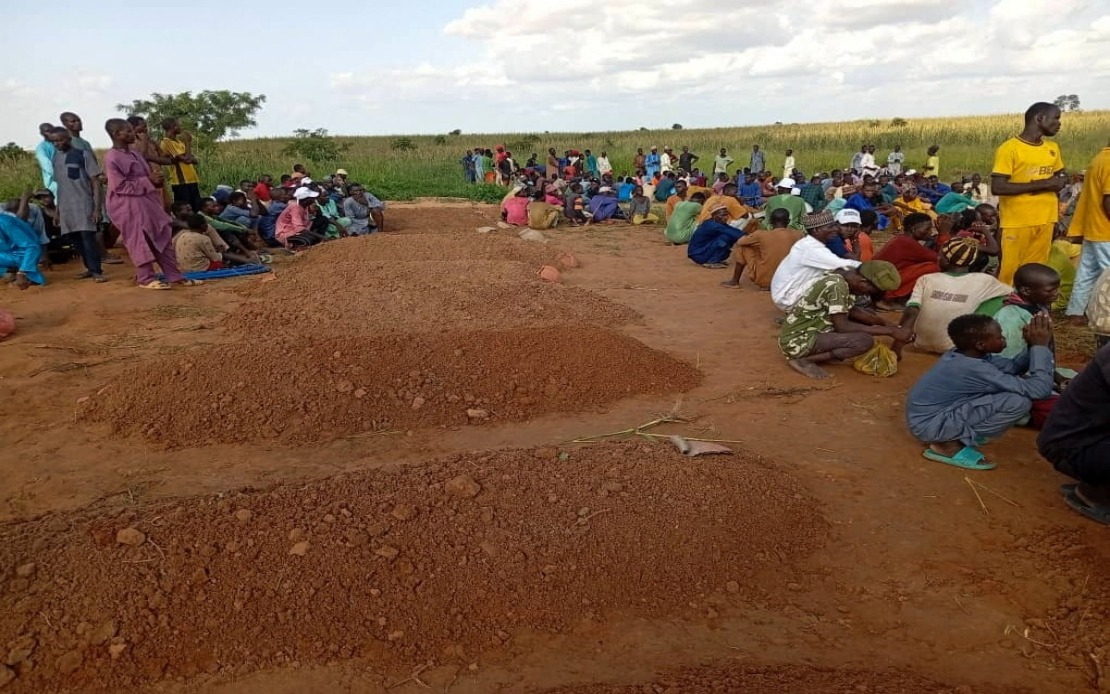
A catastrophic maritime incident in northwestern Nigeria has claimed more than 40 lives, with most victims being children, underscoring the escalating dangers facing communities that depend on inland waterways across West Africa. The vessel sank near Gorau town in Goronyo Local Government Area of Sokoto State on Thursday as passengers travelled to agricultural fields for rice cultivation activities, according to eyewitness accounts and government sources.
Official estimates place the death toll at 40, though this figure remains provisional as recovery operations continue. However, community members present at the disaster site reported finding approximately 47 bodies, many of which were carefully wrapped in mats and traditional cloth before being brought to a local mosque in Gorau for evening burial proceedings. The discrepancy between official and on-the-ground counts underscores the confusion and uncertainty that typically accompanies such emergencies in remote areas with limited administrative infrastructure.
Abdulkadir Yusuf, who manages operations for Nigeria's National Inland Waterways Authority in Sokoto State, confirmed the initial death toll while cautioning that investigations were still verifying the precise number of fatalities. His acknowledgement that figures were being confirmed reflects the logistical challenges authorities face when responding to disasters in communities with limited communication networks and medical facilities.
Representatives from affected communities provided further details about the tragedy's human dimensions. Nasiru Adamu, a legislator in the Sokoto State House of Assembly representing the affected area, revealed that the boat was transporting nearly 70 individuals, with the majority being children aged between 10 and 15 years old. He noted that whilst over 40 bodies had already been recovered by Thursday, rescue teams had successfully pulled 16 survivors from the water as search efforts continued. This survival rate, though modest, offered some relief to the devastated region.
Personal testimonies illustrated the scale of individual loss. Samaila Garba, a 55-year-old local resident, lost his 13-year-old granddaughter, Jamila Usman, in the incident. Garba's own count of the deceased—at least 42 bodies—aligned closely with other observer estimates, and he confirmed that the majority of victims were women and children, suggesting that male household members may have been absent working in fields or other locations when the tragedy occurred.
Local dive teams continued searching the waterway through Thursday evening and into subsequent days, attempting to locate any remaining survivors whilst recovering additional bodies from the riverbed. The ongoing nature of recovery operations reflected both the urgent need to account for all passengers and the painstaking process of searching murky waters in regions with limited modern search equipment.
This incident represents another painful chapter in a troubling pattern affecting Nigeria's inland waterway system. Safety failures across the nation's network of rivers, creeks, and channels have become distressingly routine, with overcrowding, inadequate vessel maintenance, and lax enforcement of maritime safety standards creating conditions ripe for disaster. The rainy season, which brings flooding and swifter currents, consistently produces clusters of fatal accidents as communities continue relying on boats despite heightened risks.
Similar tragedies have plagued the region with alarming frequency. Just eight months earlier, in January of the same year, at least 25 individuals perished when a boat with a known leak sank in Yobe State, located in northeastern Nigeria. That incident, like the Sokoto capsizing, involved an aging vessel with documented maintenance issues carrying far more passengers than safety standards would permit. The recurring nature of these disasters suggests systemic failures rather than isolated incidents.
For Malaysian and Southeast Asian observers, this tragedy offers sobering lessons about the consequences of inadequate maritime regulation in developing regions. While Malaysia has invested substantially in modernising its inland waterway safety systems through the Malaysian Maritime Enforcement Agency and regular vessel inspections, countries across Southeast Asia continue grappling with similar challenges. Communities in remote areas of Cambodia, Laos, Myanmar, and Indonesia regularly face comparable risks when relying on aging boats operated without proper safety oversight.
The tragedy in Sokoto highlights how poverty and geographic isolation intersect dangerously with weak governance. Farmers and labourers in areas lacking reliable road infrastructure have little choice but to depend on waterborne transport, yet authorities fail to ensure that vessels operating in these regions meet basic safety standards or carry appropriate safety equipment. The deaths of predominantly children and women suggest vulnerability, possibly indicating that men from affected households were temporarily absent for work, amplifying the tragedy's impact on family structures and community resilience.
Regional governments face mounting pressure to address these recurring crises through comprehensive reform. Effective solutions require simultaneous action on multiple fronts: rigorous vessel inspection protocols, enforceable passenger capacity limits, mandatory safety equipment, operator licensing requirements, and swift response capabilities for emergencies. Without such integrated approaches, similar disasters will inevitably recur, continuing to claim preventable lives among some of West Africa's most vulnerable populations. The pattern demands urgent political will and sustained investment, not merely expressions of sympathy following each tragedy.

