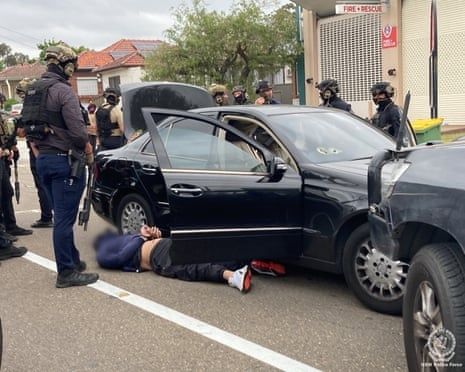
New South Wales Police have concluded their latest intensive enforcement campaign against crime on public transport, announcing the arrest of 356 individuals across a three-day period from Thursday to Saturday. The operation, known as Phase Six of Operation Waratah, mobilised over 400 police officers daily throughout NSW's sprawling public transport network, reflecting the state's commitment to maintaining safety on trains, light rail trams, buses and ferries. This latest enforcement push brings the cumulative arrest tally under Operation Waratah since its inception in 2024 to more than 1,800 individuals.
The scale of the policing effort underscores the perceived magnitude of transport-related crime in Australia's most populous state. With more than 400 officers deployed each day across NSW's diverse transport corridors, the operation represents a significant resource commitment to a problem that appears to be gaining political and public attention. The breadth of the deployment—across trains, light rail, buses and ferries—suggests that violent and sexual offences are not confined to any single mode of transport but represent a systemic concern across the entire network.
During the three-day enforcement window, police recorded 137 drug-related detections alongside weapon seizures that yielded 28 knives and other weapons from individuals found on public transport. These findings paint a picture of transport environments where passengers may encounter not only aggressive behaviour but also drug trafficking and the circulation of dangerous implements. The cumulative charge count—645 offences against 356 arrested individuals—indicates that many detainees faced multiple charges, suggesting a pattern of serious criminal conduct among those targeted.
The operational scope was demonstrably comprehensive, with officers conducting patrols aboard 539 trains, 127 buses and 29 light rail trams during the three-day phase alone. This breadth of coverage highlights both the challenge of policing public transport and the numerical advantage law enforcement requires to create a visible deterrent across such an extensive system. For regular commuters in NSW, such operations may offer temporary reassurance, though the ongoing need for repeated enforcement phases suggests the underlying problem remains persistent.
Operation Waratah itself has become a recurring feature of NSW's law enforcement calendar since commencing in 2024. The decision to implement this operation and its continuation through multiple phases reflects how authorities are responding to community concerns about safety on buses, trains and ferries. The naming convention—now in its sixth phase—suggests an established pattern of periodic, intensive enforcement rather than a permanent increased presence, which carries different implications for deterrence and public reassurance.
For Malaysian readers and Southeast Asian observers, the NSW approach offers insights into how developed democracies address public transport crime. The visible, scheduled nature of Operation Waratah contrasts with the more continuous enforcement models employed in some regional jurisdictions. Australia's reliance on periodic intensive operations may reflect different crime patterns, policing philosophies or resource constraints compared to approaches used in transport systems throughout Malaysia and the wider region.
The prevalence of weapon seizures during transport operations is particularly notable. Twenty-eight weapons recovered across a single three-day operation suggests that knife and weapon carrying on public transport remains a significant behavioural issue in NSW despite years of public messaging and enforcement. This pattern may indicate that deterrence through policing alone has limitations, pointing potentially toward the need for complementary prevention strategies.
The sexual offence component explicitly mentioned in Operation Waratah's mandate distinguishes it from crime-fighting operations focused solely on violent robbery or assault. The specific targeting of sexual offenders on public transport acknowledges that transport networks present particular vulnerabilities—crowded platforms, isolated late-night services and the transient nature of encounters all create environments where perpetrators may believe consequences are unlikely. This concern appears relevant across developed transport systems globally.
The 1,800-plus arrests since Operation Waratah's 2024 launch represent a substantial enforcement volume, yet the need to conduct subsequent phases suggests that arrest rates alone may not be achieving lasting reductions in transport crime. Criminologists and law enforcement agencies in other jurisdictions wrestling with similar problems might question whether the operation demonstrates enforcement success or, alternatively, highlights the challenge of addressing behaviours through police intervention when underlying drivers remain unaddressed.
For NSW transport users and policymakers, the data raises important questions about sustainable solutions. The operation demonstrates law enforcement capability but also reveals continuing crime despite previous enforcement phases. This pattern often prompts discussion about investment in prevention, social interventions, mental health support and environmental design alongside traditional policing—an integrated approach increasingly advocated in criminological research across the developed world.

