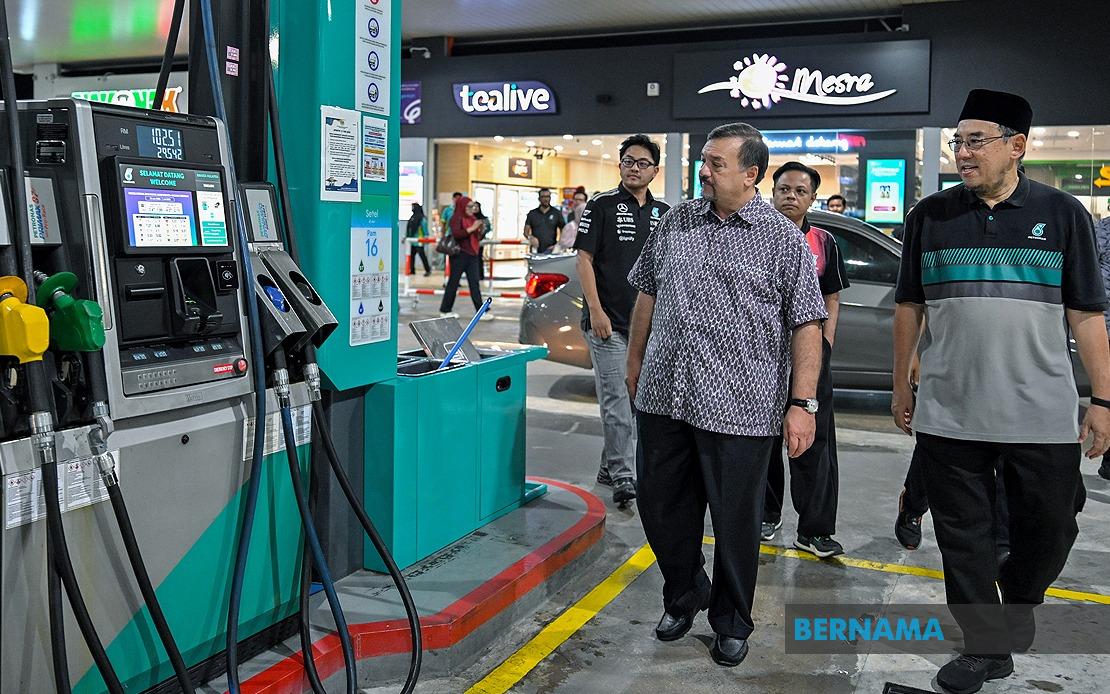
Malaysia's newly launched BUDI MADANI Diesel programme is drawing substantial interest from vehicle owners, with more than 18,000 applications lodged for additional subsidised fuel quotas within the first 48 hours of its early implementation phase. According to Second Finance Minister Datuk Seri Amir Hamzah Azizan, the programme has processed over 40,000 transactions since launching on June 27, indicating robust engagement from eligible drivers of diesel-powered pickup trucks and sport utility vehicles across Peninsular Malaysia.
The rapid uptake reflects both the appeal of the subsidy and the relative smoothness of the digital infrastructure supporting the scheme. Amir Hamzah inspected operations at the NKVE Damansara Bound Petronas petrol station alongside Treasury secretary-general Tan Sri Johan Mahmood Merican, confirming that no significant technical glitches or operational disruptions have emerged during the critical early rollout phase. This frictionless launch contrasts sharply with past government subsidy initiatives, which have sometimes struggled with digital portal congestion or system failures.
The BUDI Diesel programme extends an extra 100 litres of subsidised fuel per month to eligible vehicle owners, functioning within a flexible overall quota structure of up to 200 litres monthly. The fuel is priced at RM2.15 per litre during the current early implementation phase, with a further reduction to RM2.10 per litre scheduled to take effect from June 30. These subsidised rates represent meaningful savings compared to market prices, particularly for commercial operators and those relying on diesel vehicles for business purposes.
Accessibility has been deliberately expanded beyond the digital portal to accommodate users with varying comfort levels with online systems. The government has established multiple support channels for applications, including assistance desks at Inland Revenue Board offices, Urban Transformation Centres, and service counters operated by several major oil companies. This multi-channel approach recognises that some vehicle owners, particularly those in rural areas or older demographics, may prefer in-person assistance when navigating quota applications. The availability of offline support pathways reduces potential barriers to participation and helps ensure equitable access to the subsidy across different demographic segments.
A particularly innovative feature addresses the common situation where vehicle ownership and actual usage diverge. The programme incorporates a quota transfer facility enabling registered owners to reassign their subsidised fuel allocation to the person who actually operates the vehicle. This proves especially valuable for commercial arrangements where a company owns vehicles operated by employees, or in family situations where one spouse may be registered owner while another handles regular driving duties. Transfer applications proceed through the same official BUDI MADANI portal, and once approved, the system tags the quota to the actual user's identity card number rather than maintaining attachment solely to the vehicle.
When quota transfers are activated, the verification mechanism at petrol stations relies on the identity card number of the designated user, creating a straightforward point-of-sale process. The system recognises transferred quotas automatically when presented at pump terminals, eliminating confusion or delays at the forecourt. Despite this transfer capability, the underlying quota remains formally linked to the specific vehicle and cannot be subdivided or shared among multiple drivers. This architecture balances operational flexibility with governance clarity, preventing quota leakage whilst accommodating legitimate variations in vehicle usage patterns.
The absence of technical complications reported after two days of nationwide operation represents a significant achievement for government digital infrastructure. Modern subsidy schemes depend entirely on robust backend systems, secure identity verification, and reliable communication between the BUDI MADANI portal and point-of-sale systems across thousands of petrol stations. The flawless operation through the first weekend suggests that system architects invested considerable effort in capacity planning, load testing, and contingency arrangements prior to launch. This technical success matters because early programme glitches can damage public confidence and create cascading issues as frustrated users attempt to resubmit applications simultaneously.
As Malaysia approaches the official July 1 launch date for the broader programme, government officials are emphasising their commitment to maintaining operational stability. The early implementation phase, limited to Peninsular Malaysia, effectively functions as an extended pilot scheme, allowing administrators to identify and resolve any emerging issues before the scheme expands to Sabah and Sarawak. Any technical problems or administrative bottlenecks identified during these first weeks can be remedied before the national rollout, preventing widespread disruption that might undermine public support for the subsidy initiative.
The BUDI Diesel programme forms part of the broader BUDI MADANI initiative, reflecting government priorities around targeted subsidies and support for specific business segments. The focus on diesel vehicle owners acknowledges that this category relies heavily on fuel costs for operational viability, whether in agriculture, small-scale commercial transport, or smallholder businesses. By providing subsidised fuel specifically to this segment rather than through blanket petrol price controls, the government aims to deliver meaningful support whilst maintaining fiscal discipline and avoiding the broader economic distortions associated with economy-wide subsidies.
For Malaysian readers monitoring subsidy policies, the strong early uptake and technical stability of BUDI Diesel suggests the government's digital infrastructure capabilities have matured substantially. The ability to process over 40,000 transactions smoothly whilst managing quota transfers and eligibility verification demonstrates competence in complex digital administration. This has implications beyond fuel subsidies, suggesting that future government digital initiatives—whether in social welfare, tax administration, or licensing—may benefit from lessons learned during this deployment. The BUDI MADANI portal infrastructure could potentially be adapted for other applications requiring identity verification, eligibility assessment, and real-time transaction processing across distributed networks of service points.
Looking ahead, the trajectory of applications and transaction volumes will provide important indicators regarding the scheme's ultimate reach. Government projections for total eligible beneficiaries will become clearer as the early implementation phase continues through June and into the official launch period. The apparent ease of application and transfer processes suggests that uptake may well exceed initial official estimates, placing greater demands on fuel supply chains and government subsidy budgets. Monitoring these metrics will prove essential for assessing whether the BUDI DIESEL programme achieves its intended impact of meaningfully supporting diesel-dependent economic sectors without creating unintended consequences elsewhere in the economy.

