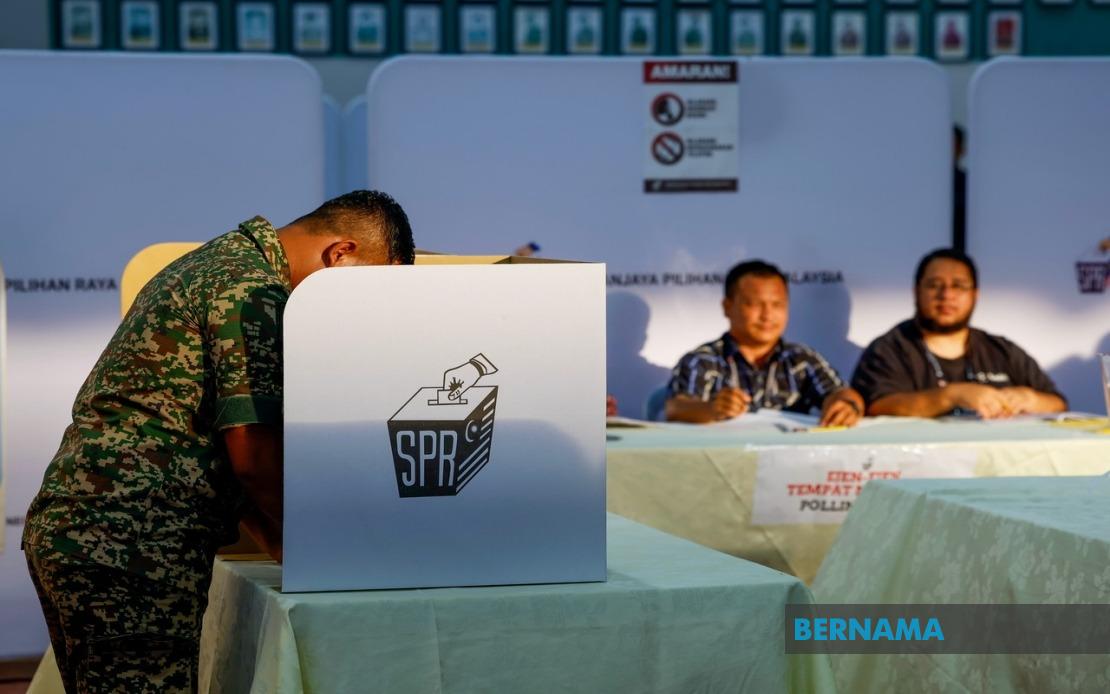
Approximately 14.31 per cent of eligible early voters in the 16th Negeri Sembilan state election have already fulfilled their voting obligations by 9 am, according to figures released by the Election Commission through its official Facebook page. The mid-morning turnout reflects participation from military personnel and police officers along with their spouses, marking a steady pace in the preliminary polling phase ahead of the main election day.
The early voting exercise brought together 22,389 registered early voters across 38 polling centres that opened their doors simultaneously at 8 am. These centres comprise military and police constituencies throughout Malaysia, recognising the special voting arrangements extended to uniformed personnel who may be unavailable for general polling. The creation of dedicated polling facilities underscores the Election Commission's commitment to ensuring comprehensive electoral participation among those serving in security forces.
Breaking down the figures, the early voter count included 1,431 military personnel and 925 police officers, along with their spouses. This composition reflects the core demographic eligible for advance voting—individuals whose operational duties and postings across the country would otherwise prevent them from voting on general polling day. The inclusion of spouses acknowledges the practical reality that military and police families often relocate for professional purposes, potentially distancing them from their registered constituencies.
The staggered closing schedule of the 38 polling centres between noon and 5 pm, adjusted according to local conditions and voter registration numbers, demonstrates administrative flexibility in managing the voting process. This approach prevents bottlenecks at individual centres while accommodating variations in expected voter turnout across different locations. The phased closure ensures that registered early voters have adequate time to cast their ballots without undue congestion.
The broader electoral context for the Negeri Sembilan state election involves 103 candidates competing for 36 state assembly seats. This candidate-to-seat ratio of approximately 2.86 indicates a moderately contested election, suggesting competitive races in multiple constituencies. The diverse candidacy reflects participation from various political parties and independent aspirants seeking representation in the state legislature.
General polling for the Negeri Sembilan state election is scheduled for July 28, with an estimated 889,490 voters expected to participate on that day. This figure substantially dwarfs the early voter participation, highlighting that the vast majority of the electorate will exercise their franchise during the standard polling period. The considerable size of the general voting population underscores the importance of efficient polling station operations and adequate resources on the main voting day.
For Malaysian readers, the early voting system represents an important accommodation within the electoral framework, recognising the unique circumstances of uniformed personnel whose geographic deployment and operational requirements may conflict with standard polling schedules. This mechanism ensures that security forces can participate in democratic processes without compromising their professional obligations, a principle fundamental to maintaining the integrity of both electoral participation and national security operations.
The turnout figure of 14.31 per cent by mid-morning suggests a reasonable pace of voting during the early phase. Election observers and administrators typically monitor these figures to gauge overall engagement and predict potential trends in voter participation. A steady early voting rate often correlates with higher overall electoral participation, though mid-morning figures provide only a partial picture of final early voting totals.
Negeri Sembilan voters should note that the 36 state seats being contested will determine the state government composition and legislative agenda for the coming term. The outcome of this election carries implications beyond the state level, as state legislatures collectively contribute to broader political dynamics within Malaysia's federal system. Changes in state government can influence regional development priorities, allocation of state resources, and representation in the Conference of Rulers.
For Southeast Asian observers, the Negeri Sembilan election exemplifies Malaysia's commitment to conducting regular democratic exercises at the state level, maintaining the federal structure's vibrancy through regular electoral cycles. The attention to administrative detail in accommodating early voters demonstrates institutional maturity in election management, a factor that strengthens regional confidence in Malaysia's democratic processes. As one of the smaller states by population, Negeri Sembilan's electoral conduct serves as a microcosm of national electoral standards and procedures.

