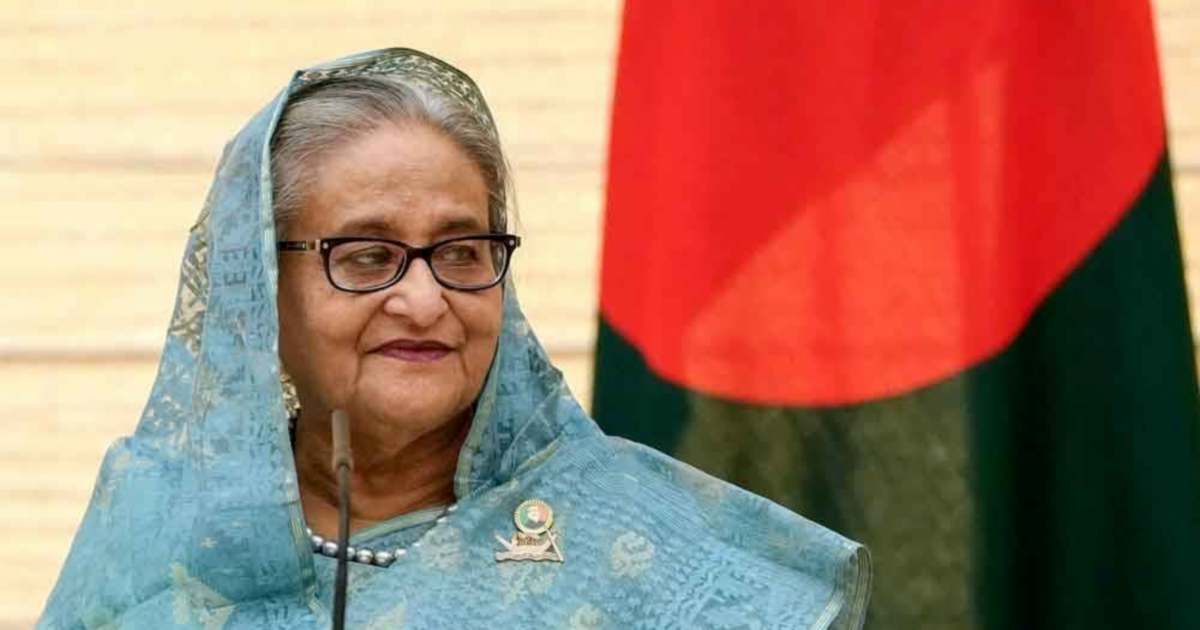
Sheikh Hasina, Bangladesh's ousted former prime minister, has declared her determination to return to her homeland this year despite a death sentence pronounced against her in absentia, signalling a defiant stance against the interim regime that took power following her flight from the country. The statement, released from her current location outside Bangladesh, represents her most forceful commitment yet to reclaim her position and challenge what she characterises as a fundamentally flawed judicial process designed to eliminate her political influence.
Hasina's bold assertion comes amid an intensifying power struggle between the exiled leader and the current interim government that has undertaken sweeping governance changes since her departure. The death sentence, handed down through what she describes as an unconstitutional and politically motivated judicial process, appears unlikely to deter her from pursuing her stated objective of returning before the year concludes. This determination underscores the deep polarisation that continues to define Bangladesh's political landscape, with Hasina's faction maintaining significant support despite the dramatic circumstances of her exit.
The ousted premier's criticism of the legal proceedings extends beyond the death sentence itself. She has challenged the entire framework under which the ruling was delivered, arguing that the judicial system has been weaponised by political opponents to eliminate a rival rather than administer justice according to established constitutional principles. This perspective resonates with her supporters, who view the current regime as illegitimate and motivated primarily by factional interests rather than national governance.
Hasina's return, should it materialise, would represent a seismic shift in Bangladesh's political dynamics. Her Awami League party, despite facing severe restrictions and harassment under the interim administration, retains substantial grassroots support, particularly among urban populations and younger voters who benefited from her government's development initiatives. The prospect of her homecoming has the potential to reignite major demonstrations and political confrontation in the streets of Dhaka and other urban centres.
From a regional perspective, Hasina's situation carries implications for Southeast Asia's democratic trajectory. Bangladesh's political instability has historically attracted external attention from major powers, and her exile represents a significant disruption to the balance that existed during her lengthy tenure as prime minister. Neighbouring countries and international observers are closely monitoring whether her return attempt will be permitted, and how such a development might affect bilateral relationships and the broader geopolitical landscape in South Asia.
The interim government, which has consolidated institutional control and introduced constitutional amendments during her absence, faces a critical test if Hasina makes good on her pledge. Officials have given no indication that they would permit her to return and resume political activities, creating the possibility of direct confrontation at borders or airports. The government's response to any return attempt would signal whether the current administration genuinely intends to guide the nation toward elections or instead plans to entrench its own power indefinitely.
For Malaysian observers and analysts, the Bangladesh situation offers a cautionary tale about political stability and institutional vulnerabilities. The speed with which Hasina's government collapsed and the subsequent consolidation of interim authority demonstrate how fragile democratic systems can become when institutional safeguards are weakened and factional competition becomes personalised rather than institutionalised. Malaysia's own experiences with leadership transitions and political competition provide instructive parallels.
Hasina's reference to the ruling as unconstitutional carries substantial legal weight in Bangladesh's jurisprudence, where the constitution is theoretically supreme and cannot be overridden by legislative or executive action. By framing the death sentence within this constitutional context, she appeals to legal principles that extend beyond partisan politics and potentially attract support from civil society organisations, legal professionals, and international human rights advocates who scrutinise Bangladesh's judicial independence.
The timeline suggested by Hasina—a return within 2024—adds urgency to the underlying political tension. If her return does not materialise by year's end, her credibility among supporters may diminish, potentially strengthening the interim administration's position. Conversely, any attempt to return could trigger the largest political confrontation since her departure, with unpredictable consequences for civil order and economic stability in a nation of nearly 170 million people.
International observers, including Western governments and human rights organisations, have expressed concern about the trajectory of Bangladesh's governance since Hasina's exit. Her return pledge, if fulfilled, would test whether the international community would permit or implicitly support what many would characterise as political justice rather than judicial fairness. The outcome of this developing situation will substantially influence how other authoritarian-leaning governments in the region handle political opposition and transitions of power.

