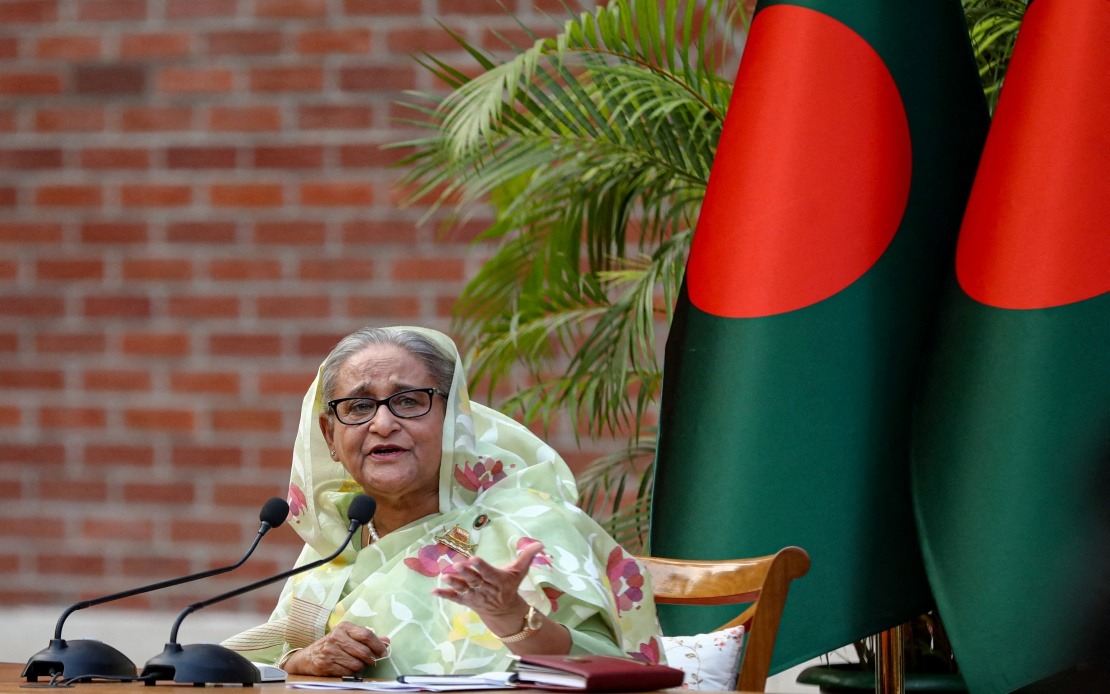
Sheikh Hasina, Bangladesh's ousted Prime Minister now living in exile in India, has declared her resolve to return to her homeland and submit to legal proceedings, fully acknowledging the grave consequences she may face. The 78-year-old made her position clear through a written interview with Kyodo News, stating unequivocally that she will come back to face judgment regardless of whether the outcome is imprisonment or capital punishment. Her determination underscores a significant moment in Bangladesh's turbulent political transition, where questions of accountability, justice, and democratic legitimacy remain deeply contested among rival political factions and international observers.
Hasina's conviction stems from events that shook Bangladesh to its core during the latter half of 2024. What began as a student-led protest against a court ruling that reinstated a 30 percent job quota for descendants of the 1971 independence war eventually snowballed into a comprehensive anti-government movement challenging her administration's authority. The escalating demonstrations pitted student activists against security forces and supporters of Hasina's then-ruling Awami League, resulting in widespread violence and bloodshed across the nation. The United Nations later documented approximately 1,400 deaths during the unrest, with most casualties attributed to gunfire from security personnel, though Hasina has consistently denied authorising the use of lethal force against protesters.
In November 2025, Bangladesh's war crimes tribunal sentenced Hasina to death in absentia, citing crimes against humanity in connection with the crackdown. The decision marked an escalation in the legal confrontation between the ousted leader and the current authorities overseeing Bangladesh's post-Hasina governance structure. Currently residing in India following her August 2024 departure, Hasina now faces the possibility of extradition, as Bangladesh has formally requested New Delhi's assistance in returning her to face trial. India's Ministry of External Affairs acknowledged receipt of the extradition request and indicated it was reviewing the matter through the lens of applicable legal and judicial frameworks, signalling a careful diplomatic approach to an increasingly sensitive bilateral matter.
For Malaysian and broader Southeast Asian audiences, the Bangladesh crisis carries significant implications for regional stability and the treatment of displaced political leaders. The situation exemplifies how political upheaval in one country can create complex international legal entanglements, particularly when exiled leaders seek refuge in neighbouring nations with whom they maintain historical ties. Bangladesh's instability during transitions of power serves as a cautionary tale for other democracies in the region still grappling with questions of how to manage peaceful power transfers and safeguard vulnerable populations during periods of political contestation.
Hasina's defence against the conviction centres on her assertion that the charges are fundamentally political in nature rather than based on genuine evidence of criminal wrongdoing. She has proposed that independent international forensic experts could examine the circumstances of deaths occurring during the unrest, including examination of the specific weapons and ammunition responsible for fatalities. Such a proposal reflects her strategy of appealing to international standards of justice and forensic investigation, positioning herself as willing to submit to scrutiny by neutral parties. This approach, while potentially strengthening her case internationally, simultaneously acknowledges the polarised nature of the political environment within Bangladesh itself, where her conviction by a war crimes tribunal reflects the dominant view among current authorities and significant portions of the population.
The transition of power in Bangladesh has been extraordinarily complex, involving multiple institutional changes that have reshaped the nation's political landscape. Following Hasina's departure, Nobel Peace Prize laureate Muhammad Yunus assumed leadership of an interim government, having been proposed for the role by student protest leaders who spearheaded the anti-Hasina movement. Subsequently, February 2026 elections brought the opposition Bangladesh Nationalist Party to power, with Tarique Rahman assuming the prime ministerial office. The new administration has moved decisively to consolidate its political position, including banning all activities of Hasina's Awami League since May 2025, effectively removing the former ruling coalition from legitimate political participation.
Rahman's government has publicly stated its commitment to bringing Hasina back to Bangladesh to face trial, with an information adviser to the Prime Minister confirming in mid-July that authorities were seeking her extradition and would afford her the opportunity to present her legal defence. This official position contrasts somewhat with the climate of political tension surrounding the case, suggesting that despite the bitter divisions within Bangladesh's political landscape, there remains at least rhetorical commitment to legal due process. However, international human rights organisations have expressed reservations about the fairness of proceedings conducted in Hasina's absence, with Human Rights Watch noting concerns about the trial while simultaneously emphasising that those responsible for any genuine abuses should indeed face accountability.
The death toll during the 2024 unrest, with estimates reaching 1,400 fatalities, reflects the severity of the security response and the intensity of the protest movement. Understanding these numbers in comparative context reveals the scale of the tragedy: similar protest-related death tolls have prompted international investigations and prosecutions elsewhere in Asia, suggesting that the Bangladesh situation warrants serious scrutiny from the international community. The disproportionate number of deaths attributed to security force actions raises legitimate questions about rules of engagement, command responsibility, and whether military and police personnel operated under explicit or implicit orders to use deadly force liberally against protesters.
Hasina's framing of Bangladesh's needs emphasises healing and reconciliation, yet she explicitly rejects the notion that these processes should result in impunity for those genuinely responsible for crimes. This nuanced position distinguishes between accountability and vengeful prosecution, suggesting she recognises that Bangladesh's long-term stability depends on genuine justice rather than politicised trials. Her observation that the next decade could be one of recovery and renewal, contingent on democratic restoration and respect for popular will, indicates a sophisticated understanding of Bangladesh's requirements for genuine political rehabilitation. Such rhetoric may resonate with international audiences and some domestic observers who fear that the current trajectory prioritises retribution over reconciliation.
The involvement of Japan in Bangladesh's development, particularly through the Japan International Cooperation Agency's support for infrastructure projects, adds another layer to this political drama. The 2016 Holey Artisan Bakery attack in Dhaka during Hasina's tenure killed nine Japanese nationals working on a rapid railway project, underscoring how Bangladesh's internal security challenges affect its international partnerships and development cooperation. Such incidents and their political aftermath influence how international partners perceive Bangladesh's governance, potentially affecting future investment and aid flows regardless of which political faction holds power.
For Malaysia's policymakers and observers, the Bangladesh situation presents lessons about managing political transitions during periods of social unrest and about the long-term consequences of using security forces against civilian protesters. The path Bangladesh has taken, from widespread protests to political regime change to legal proceedings against the deposed leader, mirrors patterns seen elsewhere but with distinctly local characteristics shaped by Bangladesh's history, institutions, and personalities. How the current government ultimately handles Hasina's case—whether pursuing genuine accountability or political vendetta—will significantly influence Bangladesh's capacity to achieve the healing and democratic renewal that all stakeholders claim to seek.

