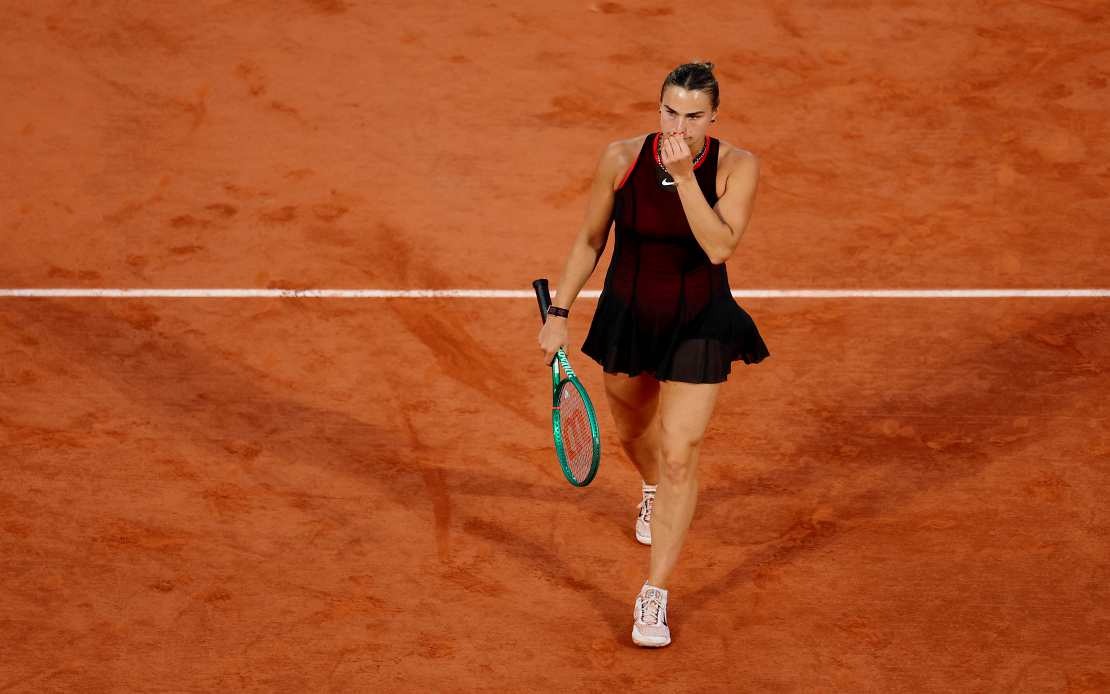
Naomi Osaka delivered one of the tournament's standout performances at Wimbledon on Sunday, dispatching top-seeded Aryna Sabalenka of Belarus with a comprehensive 6-2, 7-6(2) victory to reach the quarterfinals for the first time in her career. The 14th-seeded Japanese player's fourth-round triumph at the All England Club marked a significant breakthrough on grass, a surface where she has previously struggled to make deep tournament runs. Her passage into the last eight represents a watershed moment in her ongoing career resurgence following health and personal challenges that had sidelined her from competitive tennis.
Osaka's advancement makes her the first Japanese woman to reach the Wimbledon quarterfinals since Ai Sugiyama accomplished the feat nearly two decades ago in 2004, a gap that underscores the rarity of Japanese success at this particular Grand Slam event. The achievement carries particular resonance for tennis in Japan, where the sport has historically produced strong players on hard courts and clay but has rarely seen homegrown competitors flourish consistently on grass surfaces. For Malaysian and Southeast Asian readers, Osaka's success represents an inspiring narrative of athletic redemption, demonstrating how competitors can reclaim form and relevance after extended absences from the sport's highest level.
Perhaps most significantly, Osaka's victory reversed an unfavourable recent head-to-head record against the formidable Sabalenka. The Belarusian powerhouse had defeated the Japanese star in three consecutive encounters earlier in 2024, including a fourth-round encounter at the French Open just weeks before Wimbledon commenced. That streak of losses had clearly weighed on Osaka psychologically, and she acknowledged the mental breakthrough of finally getting the better of her rival. "Going into this match, I lost to her three times in a row, so that really sucked," Osaka reflected during her on-court interview. "I wanted to turn it over, and I'm really glad I had the opportunity to do that." Such mental resilience in high-pressure situations separates elite competitors from their peers and suggests Osaka may be entering another winning phase of her career.
The manner of victory also deserves examination. Osaka controlled the opening set comprehensively, breaking Sabalenka's serve multiple times to claim the first set 6-2 with relative ease. The second set proved more competitive, as Sabalenka, the world's highest-ranked player, mounted a stronger challenge. However, Osaka maintained her composure during the tiebreaker, ultimately prevailing 7-6(2) to secure a memorable triumph. This demonstration of tactical intelligence and emotional control under pressure from one of tennis's most aggressive strikers suggests Osaka has genuinely regained the form that once saw her occupy the world No. 1 ranking.
Osaka's next opponent will be Karolina Muchova of the Czech Republic, the 10th seed, in what promises to be a compelling quarterfinal matchup. Muchova represents a different challenge from Sabalenka's flat-hitting aggression, as the Czech player combines technical proficiency with tactical versatility. Their meeting will determine whether Osaka can sustain her momentum and advance deeper into the tournament, potentially facing even stiffer competition in the semifinal stage. The opportunity to reach a Wimbledon semifinal represents uncharted territory in Osaka's Grand Slam career at the All England Club.
In a contrasting storyline from the women's draw, Japanese representative Shintaro Mochizuki saw his remarkable run at Wimbledon conclude in disappointment. The qualifier, ranked 151st in the world, faced an insurmountable challenge against defending champion and top seed Jannik Sinner of Italy. Mochizuki fought valiantly but ultimately could not overcome the Italian's superlative form, losing 6-3, 7-6(0), 6-3 in the fourth round. His tournament nonetheless constituted a creditable effort for a qualifier, as breaking into the fourth round at a Grand Slam invariably represents a significant achievement for lower-ranked players.
Sinner's dominance throughout his match against Mochizuki illustrated why the Italian has emerged as one of tennis's most formidable forces. His ability to break serve consistently and maintain pressure throughout extended rallies proved decisive, particularly in the second set where Mochizuki was unable to win even a single game in the tiebreaker. For Mochizuki, the experience of competing against one of the sport's elite players on the grass courts of Wimbledon will undoubtedly provide valuable lessons as he seeks to climb the professional rankings.
Osaka's breakthrough at Wimbledon carries broader implications for women's tennis globally and Asian representation at Grand Slam events. The Japanese star's previous Grand Slam victories came on hard courts at the Australian Open and US Open, where her powerful baseline game translated into immediate advantage. Her success on grass demonstrates genuine evolution as a player and versatility across different surfaces. This adaptation mirrors the career trajectory of tennis legends who have proven capable of winning across varied playing conditions, suggesting Osaka's trajectory remains upward.
From a Malaysian perspective, Osaka's resurgence offers encouragement for the broader Asian tennis community. Neighbouring Japan's success at Wimbledon underscores the region's growing competitive depth in professional tennis. While Southeast Asia has not yet produced a player capable of winning Grand Slam titles, the benchmark set by Osaka and other East Asian competitors demonstrates that Asian athletes can compete at the highest levels when supported by proper infrastructure, training, and opportunity. Her quarterfinal berth may inspire younger players throughout the region to pursue professional tennis with greater ambition.

