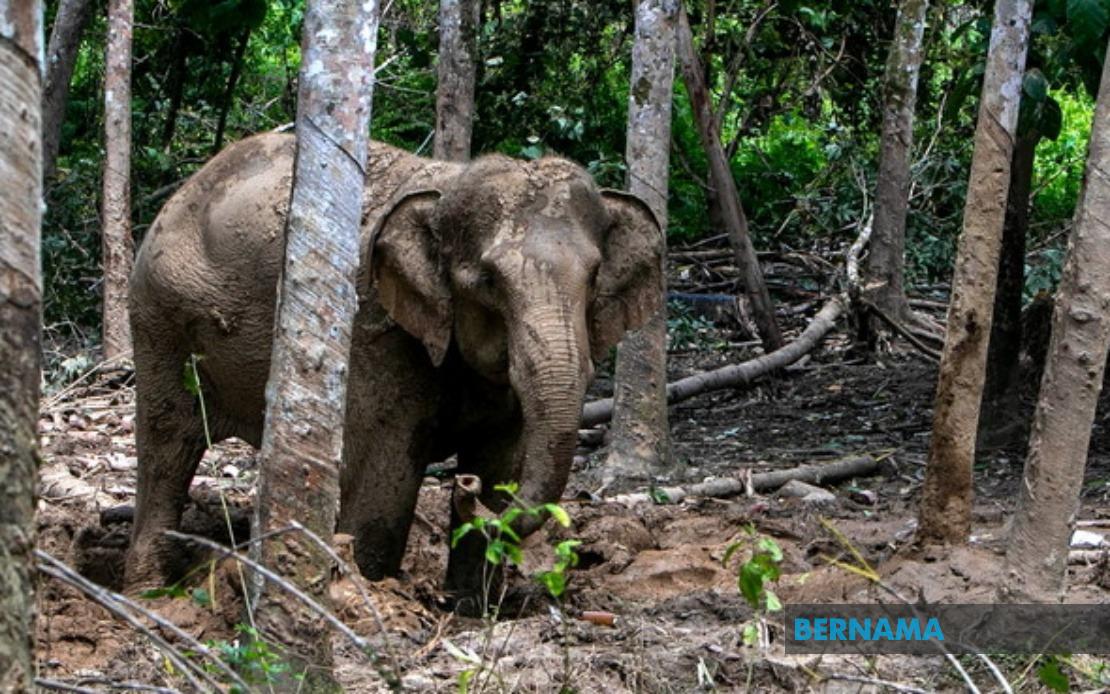
A resident of Kampung Orang Asli Perjek in the Legap Resettlement Scheme near Sungai Siput, Perak suffered injuries after an elephant attacked him while he and other villagers worked to drive away a herd of four animals that had wandered into their settlement last Friday evening. The attack underscores the escalating friction between rural communities and wildlife in peninsular Malaysia, where expanding human settlements increasingly overlap with elephant migration routes and foraging grounds.
Personnel from the Department of Wildlife and National Parks (PERHILITAN) Sungai Siput district office arrived at the scene shortly after 10 pm on the night of the incident to conduct their investigation and gather initial information about what had transpired. Their swift response reflected standard protocols for managing wildlife emergencies in populated areas, though the incident raises questions about preparedness and prevention measures in communities living at the frontier of human-wildlife coexistence.
The four elephants had moved into the area immediately behind the villagers' homes, where they began feeding on cassava and banana crops cultivated by residents. These staple crops, which form part of the community's subsistence farming and local economy, essentially serve as a magnet for hungry elephants searching for food sources. The attractiveness of these agricultural plots highlights a fundamental tension in rural development: farming activities that sustain livelihoods inadvertently create conditions that draw large herbivores into populated zones.
When the victim and several other villagers moved to chase the animals away from their fields, the situation quickly deteriorated. The man ventured too close to the elephant herd, and one of the animals responded aggressively, attacking him. He sustained significant injuries, experienced bleeding, and lost consciousness at the scene—an indication of the severity of the assault. The rapid intervention of fellow villagers, who extracted him from immediate danger and ensured he received transport to medical care, likely prevented more catastrophic outcomes.
The victim was transferred to Raja Permaisuri Bainun Hospital in Ipoh, where medical staff have been treating his injuries. As of the latest reports, his condition has stabilised, allowing for cautious optimism about his recovery prospects. However, his hospitalisation represents a tangible human cost of habitat compression and the daily realities faced by indigenous communities whose ancestral lands increasingly host dangerous wildlife encounters.
Drone surveillance deployed by PERHILITAN confirmed that the four elephants had vacated the village by the time monitoring operations commenced. The department subsequently implemented additional management strategies designed to diminish the likelihood of future confrontations between residents and elephants in this particular locale. These measures likely include increased patrols, early-warning systems, and possibly modifications to the local landscape to make it less hospitable to elephant visitation.
Beyond the immediate response to this incident, PERHILITAN noted its intention to facilitate the victim's family's application for compensation under the Wildlife Attack Victim Assistance scheme, which operates under the auspices of the Ministry of Natural Resources and Environmental Sustainability. This assistance programme represents governmental acknowledgement that individuals and families who suffer harm from wildlife encounters deserve financial and material support, though questions persist about whether compensation levels adequately reflect the trauma, medical costs, and lost income associated with such attacks.
The department has issued a public advisory cautioning residents against attempting to manage wildlife encounters independently, particularly when elephants are involved. The rationale is straightforward: untrained individuals lack the expertise and equipment necessary to safely redirect dangerous animals, and improvised interventions frequently escalate rather than defuse volatile situations. Nevertheless, for communities whose livelihoods and homes are threatened, the impulse to take direct action remains compelling and sometimes unavoidable.
This incident exemplifies broader wildlife management challenges confronting Malaysia as human populations expand into increasingly marginal spaces that overlap with critical elephant habitat. The Sungai Siput region, situated in the northern reaches of Peninsular Malaysia, sits within a landscape where Asian elephants have roamed for centuries. As agricultural development and residential settlement intensify, these migrations become fraught with danger for both humans and the animals themselves.
The Department of Wildlife and National Parks has established reporting mechanisms for wildlife-related emergencies, including a dedicated hotline at 1-800-88-5151 and online submission via the Public Complaints Management System (SISPAA) accessible through its official website. These channels enable rapid official response to incidents and contribute to a comprehensive database of human-wildlife interactions that can inform policy and management decisions.
For Orang Asli communities in resettlement schemes like Perjek, such incidents represent an ongoing occupational hazard embedded within their circumstances. While formal resettlement was intended to improve living standards and provide secure tenure, it has sometimes positioned these populations at the intersection of conservation imperatives and development pressures. Resolving this tension requires multi-faceted approaches encompassing habitat management, early-warning systems, livelihood diversification, and genuine participation of affected communities in designing solutions that protect both human welfare and wildlife conservation.

