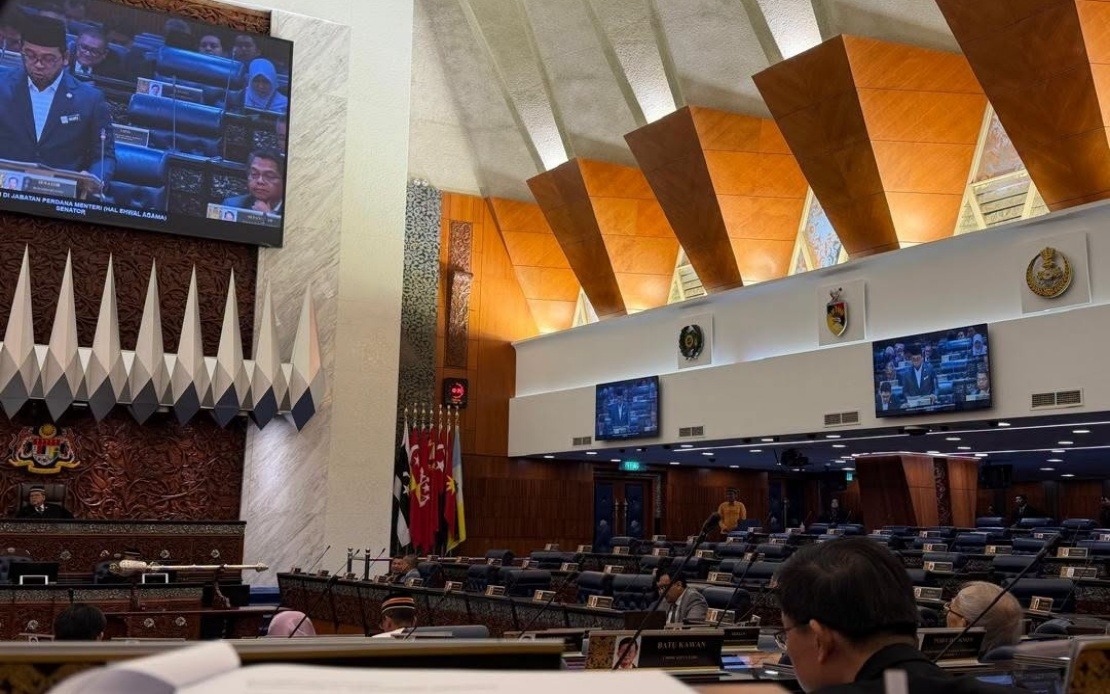
The opposition's departure from Parliament during today's special sitting dedicated to discussing the Tabung Haji Royal Commission of Inquiry findings represents a deliberate avoidance of parliamentary responsibility, according to the MADANI Government Backbenchers Club leadership. Datuk Seri Dr Zaliha Mustafa, who chairs the influential backbencher group and represents Sekijang, articulated frustration with what she characterized as performative political activism undermining genuine legislative oversight.
The walkout took place before Minister in the Prime Minister's Department for Religious Affairs Dr Zulkifli Hasan could present the government's position on the RCI's conclusions regarding Lembaga Tabung Haji's management practices. Opposition members staged the departure in protest against Speaker Tan Sri Johari Abdul's decision to proceed with the sitting despite the absence of Prime Minister Datuk Seri Anwar Ibrahim and Deputy Prime Minister Datuk Seri Fadillah Yusof, both currently receiving medical treatment. Perikatan Nasional chief whip Datuk Seri Takiyuddin Hassan had formally proposed postponing the special sitting, but the Speaker chose to advance with the scheduled briefing and debate.
Dr Zaliha's subsequent commentary on social media platforms highlighted what she views as a fundamental contradiction in opposition positioning on matters affecting the Muslim community. She pointed out that opposition parliamentarians have consistently positioned themselves as stalwart defenders of Islam and Muslim interests throughout the current parliamentary term, yet chose to exit the chamber at a critical juncture when substantive debate could occur. The Tabung Haji matter carries particular weight given that the institution manages billions of ringgit in savings belonging to Malaysian Muslims planning to perform the hajj pilgrimage, making governance scrutiny fundamentally important to depositors across the nation.
The government MP emphasized that Parliament provided the appropriate forum for opposition members to challenge any findings they disputed, question government decisions, and present alternative perspectives supported by evidence. Rather than engaging in this formal process, she suggested, the opposition opted for a tactical withdrawal that avoided direct confrontation with the facts presented in the RCI report. Dr Zaliha questioned whether genuine commitment to transparency and protecting Muslim interests would manifest through walkouts or through rigorous parliamentary examination of contested issues.
The incident reflects broader tensions surrounding how Parliament functions as an institution for governance accountability. Opposition participation in parliamentary debate serves multiple democratic functions: it provides a public record of alternative viewpoints, it forces government and majority members to justify decisions with evidence and logic, and it demonstrates to constituents that their representatives actively scrutinize matters affecting them. By withdrawing, opposition MPs forfeited the opportunity to defend any position they believed the RCI or government had misjudged, according to Dr Zaliha's analysis.
The Tabung Haji situation itself carries substantial implications for Malaysian Muslims and the broader financial system. The institution has faced significant management challenges and operational disruptions in recent years, prompting the establishment of the RCI to investigate governance failures and recommend reforms. Any findings from such an inquiry directly concern millions of ordinary Malaysians who have entrusted their savings to the organization, making parliamentary debate on the matter substantive rather than merely procedural.
Dr Zaliha's critique introduces an interesting asymmetry in how opposition and government members approached the sitting. While the opposition objected to proceeding without the Prime Minister's participation, citing the need for proper protocol and leadership presence, the government backbenchers argued that the absence of two senior leaders should not prevent Parliament from conducting its business on an important matter. This disagreement reflects different constitutional philosophies regarding parliamentary operations during situations involving ministerial medical absences.
The political calculation underlying the opposition's walkout likely involved multiple considerations beyond the immediate Tabung Haji issue. By framing their departure as a protest against procedural irregularity, opposition parties positioned themselves as defenders of parliamentary tradition and proper governance protocols. However, this framing also meant they could not participate in shaping the narrative around the RCI findings or the government's response—a strategic trade-off that Dr Zaliha suggests undermines their stated commitment to the substance of the matter.
For Malaysian readers and observers, this incident illustrates the ongoing tensions between parliamentary opposition and government, and how institutional procedures can become vehicles for political positioning. The Tabung Haji matter itself warrants serious attention regardless of political positioning, given the millions of Malaysian Muslims with savings at stake. How Parliament ultimately addresses the RCI findings and implements reforms will likely prove more consequential than the symbolic protest that characterized today's sitting.
Moving forward, whether the opposition will seek alternative forums to engage with the RCI report remains unclear. Parliamentary debate provides a particular kind of legitimacy and public visibility that other venues cannot replicate. The government's position—that proceedings should continue despite senior absences—suggests an approach prioritizing institutional continuity over protocol deference, a stance that may face continued opposition resistance.

