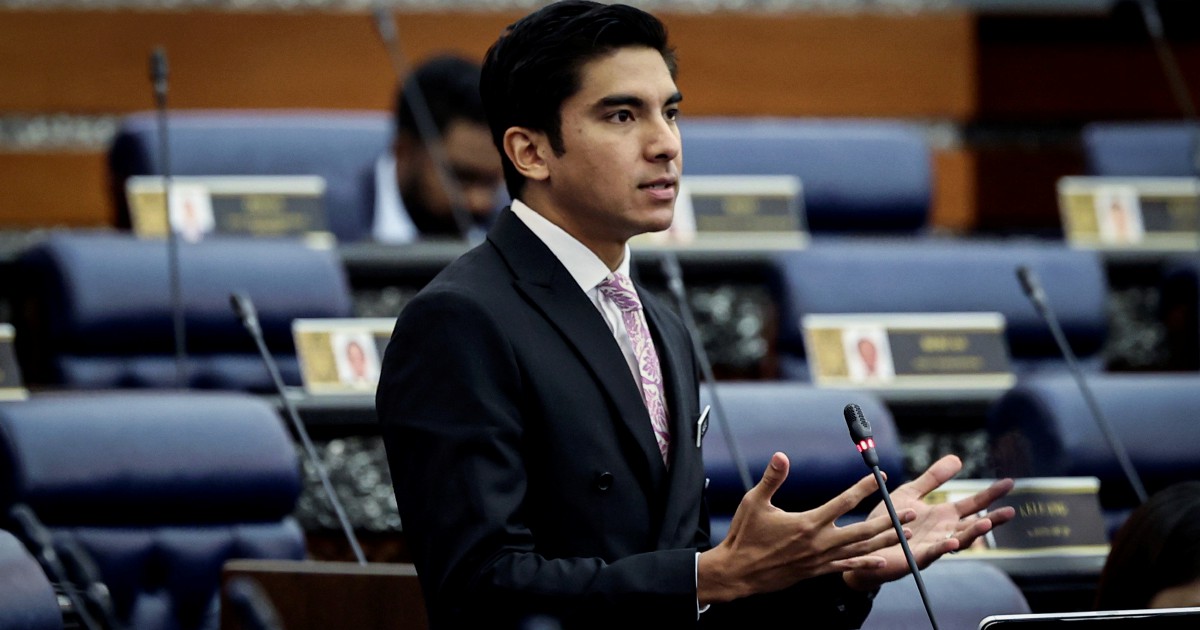
Syed Saddiq Syed Abdul Rahman, the Muda representative for Muar, has launched a scathing critique of the parliamentary opposition, accusing them of shirking their legislative responsibilities by absenting themselves from a crucial debate on the Tabung Haji Royal Commission of Inquiry findings. The controversial walkout, which occurred during what many observers regard as a critical moment for financial accountability, has drawn fire from the Muda politician for failing the interests of the financial institution's vast depositor base.
Tabung Haji, the Islamic pilgrimage fund managed by the Tabung Haji Fund Management Corporation, holds savings from millions of Malaysian Muslims who contribute regularly toward performing the hajj pilgrimage. The institution's significance extends far beyond a simple savings scheme—it represents a sacred trust that intertwines religious aspirations with financial security for ordinary Malaysian families. When controversy surrounding the fund's management surfaced and a Royal Commission of Inquiry was convened to investigate, the parliamentary examination of its findings became a matter of considerable national importance.
Syed Saddiq's objection centers on the democratic principle that parliamentary opposition must actively participate in scrutinizing government reports and holding the executive accountable. By boycotting the session, he argues, opposition members effectively abandoned their constitutional duty to represent depositor interests and ensure transparent governance. This perspective highlights a broader tension within Malaysian parliamentary practice regarding the proper role of opposition benches during critical national matters.
The Tabung Haji issue has commanded sustained public attention across Malaysia, particularly among the Muslim-majority population for whom the fund carries deep spiritual and financial significance. Stories of depositors facing difficulties accessing their savings or uncertainty about fund security have periodically surfaced in local media, amplifying public concern about management practices and regulatory oversight. The Royal Commission's investigation was intended to provide clarity and accountability regarding any administrative or financial irregularities.
Parliamentary debates on RCI reports traditionally serve as forums where lawmakers across party lines can raise concerns, request clarifications, and signal to the public that their representatives are actively monitoring government institutions. When opposition members choose not to participate, the effectiveness of this democratic mechanism is undermined. Syed Saddiq's criticism suggests that such boycotts, regardless of their tactical or political motivation, come at the expense of the very constituents whom opposition parties claim to champion.
The broader Malaysian context makes this incident particularly noteworthy. The country's political landscape has become increasingly fractious in recent years, with opposition parties sometimes utilizing boycotts as a tool to express dissent over procedural matters or perceived unfair treatment. However, critics contend that such tactics can backfire when applied to matters affecting vulnerable populations, such as the millions of Tabung Haji depositors who depend on political scrutiny to protect their interests.
Syed Saddiq's Muda party, which has positioned itself as a reform-oriented alternative to both the ruling coalition and traditional opposition parties, has been vocal about institutional governance and accountability issues. His intervention in this matter reflects Muda's stated commitment to holding all political actors, regardless of alignment, to account for their parliamentary conduct. This stance may also serve to differentiate Muda's approach from that of more established opposition blocs.
The Tabung Haji depositor base—exceeding 10 million individuals—represents an economically and demographically significant constituency. These are primarily middle and working-class Malaysians making regular contributions toward fulfilling one of Islam's five pillars. Their financial security and the integrity of their deposits should theoretically transcend partisan politics, making parliamentary unity on this matter a reasonable expectation. When such unity fractures, the message sent to depositors is one of political disorganization at precisely the moment when robust oversight is required.
From a Southeast Asian perspective, Malaysia's experience with large state-linked financial institutions and their governance challenges is not unique. Regional neighbors have grappled with similar issues regarding transparency and accountability in managing public savings schemes. How Malaysian political institutions respond to such challenges, including whether opposition participation in scrutinizing RCI reports is maintained, has implications beyond national borders for how regional democracies handle institutional governance failures.
The parliamentary record on Tabung Haji oversight will likely shape public confidence in both government and opposition going forward. Syed Saddiq's criticism appears calculated to highlight this accountability gap, positioning Muda as unwilling to tolerate political opportunism at the expense of ordinary Malaysians' financial interests. Whether this critique gains traction among the broader depositor population remains to be seen, but it underscores the tension between parliamentary tactics and substantive representation.
Looking ahead, this incident raises questions about whether opposition parties should adopt more selective approaches to boycotts—maintaining tactical dissent on procedural grounds while participating in substantive scrutiny of institutions affecting millions of citizens. The Tabung Haji case may become a reference point in Malaysian political discourse about balancing legitimate opposition roles with democratic accountability for protecting citizen interests. For the depositors themselves, the immediate concern remains ensuring that parliament—in whatever composition—delivers the robust institutional oversight their savings deserve.

