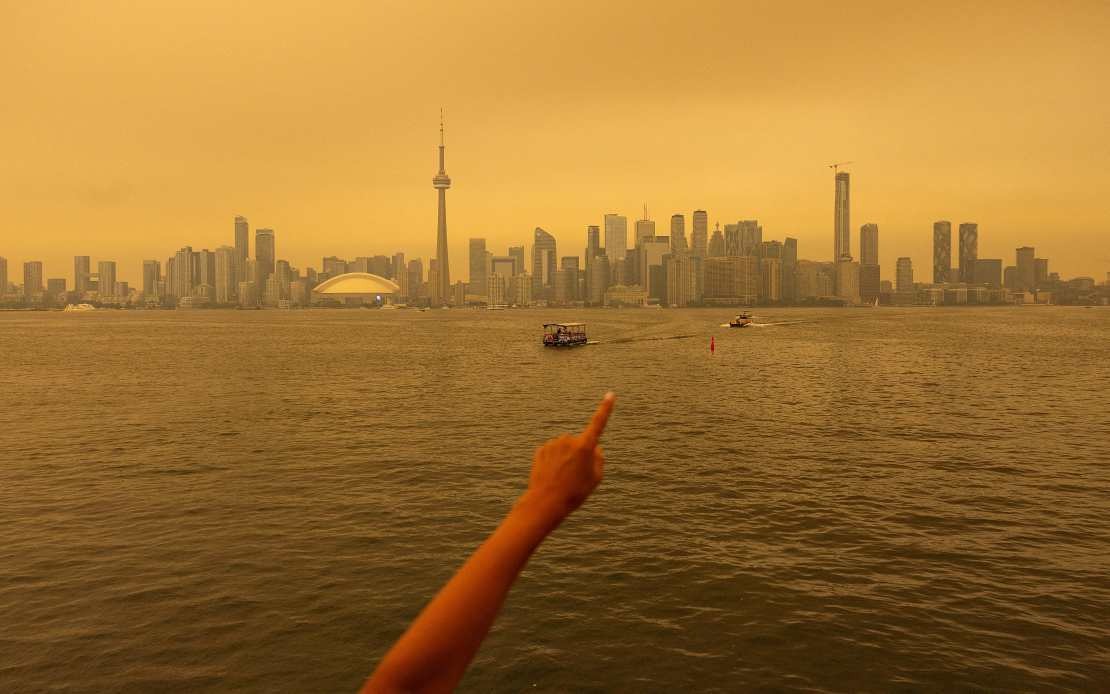
Canada's Ontario province is grappling with an unprecedented wildfire crisis that has transformed the air quality in some of North America's largest metropolitan areas into hazardous conditions. The uncontrolled blazes across northwestern Ontario have created a dramatic deterioration in atmospheric conditions affecting Ottawa, the national capital, and Toronto, the country's most populous city, with weather officials cautioning that relief may not arrive for several days. The scale of the emergency underscores the increasing vulnerability of densely populated Canadian regions to wildfire smoke migration, a phenomenon becoming more frequent across North America.
The air quality crisis reached alarming proportions on Wednesday morning when Toronto registered readings that ranked it among the worst-performing cities globally in terms of atmospheric pollution. Environment Canada's monitoring systems classified Toronto's Air Quality Health Index as operating at "very high risk" levels, a designation that carries serious implications for vulnerable populations including children, the elderly, and individuals with respiratory conditions. Meanwhile, Ottawa simultaneously issued formal air quality alerts as local meteorological conditions conspired to worsen the situation—high humidity levels trapped smoke particles suspended in the lower atmosphere, creating a visible yellow haze that obscured normal visibility across the metropolitan region.
The visual and health impacts extend beyond mere discomfort or reduced visibility. Healthcare systems in affected areas have reportedly experienced increased emergency department visits from residents experiencing respiratory distress, exacerbated asthma attacks, and related acute conditions. The convergence of wildfire smoke and summer humidity creates particularly challenging atmospheric conditions that prevent the natural dispersal of particulate matter, allowing pollutants to accumulate near ground level where exposure is most concentrated. Environmental agencies have advised residents to limit outdoor activities, keep windows sealed, and utilize air filtration systems where available—measures that have become routine rather than exceptional in major Canadian population centers during wildfire season.
The crisis extends beyond air quality concerns into critical economic and transportation infrastructure. A dramatic incident captured on video and subsequently verified by Canadian National Railway illustrates the immediate threat posed by the advancing fires. Filmed late Monday evening near Armstrong, Ontario, the footage shows a CN train engulfed in the immediate proximity of towering flames consuming the surrounding forest landscape. The dramatic images, recorded by locomotive crew members, depict intense flames flanking both sides of the rail line while casting vivid red illumination through the train's cab windows. Such scenes underscore the perilous conditions faced by railway workers and the genuine safety risks posed by wildfires near critical transportation corridors.
Following verification of the video's authenticity, CN confirmed that all train crew members had been evacuated safely from the endangered location, preventing what could have been a catastrophic incident. The railway company subsequently announced a complete temporary suspension of train operations throughout the affected section, a significant disruption to cargo movement and passenger services across the region. This operational suspension ripples across supply chains and commerce throughout Ontario and connected provinces, affecting the movement of goods and potentially impacting freight-dependent industries across the country. For Malaysian importers or exporters engaged in North American trade, such disruptions highlight the vulnerability of continental supply chains to climate-driven incidents.
The magnitude of the wildfire emergency is staggering, with over 100 individual active fires currently burning across northwestern Ontario. This unprecedented concentration of simultaneously active fires has forced emergency services to orchestrate the evacuation of residents from multiple communities scattered throughout the region. Provincial authorities have activated emergency management protocols typically reserved for the most severe disaster scenarios, redirecting personnel and resources toward rescue operations and community protection. The evacuation process itself creates secondary humanitarian challenges as residents flee with limited notice, abandoning homes and livelihoods with uncertain timelines for return.
Meteorological forecasts provide limited optimism for near-term improvement. Weather authorities have issued warnings indicating that prevailing atmospheric circulation patterns and dominant wind directions will likely sustain the heavy smoke conditions blanketing the region for an extended period spanning several additional days. These wind patterns are transporting smoke far beyond the fire zones themselves, affecting air quality across a much broader geographic area than the wildfire perimeter alone would suggest. The persistence of these atmospheric conditions means that major population centers will endure elevated pollution levels well beyond the immediate vicinity of the active fires.
For Southeast Asian observers and Malaysian stakeholders, the Ontario wildfire crisis carries important lessons regarding climate change adaptation and infrastructure resilience. Canada, typically perceived as a northern nation with vast boreal forests and cooler temperatures, increasingly experiences the types of severe wildfire events once considered more characteristic of Mediterranean or tropical regions. The disruption of transportation networks, the health impacts on urban populations, and the economic consequences of environmental emergencies demonstrate how climate-driven disasters transcend geographic expectations. Malaysia and the broader region must consider analogous vulnerabilities in its own haze-prone seasons and the potential for similarly cascading infrastructure disruptions.
The interconnected nature of North American trade also means that Malaysian businesses engaged in Canadian commerce should monitor the situation closely. Rail network disruptions and potential transportation delays could affect delivery schedules for imports and exports, while broader economic impacts in Ontario and Canada may influence purchasing patterns and bilateral trade flows. The incident serves as a concrete demonstration that environmental emergencies increasingly represent genuine business risks requiring contingency planning and supply chain diversification strategies.

