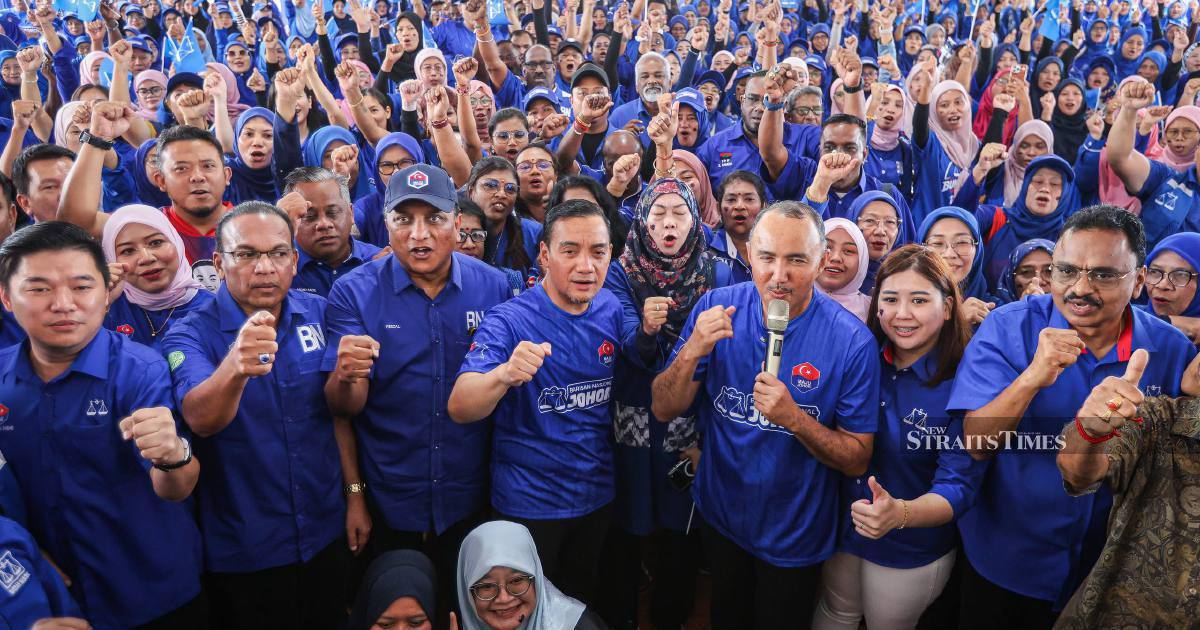
Campaigning in Kluang as the Johor state election moves into its concluding week, Caretaker Menteri Besar Datuk Onn Hafiz Ghazi has appealed directly to the electorate to resist what he characterises as a coordinated opposition strategy relying on disparagement, inflammatory rhetoric, and promises disconnected from fiscal reality. His comments underscore growing tensions in the contest, with both camps intensifying their messaging as polling day approaches and voter attention peaks.
Onn Hafiz's warning reflects a familiar pattern in Malaysian state and federal campaigns, where accusations of misinformation have become routine battleground tactics. Opposition parties have traditionally leveraged grassroots networks and social media to amplify narratives challenging the incumbent administration's record, while ruling coalitions counter by questioning the credibility and feasibility of alternative proposals. In Johor's context, this dynamic carries particular weight given the state's economic significance and its role as a political bellwether in the broader Malaysian electoral landscape.
The caretaker Menteri Besar's intervention in the final campaign phase suggests confidence in Barisan Nasional's ground positioning, yet simultaneously hints at concern over opposition momentum gathering among certain voter segments. Johor, historically a BN stronghold, has nonetheless witnessed growing electoral competition in recent cycles, with opposition parties making inroads particularly among younger and urban constituencies. The emphasis on rejecting "slander" indicates the ruling coalition views itself as the victim of unfair characterisation, a recurring theme in Malaysian political discourse where both sides claim victimhood.
The reference to "empty promises" carries particular resonance in Malaysian politics, where development projects, subsidy commitments, and job creation pledges frequently anchor campaign rhetoric. Opposition parties often promise enhanced welfare provisions, higher wages for civil servants, or accelerated infrastructure development. Evaluating the feasibility of such commitments requires voters to assess rival proposals against Johor's actual fiscal position, existing debt obligations, and revenue generation capacity. Onn Hafiz's invocation of "unrealistic" pledges invites voters to consider whether opposition commitments can withstand scrutiny regarding implementation and funding mechanisms.
Johor's economic landscape provides crucial context for understanding these campaign assertions. The state generates substantial revenue through petroleum royalties, port operations, and manufacturing activities, yet faces longstanding regional disparities between developed coastal areas and rural hinterlands. Infrastructure deficits persist in certain constituencies, and unemployment remains a concern despite the state's relative prosperity compared to several other Malaysian states. Opposition parties have capitalised on these gaps, proposing targeted interventions while BN emphasises continuity and incremental improvement through established programmes.
The timing of Onn Hafiz's remarks—during the campaign's final week—reflects strategic considerations about voter decision-making processes. Political science research consistently demonstrates that late-stage messaging attempts to crystallise undecided voter preferences while reinforcing commitment among supporters. By framing opposition tactics negatively rather than presenting positive BN achievements, the caretaker Menteri Besar's approach suggests either confidence that BN's development record speaks for itself or concern that narrative control remains contested even as voting nears. This rhetorical choice carries implications for how each coalition concludes its campaign, potentially determining which messages remain uppermost in voter consciousness on polling day.
Electoral campaigns in Malaysian states increasingly resemble multi-channel information environments where traditional rally speeches coexist with social media campaigning, WhatsApp messaging, and targeted digital advertising. Opposition claims and counter-claims circulate rapidly through unmoderated online spaces, rendering fact-checking and verification increasingly difficult for ordinary voters. Onn Hafiz's appeal to reject "slander" acknowledges this fragmented media landscape, where distinguishing between substantive criticism and deliberate falsehood becomes progressively harder. The Menteri Besar's intervention thus represents an attempt to re-establish epistemic authority at a moment when multiple competing narratives circulate simultaneously.
Johor's political composition encompasses diverse constituencies with distinct priorities and demographics. Coastal urban areas surrounding Johor Bahru reflect characteristics of developed metropolitan regions, with younger, mobile, educated populations receptive to messaging around good governance and economic opportunity. Rural and semi-urban constituencies conversely prioritise agricultural support, infrastructure connectivity, and social welfare provisions. Any campaign message, including Onn Hafiz's caution against unrealistic pledges, resonates differently across these varied communities, suggesting that voters themselves must evaluate rival proposals against their specific local circumstances and priorities.
The invocation of voter agency—choosing which messages to accept or reject—places responsibility squarely on the electorate to distinguish between persuasive framing and substantive analysis. Malaysian voters, particularly those engaged with current affairs through diverse information sources, increasingly demonstrate capacity to evaluate competing claims critically. Yet information disparities persist, with some segments of the population accessing primarily single-source narratives or relying on interpersonal networks for political information rather than independent verification. This variance in information access and analytical capacity means that Onn Hafiz's appeal inevitably proves more persuasive for certain voter categories than others.
As Johor's election campaign accelerates toward its conclusion, the substance of campaign messages will ultimately prove less decisive than voter perceptions regarding which coalition better understands their needs and demonstrates capacity for delivery. Opposition allegations of government underperformance versus BN assertions of progressive governance will be weighed against lived experience within communities across the state. The caretaker Menteri Besar's warning against slander and impossible promises simultaneously invites voters to demand rigorous scrutiny of all political actors' proposals, potentially strengthening democratic discourse even as it advances BN's electoral interests.

