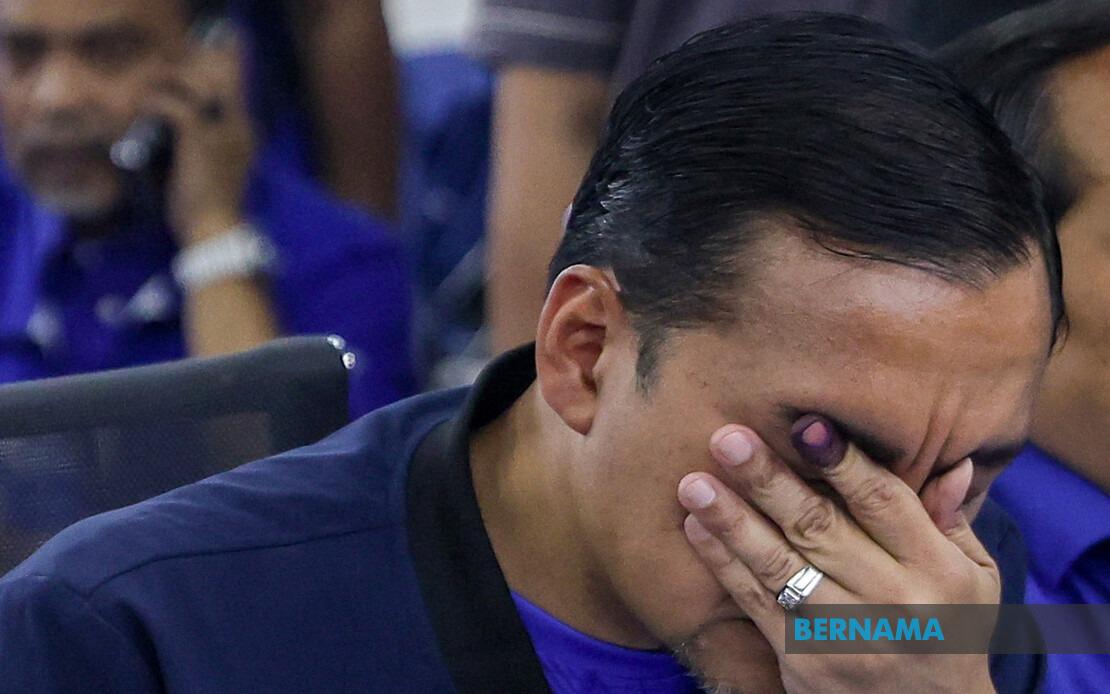
Datuk Onn Hafiz Ghazi, the Johor Menteri Besar and chairman of the state Barisan Nasional chapter, has consolidated his political position by retaining the Machap constituency in the 16th Johor state election held on July 11. The victory marks another chapter in the political leader's dominance within his home state, signalling the continued strength of the Barisan coalition in this traditionally important seat.
According to the official tallies released by the Election Commission, Onn Hafiz accumulated 20,382 votes in what proved to be a straight contest against his sole opponent. His Pakatan Harapan rival, Nur Hafiz Roslan, garnered significantly fewer votes, leaving the Menteri Besar with a commanding majority of 15,375 votes. The scale of this victory represents a substantial performance, particularly when measured against the competitive nature of recent Malaysian electoral contests where margins have frequently narrowed.
The result underscores Onn Hafiz's personal appeal within the Machap electorate and the appeal of Barisan Nasional candidates in this segment of Johor. The constituency, which encompasses parts of the southern state's heartland, has consistently demonstrated loyalty to the ruling coalition. This electoral outcome will likely be interpreted as validation of Onn Hafiz's stewardship as Menteri Besar and his efforts to advance the state's development agenda.
When compared to the 2022 state election results, the 2024 victory reveals important shifts in the local political landscape. In the previous contest just two years ago, Onn Hafiz had secured the seat with a majority of 6,543 votes, but that election featured a much more fragmented field. The earlier contest included four candidates competing for the seat: Perikatan Nasional's Azlisham Azahar, MUDA's R. Sangaran, and PEJUANG's Sharuddin Md Salleh, each carving into the voting pool.
The consolidation from a four-way race to a straightforward Barisan-Pakatan contest reflects broader changes in Malaysian electoral mathematics. The disappearance of smaller opposition parties from the Machap race suggests either a withdrawal of resources from this particular battleground or a strategic realignment by the various political movements. The absence of Perikatan Nasional candidates in this iteration is particularly noteworthy, given that party's strong showing in other parts of Johor and its significant support base across the nation.
Onn Hafiz's expanded majority—more than doubling his 2022 margin despite the technically more challenging straight fight scenario—suggests that the Menteri Besar has successfully mobilised the Barisan coalition's machinery and expanded his personal vote. In a two-candidate race, voter polarisation can intensify, yet the Barisan candidate's performance indicates he retained support from multiple demographic segments while possibly consolidating previously scattered votes that had gone to minor parties.
The Machap constituency holds particular significance within Johor's political structure as the seat of the state's chief executive. Unlike some other Malaysian states where Menteri Besar seats have occasionally proven vulnerable, Machap appears to function as a secure Barisan stronghold. This stability at the top leadership level provides organisational continuity and allows the Menteri Besar to focus on state governance without the constant threat of losing his own seat.
For the broader Barisan coalition in Johor, this outcome provides crucial momentum as the party consolidates its position following earlier electoral challenges elsewhere in the country. The state remains strategically important to the ruling coalition's national standing, and maintaining control of key constituencies like Machap ensures the continued relevance of established political networks and patronage structures that have sustained Barisan's dominance.
The election results may also carry implications for internal Barisan dynamics within Johor, as strong performances by senior leaders like Onn Hafiz can translate into expanded influence during party deliberations on ministerial appointments, development funding allocation, and strategic direction. The Menteri Besar's enhanced mandate from Machap voters could strengthen his hand in negotiations with federal leadership and other state-level Barisan figures.
Looking forward, the Machap victory suggests that Onn Hafiz enters his next term with solid local support, positioning him to pursue his development agenda without being distracted by electoral survival concerns. The state-level coalition will likely attempt to build on this success in other constituencies, though the strategic withdrawal or weakening of Perikatan Nasional opposition in this particular race may not be replicated uniformly across all Johor seats.

