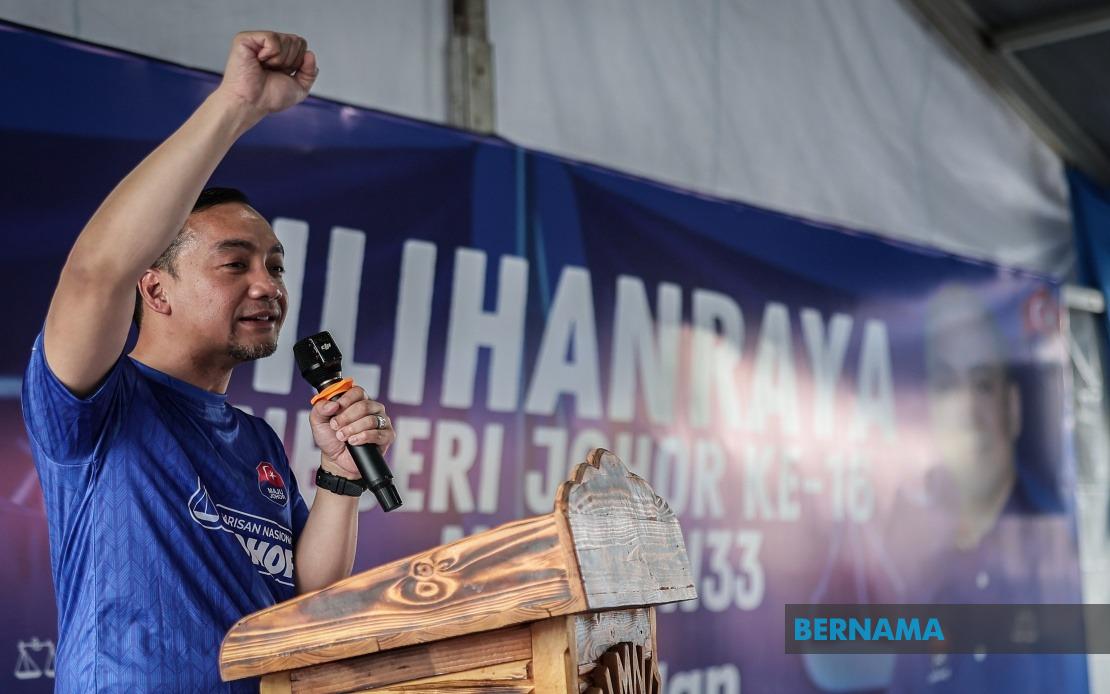
Barisan Nasional's machinery in Johor is riding a wave of optimism as the coalition's chairman Datuk Onn Hafiz Ghazi reported enthusiastic community engagement with candidate Alwiyah Talib in the Endau constituency, with polling day set for July 11. The Johor Menteri Besar described the reception from local voters as encouraging throughout the campaign trail, signalling what BN hopes will translate into electoral gains when Johor residents cast their ballots.
Alwiyah Talib, who goes by the nickname "Kak Awi" among constituents, represents a notable political trajectory that underscores broader themes within Malaysia's contemporary political landscape. The candidate initially won the Endau seat under the BN banner during the 14th General Election before subsequently moving to Bersatu, where she retained the seat in the 2022 Johor state election with a majority of 3,041 votes in a five-cornered contest. Her recent return to BN has been positioned by party leadership as emblematic of the "Rumah Bangsa" concept championed by UMNO president Datuk Seri Dr Ahmad Zahid Hamidi, a framework emphasising coalition unity and inclusive politics rather than factional rigidity.
Onn Hafiz's remarks at the "Santai ONN X ONN Bersama Menteri Besar Johor" event in Endau highlighted the party's emphasis on Alwiyah's track record of public service regardless of which political banner she has carried. His acknowledgment that she was previously aligned with opposition forces, yet maintained responsiveness to constituent needs, reflects a pragmatic approach to rebuilding BN's support base in Johor. This strategy appears designed to soften the perception that party affiliation matters more than individual competence or community commitment, a messaging angle particularly relevant as BN seeks to recover ground in a state that has historically been pivotal to federal politics.
The campaign environment in Johor has reportedly remained orderly, with Onn Hafiz noting the absence of significant incidents during the election period. This relative stability contrasts with the sometimes contentious political atmosphere in other Malaysian states and suggests that both BN and competing coalitions have maintained decorum in their campaigning approaches. Such conduct may reflect lessons learned from previous electoral cycles and a shared understanding that excessive acrimony can alienate swing voters whose preferences ultimately determine outcomes in closely contested seats.
BN's operational readiness in both Endau and the nearby Tenggaroh constituency—represented by candidate Mohd Youzaimi Yusof—appears to be a focal point of party confidence. The emphasis on party machinery preparedness and volunteer commitment indicates that BN is banking on traditional organisational strengths to mobilise supporters and convert campaign momentum into actual votes. In Malaysian state elections, the effectiveness of ground-level operations often proves decisive, particularly in constituencies where electoral margins are narrow.
The timing of Alwiyah's return to BN warrants closer examination within the broader context of Johor politics. The 2022 state election saw Perikatan Nasional make significant inroads in the state, but subsequent developments have seen various shifts in political alignments. BN's ability to attract back candidates with proven electoral credentials and voter familiarity potentially addresses the coalition's vulnerability in constituencies where it had previously held sway. This approach acknowledges that brand loyalty among Malaysian voters often intertwines with personal connections to individual candidates rather than abstract party principles.
The "Rumah Bangsa" framework that Onn Hafiz invoked carries particular significance for understanding BN's strategic direction. Rather than presenting the coalition as monolithic, this concept suggests flexibility in accepting members with diverse political histories, provided they demonstrate commitment to the broader coalition project. Whether this philosophy proves attractive to voters, particularly younger ones who may be less tethered to traditional party loyalties, remains to be seen. The approach could either broaden BN's appeal by appearing pragmatic and forward-looking, or potentially alienate core supporters who view defections as opportunistic rather than principled.
Polling arrangements for the Johor election include early voting scheduled for July 7, providing an avenue for voters unable to participate on the primary polling day. Early voting mechanisms have become increasingly significant in Malaysian elections, sometimes indicating voter enthusiasm or specific demographic participation patterns. BN's assessment of early voting trends could provide useful signals about overall campaign momentum in the final days before the main polling date.
For Malaysian observers and political analysts, this election carries implications beyond state-level implications. Johor's electoral performance will influence perceptions of BN's viability as a national force, particularly given the coalition's mixed fortunes in recent federal and state contests. A strong showing could reinforce narratives of BN revival, while disappointing results might prompt further internal reckonings about the coalition's direction and appeal to contemporary Malaysian voters. The performance of candidates like Alwiyah—returnees to the coalition from other political movements—may offer insights into whether BN can successfully reposition itself as a centrist, pragmatic alternative in an increasingly fragmented political marketplace.

