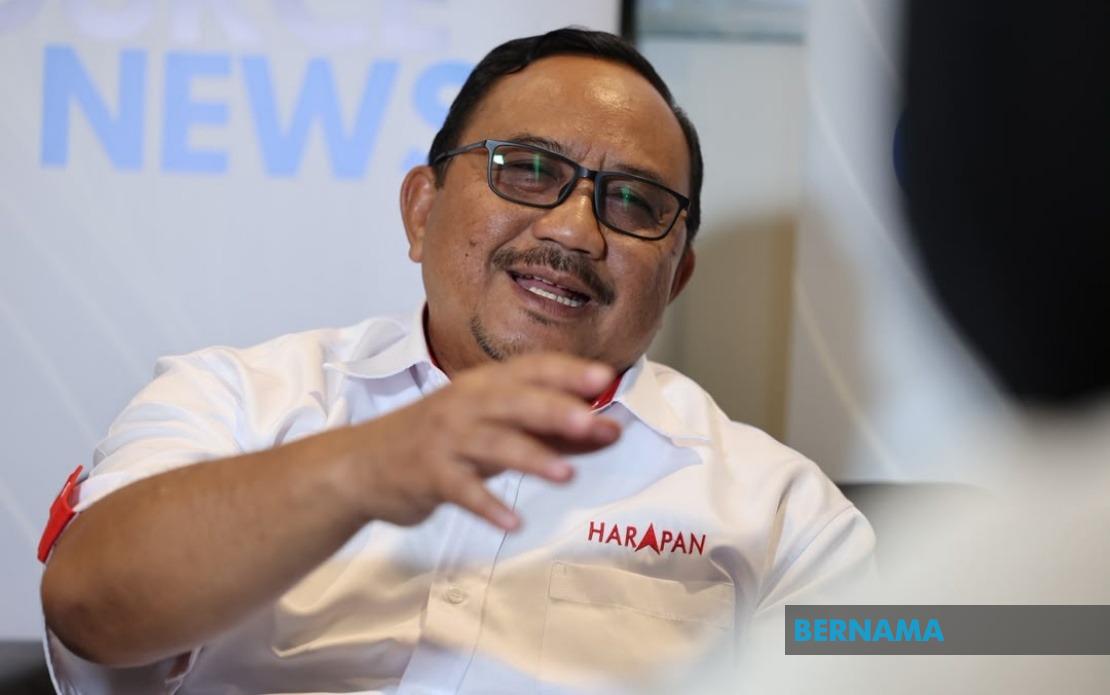
Batu Pahat Member of Parliament Onn Abu Bakar has initiated a digital infrastructure project designed to eliminate connectivity dead zones affecting residents across the Senggarang state constituency in Johor. The Wireless Bridging System (WBS) initiative represents a targeted intervention to resolve communication challenges that have persisted in several remote communities, with the proposal now under review by the Academy of Sciences Malaysia following submission to the Science, Technology and Innovation Ministry (MOSTI).
The initiative seeks initial funding between RM100,000 and RM200,000 to establish wireless infrastructure across seven geographically dispersed areas currently hampered by inadequate signal strength. The identified locations—including Jalan Kampung Sungai Keluang Darat, Jalan Kampung Parit Kadir, Jalan Kampung Parit Seri Bahrom, Kampung Punggur Darat, Sri Merlong, Simpang 6, and the vicinity of Seri Bahrom Mosque—currently experience mobile signal coverage limited to one or two bars, making reliable data transmission virtually impossible for residents seeking to participate in the digital economy.
Onn, who is contesting the Senggarang seat as the Pakatan Harapan candidate in the 16th Johor state election, frames the connectivity issue as a question of equitable development and social inclusion. Rather than simply asserting the need for better infrastructure, he articulates the project as an answer to residents being systematically excluded from digital opportunities that more urbanised communities take for granted. His framing positions internet access as fundamental to ensuring no segment of the electorate is disadvantaged by geographic circumstance in an increasingly digital society.
The proposal will be executed through collaboration with Universiti Tun Hussein Onn Malaysia (UTHM), leveraging the institution's technical expertise in telecommunications infrastructure. This partnership underscores how state-level digital inequality challenges increasingly require coordination between government entities, educational institutions, and regulatory bodies to achieve workable solutions. UTHM's involvement brings research credibility and ensures the project incorporates contemporary wireless technology standards rather than relying on conventional approaches that have proven inadequate for rural deployment.
Onn emphasises that his position as a federal legislator provides institutional advantage in advancing this initiative through agencies such as the Malaysian Communications and Multimedia Commission (MCMC) and the Communications Ministry. This leverage points to the reality that rural infrastructure projects often require navigation of multiple bureaucratic processes and sustained advocacy across government hierarchies. His ability to champion the proposal through established channels potentially accelerates implementation timelines compared to locally-initiated requests that lack such parliamentary connections.
The WBS technology itself represents a practical solution to coverage gaps that plague numerous Malaysian rural communities where topography, population density, or economic factors make traditional network expansion uneconomical for commercial providers. Rather than waiting for telecommunications companies to expand coverage through conventional infrastructure—a timeline that could extend indefinitely—the WBS approach creates localised wireless bridging to amplify and redistribute existing signals, or establish alternative transmission pathways where coverage remains genuinely absent.
Professor Muhammad Ramlee Kamarudin of UTHM's Electrical and Electronic Engineering Faculty provides technical context for the proposal's feasibility. His department submitted the WBS proposal to MOSTI in February, with formal presentation occurring in March, indicating the project has undergone preliminary technical vetting. The professor notes that several Batu Pahat villages continue experiencing inadequate 4G and 5G network coverage despite Malaysia's broader mobile infrastructure development, suggesting the problem persists despite national rollout initiatives.
Crucially, UTHM has already demonstrated WBS technology viability through implementation in Kampung Simbuan Tulid, Keningau, Sabah, where the system has reportedly delivered improved signal stability and reliability to rural residents. This precedent provides empirical evidence supporting Senggarang's project proposal, as successful deployment elsewhere reduces technical and performance uncertainty. The Sabah implementation will remain under continuous supervision until 2027, establishing a longer-term validation framework that potential Senggarang stakeholders can reference when evaluating project credibility.
From an electoral perspective, the announcement positions Onn's candidacy within a specific governance narrative: tackling tangible infrastructure deficits that directly affect daily life in rural constituencies. The three-cornered contest among Onn Abu Bakar (PH–PKR), Mohd Yusla Ismail (BN–UMNO), and Datuk Mohd Rashid Hasnon (PN–Bersatu) suggests competition focused partly on which candidate can deliver concrete developmental outcomes. Onn's proposal demonstrates proactive engagement with infrastructure challenges rather than generic campaign promises.
The Senggarang seat comprises one of three state constituencies within the broader Batu Pahat parliamentary division, alongside Rengit and Penggaram, indicating that digital connectivity extends beyond a single electoral unit. The WBS project's scope therefore has implications for Batu Pahat's overall digital infrastructure trajectory. If successful, the model could potentially be replicated across other underserved areas within the parliamentary seat, creating momentum for broader digital inclusion efforts.
For Malaysian readers particularly in similarly positioned rural constituencies, the initiative illustrates how state-level digital divides continue requiring targeted intervention beyond market mechanisms. Telecommunications companies naturally prioritise profitable urban and suburban markets, leaving genuinely remote communities dependent on government-led or government-supported infrastructure programmes. The WBS approach represents one practical methodology, though questions remain regarding sustainability, maintenance responsibilities, and long-term funding once initial project support concludes.
The Johor state election scheduled for July 11, with early voting on July 7, provides immediate context for this proposal's announcement. While the timing suggests electoral positioning, the proposal's substantive dimensions warrant evaluation independent of campaign calendars. The underlying connectivity challenge is genuine and affects resident quality of life irrespective of electoral cycles. Whether subsequent implementation translates this proposal into functioning infrastructure depends on post-election governance priorities and MOSTI's resource allocation decisions.
Regionally, Senggarang's digital divide reflects patterns observed across Southeast Asia, where rural communities across Malaysia, Indonesia, Thailand, and the Philippines experience persistent connectivity gaps despite national development targets. Wireless bridging represents one emerging technology for addressing such gaps, suggesting Malaysian experience with WBS implementation could hold relevance for regional digital inclusion conversations. The project thus occupies space between local electoral politics and broader Southeast Asian development challenges regarding technology access equity.

