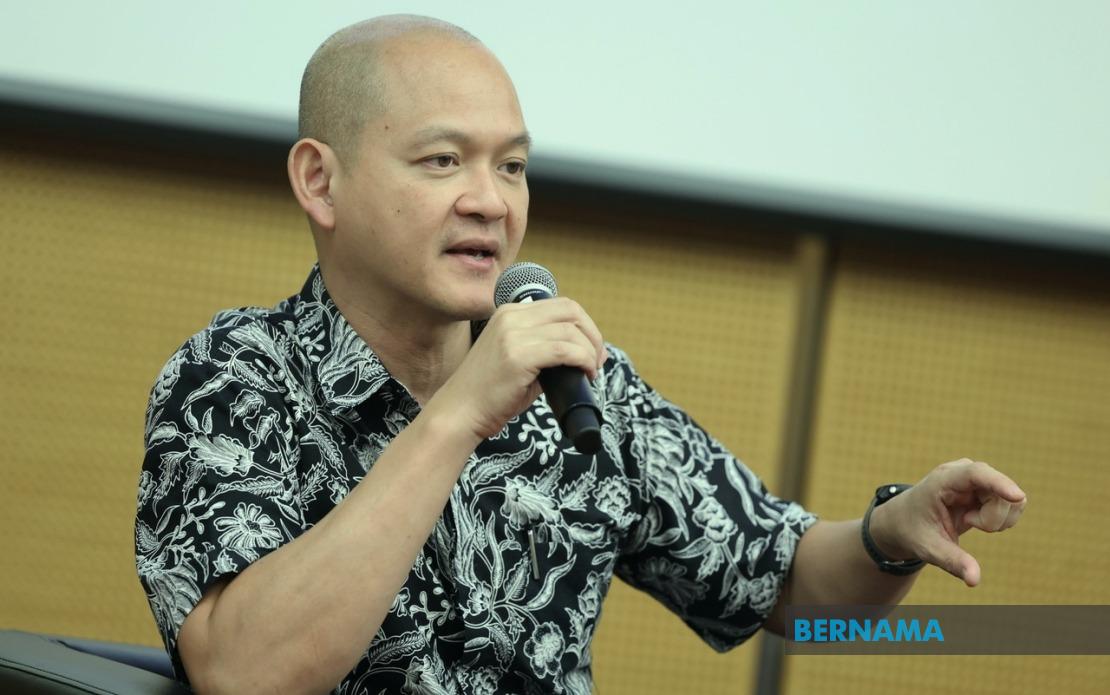
Dr Ong Kian Ming, the former Member of Parliament for Bangi, has formally announced his departure from the Democratic Action Party (DAP) effective August 31, marking the end of a 12-year affiliation with the coalition partner that defined much of his political career. The announcement came via a Facebook statement addressing party leadership, including DAP Secretary-General Anthony Loke Siew Fook and National Organising Secretary Khoo Poay Tiong, signalling a considered and orderly transition rather than an acrimonious split.
Ong's exit represents a significant development within DAP ranks, as he was among the party's more senior and nationally visible figures during his tenure. His parliamentary history spanned two constituencies across a decade, first representing Serdang from 2013 to 2018 before transferring to the Bangi seat in 2018, where he served until 2022. This dual representation across the critically important Selangor state underscored his prominence within the party's federal and state structures, making his voluntary departure noteworthy for internal party dynamics.
Beyond his parliamentary work, Ong held several positions of responsibility that extended his influence across both party and government institutions. His appointment as Deputy Minister of International Trade and Industry from 2018 to 2020 gave him portfolio responsibilities during a period of economic transition in Malaysia. Additionally, he served on the DAP's Central Executive Committee from 2019 to 2022 as an appointed member, and maintained an elected position on the DAP Selangor state committee from 2018 through 2024, demonstrating sustained engagement with party structures even as his national political profile receded following the 2022 general election.
In his resignation statement, Ong expressed gratitude for the opportunities afforded to him across multiple dimensions of public service since joining the DAP in 2012. His tone suggested reflection rather than frustration, framing his years within the party as a valuable chapter of contribution to Malaysia's political landscape. This measured language appears designed to preserve relationships and avoid inflaming internal party sentiment, which may prove important if he intends to maintain any role in public discourse or civil society moving forward.
Significantly, Ong made explicit declarations about his future political trajectory, categorically stating that he does not intend to join another political party in the foreseeable future and will not be seeking candidacy in the forthcoming general election campaign. These twin commitments effectively remove him from active electoral politics, at least for the current political cycle and beyond. Such a withdrawal marks a departure from patterns sometimes seen in Malaysian politics where departing politicians from established parties rapidly seek alternative political homes or attempt comebacks through alternative vehicles.
The decision to step away from party politics rather than pivot to another organization may reflect broader considerations about the political landscape as Malaysia approaches its next general election. The timing of his departure, announced in late August, occurs well in advance of typical election season activity, suggesting deliberation rather than opportunism or reactive decision-making driven by immediate political circumstances. For a figure of Ong's intellectual standing and policy background, the choice to depart formal party structures while pledging continued service to national interests points toward potential engagement in academic, research, or advisory capacities outside the partisan arena.
Ong's announcement carries particular relevance for DAP's internal consolidation and leadership renewal, as the party navigates its position within the broader political coalition and faces questions about generational succession in key roles. His departure removes one element of the established leadership cohort while creating space for other party figures to advance within hierarchical structures. The circumstances surrounding his exit, characterized by his own initiative and amicable notification to senior leadership, contrast with the more contentious departures sometimes witnessed in Malaysian political life.
The implications for Selangor politics warrant attention, given that Ong maintained state-level party committee responsibilities until recently and represented constituencies within this pivotal state. Selangor's political importance to Malaysia's broader electoral mathematics means that shifts in the composition of major parties' state-level machinery receive scrutiny from analysts and competitors. His departure may reshape factional dynamics or committee work within DAP Selangor, though the relative stability of his exit suggests the party anticipated and managed this transition internally.
Ong's pledge to serve national interests through alternative channels opens intriguing possibilities about his future contributions to Malaysian public life. Academics, former policymakers, and politically experienced figures frequently transition into research institutions, think tanks, advisory boards, or international organizations where they can apply expertise without partisan constraints. For someone with his background in international trade policy and parliamentary experience, such pathways offer meaningful avenues for continued engagement with matters of national importance.
The broader context of Malaysian political fluidity and periodic realignments means that individual departures from established parties frequently attract speculation about timing and motivation. Ong's explicit commitments to neither join competing parties nor contest elections appear designed to preempt such speculation and to frame his decision as principled rather than strategic. This positioning may serve protective functions for his personal credibility and future effectiveness in whatever role he assumes beyond party politics.
As Malaysia's political landscape continues evolving, departures of experienced parliamentarians and policymakers represent important data points for understanding party health, internal satisfaction, and the attractiveness of formal political structures to ambitious and accomplished individuals. Ong's case suggests that at least some established figures are choosing alternative pathways over continued partisan engagement, a trend that may reflect both personal calculations and broader assessments of where meaningful contribution to national interests can best be achieved.

