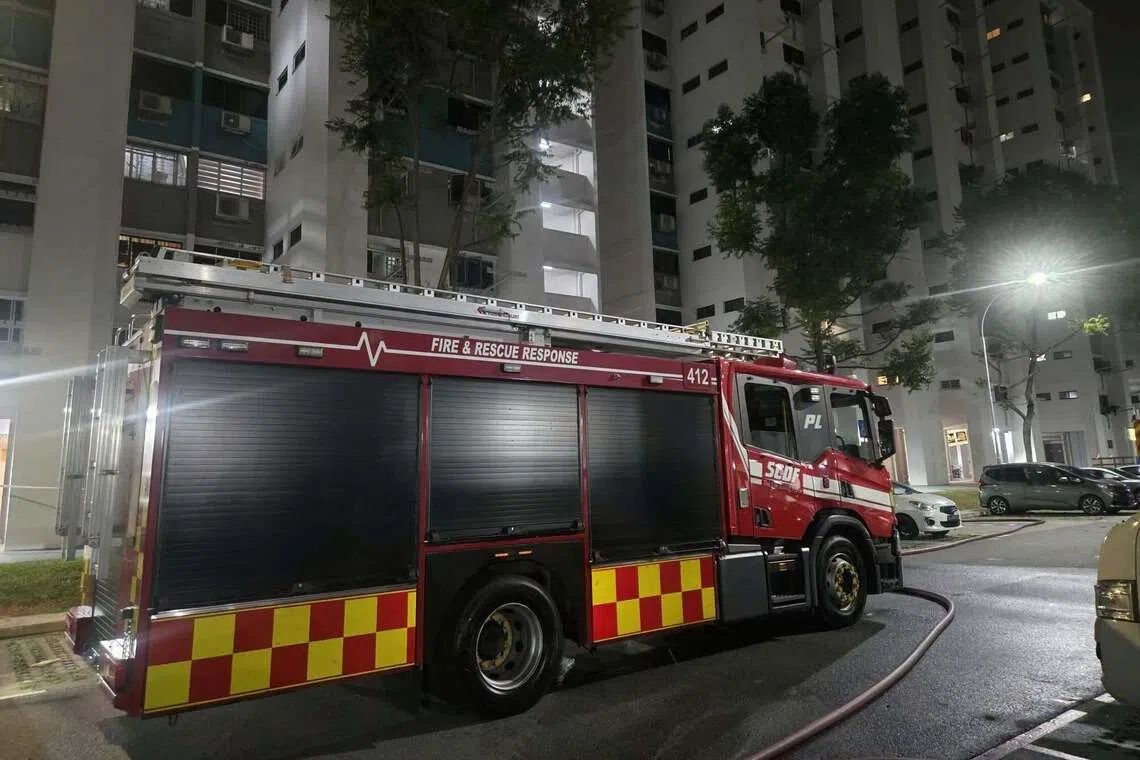
A fatal fire broke out in the early hours of August 16 at a Jurong East housing estate, claiming one life and necessitating the immediate evacuation of 50 residents from the building. The Singapore Civil Defence Force responded to the emergency call at 3.55am, arriving at Block 339 Jurong East Avenue 1 to find thick black smoke billowing from a unit on the third floor. Firefighters identified the source of the blaze within the living room of the affected flat, prompting immediate action to contain the situation.
Upon forcing entry to the residential unit, rescue personnel discovered an unresponsive individual in the living room. A paramedic confirmed the person had died at the scene, bringing another tragedy to Singapore's public housing sector. The identity of the deceased and circumstances leading to the fatal outcome remain undisclosed as authorities continue their investigation into the cause of the fire.
This incident represents part of a troubling pattern of residential fires within HDB estates. Since late July, Singapore has recorded at least four fatal fires in public housing flats, raising concerns about fire safety in these densely populated residential buildings. The frequency and severity of these incidents have sparked fresh questions about prevention measures and resident awareness within the community.
The first of these recent tragedies occurred on July 28, when a fire engulfed a flat at Block 39 Circuit Road in the morning hours. That blaze proved fatal to a 70-year-old resident, marking the beginning of what would become a critical period for HDB fire incidents. Just three days later, on July 31, another catastrophic fire occurred in an eighth-floor unit at Block 309 Clementi Avenue 4, claiming the life of a 65-year-old man while leaving two firefighters injured during their valiant rescue efforts.
The cluster of incidents continued unabated when a fifth-floor unit at Block 684 Race Course Road caught fire on August 3. This particular blaze resulted in five residents, ranging in age from 55 to 88 years old, requiring hospitalisation for injuries sustained. The situation deteriorated when the oldest victim, an 88-year-old man, succumbed to his injuries on August 5, further expanding the toll of this dangerous period.
For Malaysian observers watching developments in neighbouring Singapore, these incidents carry particular relevance. Many Malaysians maintain close ties to Singapore or have family members residing in the island nation, making such tragedies immediate concerns. The pattern also invites comparative reflection on fire safety standards, building codes, and emergency response mechanisms across the region, particularly in ageing public housing estates where dense populations and aging infrastructure may compound risks.
The Singapore Civil Defence Force has indicated that investigations into the Jurong East fire remain ongoing, with officials yet to determine the precise cause. Understanding the root cause will be essential for identifying preventative measures and potentially implementing new safety protocols. Whether the fire originated from electrical faults, cooking accidents, or other factors will significantly influence subsequent policy responses.
The concentration of fatal fires within a compressed timeframe suggests that systemic factors may be at play. Public housing estates across Southeast Asia typically house vulnerable demographics—elderly residents, low-income families, and individuals with limited mobility—who face heightened risks during fire emergencies. The rapid succession of incidents points to a need for comprehensive safety audits, updated warning systems, and enhanced community education programs.
Authorities in Singapore have long maintained rigorous fire safety standards, yet these recent incidents demonstrate that hazards persist despite existing measures. The SCDF's rapid response times and professional conduct in these emergencies have been notable, with personnel often sustaining injuries while protecting residents. However, prevention ultimately remains more effective than even the most skilled emergency response.
For residents of HDB flats across Singapore and comparable public housing in the region, these tragedies underscore the importance of fire preparedness. Maintaining clear evacuation routes, ensuring functional smoke detectors, keeping flammable materials away from potential ignition sources, and understanding building safety features represent critical personal protective measures. Community awareness campaigns and regular safety drills could significantly reduce casualties during such emergencies.
The pattern of incidents also highlights the intersection of urban density and fire risk in modern Southeast Asian cities. As populations concentrate in high-rise residential complexes, the challenge of ensuring uniform safety standards across thousands of units intensifies. Coordinating maintenance, updating aging infrastructure, and maintaining vigilant oversight requires sustained commitment from housing authorities and cooperation from residents.
As Singapore authorities continue their investigations and seek to understand why these fires occurred in rapid succession, neighbouring countries including Malaysia will be monitoring developments closely. Lessons learned from Singapore's experience—both from what worked during emergency response and from factors that contributed to fatalities—can inform regional approaches to residential fire safety.
The SCDF's ongoing inquiry into the August 16 fire at Jurong East will eventually provide insights into this particular incident. Until then, the loss of life and the displacement of 50 families serves as a sobering reminder of fire's devastating potential and the need for constant vigilance in protecting residential communities.

