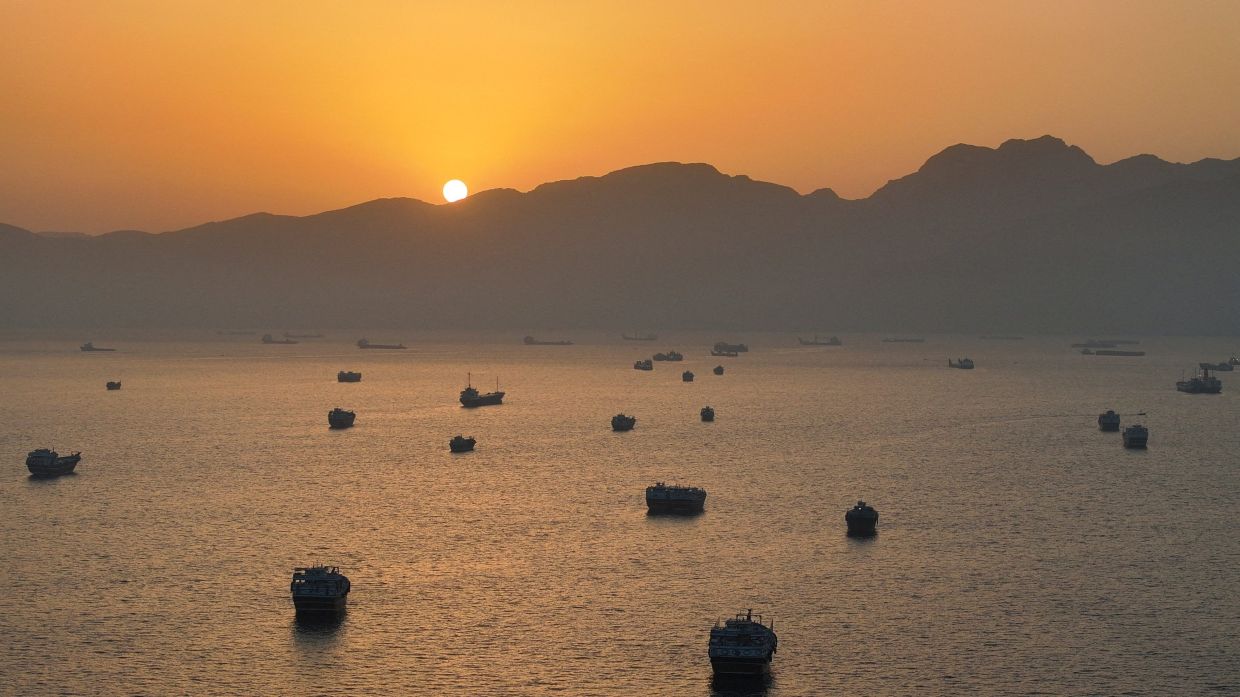
The flow of crude oil through the critical Strait of Hormuz is accelerating as geopolitical tensions ease, with three major tankers carrying 5 million barrels combined passing through the strategic waterway this week. The movement marks a tangible shift in what has become one of the world's most significant supply disruptions since the latest conflict erupted in the Middle East, directly benefiting refineries across Asia while gradually bringing downward pressure on global oil prices.
The South Korean-flagged VL Breeze, classified as a Very Large Crude Carrier with capacity to hold 2 million barrels, departed the Strait of Hormuz carrying a mixed cargo of Qatari condensate and crude from Abu Dhabi destined for the South Korean port of Daesan. The vessel, operated under charter by Hyundai Oilbank, represents the largest single shipment resuming its journey towards Asian markets. Concurrently, the Liberian-flagged Plata Carrier, chartered by the Indian state-owned Oil Corporation, headed out of the strait carrying 2 million barrels of Saudi Arabian crude, while the Suezmax tanker Prudent Warrior departed with 1 million barrels of Iraqi Basrah crude bound for the port of Sohar in Oman.
These movements do not occur in isolation. Kpler and Vortexa, two leading maritime analytics firms, estimated that approximately 90 million barrels of crude had accumulated within the Persian Gulf region since the onset of regional hostilities, creating an unprecedented backlog of unsold inventory and idle shipping capacity. The clearing of even these initial 5 million barrels therefore represents a significant, if still modest, reduction in the bottleneck that has constrained global crude availability and supported elevated oil prices across international markets.
South Korea's maritime ministry confirmed that four vessels operated by South Korean shipping companies successfully transited the Strait of Hormuz on Wednesday, with one heading directly to South Korean ports and three proceeding to third-country destinations. However, the broader picture remains complex: of the 26 vessels originally trapped in the Gulf when the conflict commenced, 18 remain anchored or drifting in regional waters, indicating that widespread clearance will require sustained diplomatic progress and continued access to key shipping lanes.
The temporary maritime corridors established jointly by Oman and the International Maritime Organisation have proven instrumental in managing this exodus safely. These designated northern and southern routes, which deviate from the conventional shipping lane through the Strait of Hormuz, provide alternative pathways for vessels seeking to depart the region while minimising exposure to potential hazards. Oman's commitment to maintaining open passage through the strait without imposing tolls has further encouraged resumption of normal commercial operations, offering reassurance to shipowners concerned about unexpected costs or transit delays.
Liquefied natural gas markets are experiencing their own recovery trajectory. Two empty LNG carriers, the Shandong Redwood and Milaha Qatar, have recently been observed west of the Strait of Hormuz bound for Qatar to collect cargoes. This represents the ninth empty LNG vessel known to be transiting towards Qatari terminals to load supplies, the highest number to enter the Gulf since the Middle East conflict began. The data suggests that confidence in the stability of regional operations is strengthening among international LNG traders.
Qatar's position as a critical supplier of liquefied natural gas to global markets appears increasingly secure. Sheikh Mohammed bin Abdulrahman al-Thani, the country's Prime Minister, informed the Financial Times that Qatar expects to return to normal levels of LNG production within several weeks. This timeline carries significant implications for Europe and other regions heavily dependent on Gulf gas supplies, potentially easing the energy security concerns that have persisted throughout the disruption period.
For Malaysian readers and Southeast Asian economies more broadly, these developments signal improving energy security prospects. The region's refineries and power plants have maintained operations through a combination of strategic stockpiles and alternative sourcing, but sustained higher energy costs have compressed margins and elevated operational expenses. Renewed flow of crude from the Gulf at pre-conflict volumes would gradually normalise pricing and restore the cost advantages that Gulf producers have traditionally provided to Asia-Pacific refining centres.
The interim agreement between Iran and the United States forms the diplomatic foundation for this operational improvement. By reducing acute geopolitical tensions and providing pathways for vessel transits that all parties can accept, the arrangement has created space for commercial normalcy to gradually reassert itself. However, the continued presence of 18 stranded vessels in the Gulf indicates that full normalisation remains incomplete and dependent on sustained political restraint.
The broader implication for global energy markets centres on price stability. With 90 million barrels tied up in the region and unable to reach markets, the supply constraint has artificially elevated crude prices. As vessels resume their journeys to refineries in Asia, Europe, and beyond, this locked inventory can finally reach consumers, theoretically moderating inflationary pressures on energy costs that have rippled through supply chains worldwide.
Shipping analysts and energy traders are watching subsequent weeks closely to assess whether the initial exodus will accelerate into a sustained clearing operation. If additional vessels successfully transit the Strait of Hormuz at regular intervals, the market could anticipate meaningful reduction in the crude backlog within months rather than years, restoring competitive pricing dynamics and reducing the economic drag that supply disruptions have imposed on manufacturing, transport, and power generation sectors across Asia and globally.