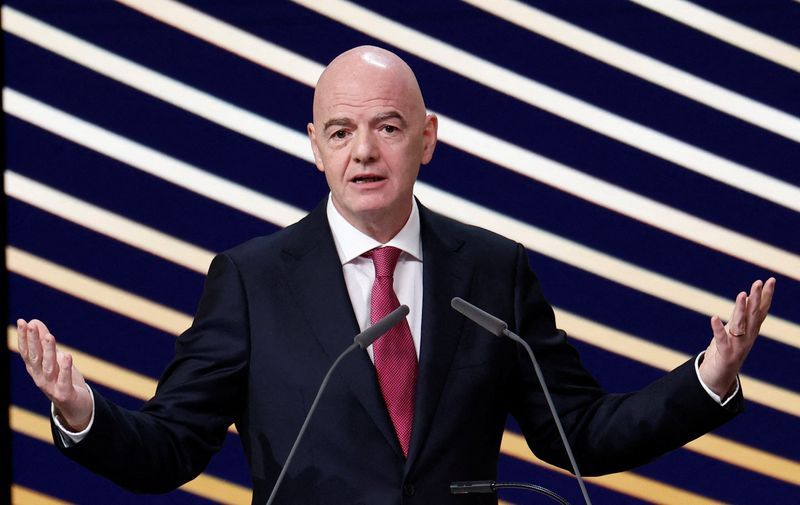
The Oceania Football Confederation has signalled support for FIFA's handling of a botched private investment scheme that sparked international controversy, even as New Zealand—the region's sole World Cup qualifier—publicly withdrew backing for President Gianni Infantino's anticipated reelection campaign. The divergence underscores deep fissures within global football governance, with national federations increasingly willing to challenge the FIFA leadership that has dominated the sport for years.
Infantino, who intends to seek reelection at next year's FIFA Congress, has faced unprecedented pressure from three major continental confederations. UEFA, the Asian Football Confederation (AFC), and CONCACAF—representing Europe, Asia, and North and Central America respectively—have openly demanded a comprehensive review of his stewardship. Their grievances centre on his conduct surrounding the FIFA Forward Enterprise (FFE), an initiative designed to inject private capital into the World Cup and other major FIFA tournaments. The three confederations have characterised his handling of the proposal as a critical lapse in leadership that warrants scrutiny.
Despite this mounting international criticism, the OFC, which represents soccer's smallest confederation with just eleven full member nations, struck a markedly different tone during internal discussions held on Wednesday. The confederation's executive committee formally welcomed FIFA's decision to withdraw the FFE proposal and expressed confidence in the organisation's commitment to examine the circumstances surrounding the failed initiative. In a carefully worded statement, the OFC acknowledged the tangible progress achieved across the Oceania region over the preceding decade, framing FIFA's leadership as instrumental to football development in member nations. The confederation encouraged FIFA to leverage the forthcoming review as an opportunity to identify and implement necessary reforms.
This regional endorsement carries practical significance for Infantino's political standing. The OFC's backing provides ballast against the criticisms levelled by the three larger confederations, demonstrating that opposition to his reelection is not entirely monolithic across FIFA's global membership. For the president, securing support from multiple confederations—regardless of their size—remains strategically valuable as he navigates the political terrain ahead of the Congress vote. The OFC's measured language suggests a willingness to accept the FIFA leadership's assurances about the handling of the FFE debacle.
New Zealand's position, however, represents a more forceful intervention that complicates the narrative of regional solidarity. As Oceania's only nation to qualify for the most recent World Cup, New Zealand Football (NZF) carries outsized influence within the region despite competing under the OFC banner. The federation's decision to withdraw support for Infantino's reelection represents a significant political statement, signalling that even smaller football nations are prepared to challenge the incumbent president's bid for another term. This defection from the regional consensus reflects deeper concerns about governance and institutional trust within FIFA.
The New Zealand federation articulated its reasoning with clarity and force. Beyond withdrawing support for Infantino's reelection, NZF explicitly demanded an independent review of the entire process through which the FIFA Forward Enterprise scheme was developed. The federation's statement emphasised that decisions and actions undertaken within FIFA had precipitated what it characterised as a fundamental erosion of trust and heightened divisions within international football. From this perspective, the credibility of global football governance itself depends on restoring confidence through a transparent, externally conducted examination of what transpired. The NZF position suggests that the FFE controversy revealed systemic governance failures extending beyond any single proposal.
The financial dimensions of the dispute add urgency to the debate. Infantino's withdrawn proposal had included a $20 million grant for member associations to distribute during the next funding cycle. Critically, the FFE package could have doubled this allocation to $40 million had member associations consented to the private investment arrangement. For smaller confederations like the OFC, such financial stakes are far from trivial—the grants represent meaningful resources for football development infrastructure, coaching programmes, and youth initiatives. The OFC's relatively quick acceptance of the proposal's withdrawal may reflect confidence that FIFA will provide alternative funding mechanisms, or possibly suggests that the financial incentive, while attractive, was not decisive in shaping the confederation's overall position.
FIFA's crisis management response has attempted to contain the scandal through acknowledgment and reassurance. Following an emergency meeting in Morocco last week, FIFA issued a formal apology to all 211 member associations, acknowledging lapses in how the FFE proposal had been communicated and administered. The organisation simultaneously reaffirmed that its leadership maintained full institutional support, a gesture clearly intended to strengthen Infantino's standing and signal that FIFA's governing structures remained unified behind the president. Yet this damage-control effort has proven only partially effective, as the withdrawal of support from multiple confederations indicates.
For Malaysia and other Southeast Asian nations within the AFC, the unfolding FIFA governance crisis carries implications for broader questions about accountability and transparency in international sports bodies. The AFC's alignment with UEFA and CONCACAF in demanding a leadership review signals that major confederations increasingly expect FIFA to operate according to higher standards of institutional governance. This positions AFC member states—including Malaysia—as stakeholders in a global recalibration of how FIFA conducts its affairs. The debate transcends the personalities involved; it concerns the legitimacy and competence of the institutions that shape international football's future.
The contrast between the OFC's measured acceptance and New Zealand's principled withdrawal illustrates how differently member associations are weighing the costs and benefits of challenging incumbent leadership. While smaller confederations may prioritise financial relationships with FIFA, individual national federations can pursue independent courses when their governing interests diverge from regional bloc positions. This fragmentation of voting patterns could prove consequential at next year's Congress, where Infantino will face his most serious electoral challenge in years. The trajectory of the FIFA presidency remains uncertain, contingent on how the broader membership ultimately evaluates the governance questions that the FFE controversy has thrust into the spotlight.

