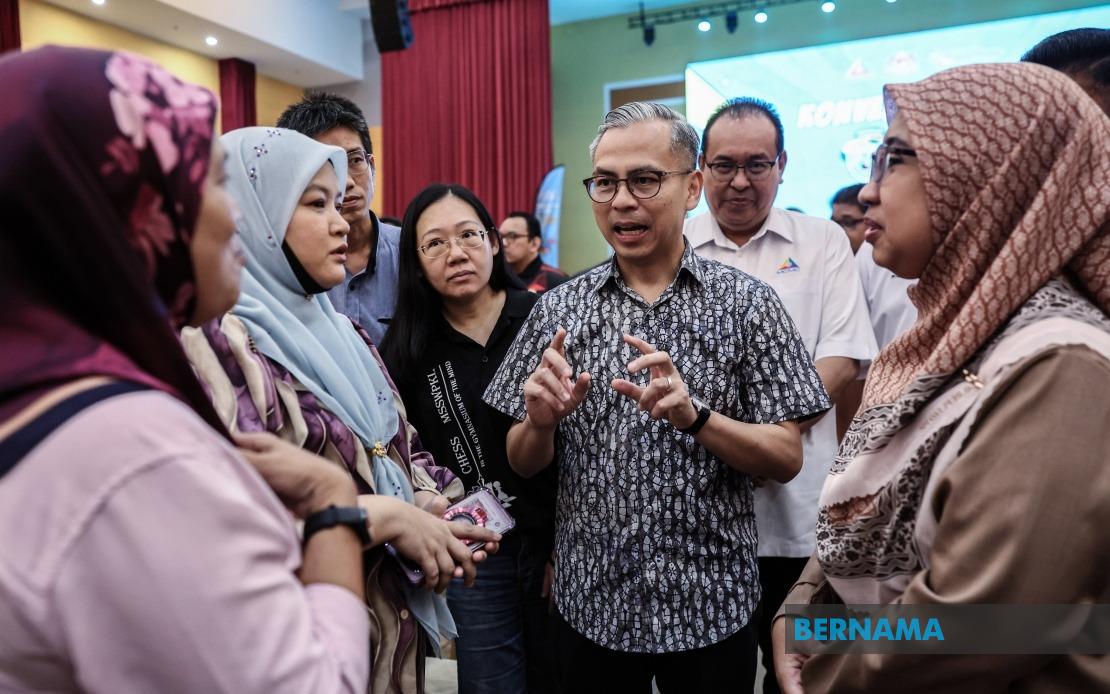
PKR's leadership has moved swiftly to contain potential disruption following Nurul Izzah Anwar's decision to step back from her deputy presidency, with party Information chief Datuk Seri Fahmi Fadzil providing reassurance that the change will create no vacuum in the party's functioning. At a press conference in Kuala Lumpur on August 8, Fahmi explained that the party's Central Leadership Council had opted not to accept Nurul Izzah's resignation outright, instead approving her request for a temporary leave of absence so she can pursue personal commitments and doctoral studies.
The delegation of her duties represents a carefully considered succession plan within PKR's upper echelon. Vice-president Datuk Seri Saifuddin Nasution Ismail has been entrusted with assuming the responsibilities and functions associated with the deputy president position during Nurul Izzah's absence. This arrangement suggests the party leadership has confidence in Saifuddin's capacity to shoulder additional administrative load without disrupting the party's day-to-day operations and strategic initiatives.
Fahmi's remarks underline an important distinction that PKR is keen to emphasise: Nurul Izzah's temporary stepping back from formal leadership responsibility does not constitute a departure from the party itself. She remains a full party member, Fahmi stressed, and her intention to pursue advanced academic qualification does not diminish her commitment to PKR's broader political struggle and reform agenda. This framing allows PKR to manage what could be perceived as an internal leadership shift without broadcasting any sense of instability or internal fracture.
The timing of Nurul Izzah's leave request carries particular significance within the Malaysian political landscape. As the daughter of Prime Minister Datuk Seri Anwar Ibrahim, her prominence within PKR has always carried symbolic weight. Her voluntary step back, presented as a decision made on personal grounds, provides a useful narrative that separates family dynamics from party governance during a period when the Unity Government requires maximum cohesion to deliver on its reform commitments.
During the same press conference, Fahmi addressed speculation surrounding Subang MP Wong Chen and whether he might relinquish his parliamentary seat. The PKR information chief indicated that no official information had reached him regarding such a move, characterising any announcement on the matter as the prerogative of Dewan Rakyat Speaker Tan Sri Johari Abdul. This measured response reflects standard parliamentary procedure while avoiding premature confirmation of potential leadership changes that could trigger unwanted conjecture.
Questions about the timing of the next general election also surfaced during discussions, with observers wondering whether the government might push for polls earlier than constitutionally mandated. Fahmi flatly dismissed such speculation, confirming that no accelerated election timeline was under consideration. He indicated that the Federal Government anticipated that general elections would be held by the end of next year at the earliest, providing a clear marker for political planning across all parliamentary constituencies.
The broader context for these developments lies in the government's current operational priorities. Fahmi articulated that the administration's principal focus remains ensuring smooth governance and the continuation of key reform initiatives that the Unity Government has pledged to undertake. He also highlighted the commitment shown by component parties within Pakatan Harapan and the wider Unity Government coalition toward supporting Prime Minister Anwar's leadership trajectory through to the natural conclusion of the current parliamentary term.
One substantive governance matter that continues to command attention is the implementation of recommendations emerging from the Royal Commission of Inquiry into Lembaga Tabung Haji for the period spanning 2014 to 2020. This RCI's findings touch on issues of institutional accountability and financial management that resonate deeply with Malaysian citizens who hold investment accounts with the institution. The government's focus on translating these recommendations into concrete action signals a commitment to addressing historical grievances and strengthening governance frameworks within critical public institutions.
Fahmi concluded his remarks by offering a cryptic hint that Prime Minister Anwar would shortly announce several significant decisions that he characterised as beneficial for the Malaysian people and the nation's development trajectory. While he declined to elaborate on specifics, this forward-looking statement suggests the government continues to advance its reform agenda across multiple policy domains, from economic restructuring to institutional renewal.
The orchestration of these messages—reassuring about party stability, clear about parliamentary timelines, and forward-looking about governmental achievements—reflects a political environment where the Unity Government appears focused on consolidating its position ahead of the electoral cycle. PKR's management of Nurul Izzah's leave, presented as a routine administrative matter enabling an individual to pursue academic goals, exemplifies how Malaysia's political leadership attempts to separate personal circumstances from institutional governance, maintaining public confidence in both party machinery and governmental capacity during periods of transition.

