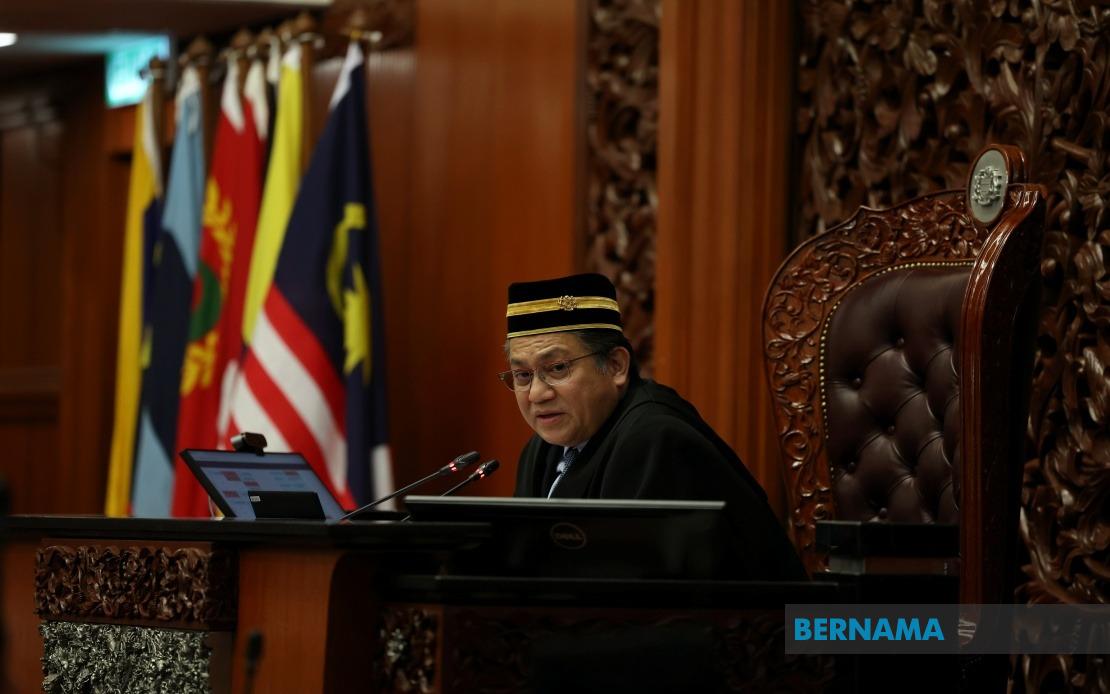
Senator Datuk Nur Jazlan Mohamed has been reappointed to serve as Deputy Speaker of the Dewan Negara for a second consecutive term, marking a significant continuation of his role within Malaysia's legislative upper chamber. The position was offered to him unopposed, with Higher Education Minister Datuk Seri Zambry Abd Kadir formally presenting the nomination on behalf of Prime Minister Datuk Seri Anwar Ibrahim during parliamentary proceedings on July 20.
Nur Jazlan's renewed appointment by His Majesty the Yang di-Pertuan Agong extends across a three-year mandate running from June 15 2026 through June 14 2029. This institutional endorsement reflects his standing within both the UMNO party hierarchy and the broader legislative framework, having previously occupied the Deputy Speaker position since June 2023. The stability of his reappointment underscores the confidence maintained by the current administration in his stewardship of Senate business and procedural matters.
At 60 years old, Nur Jazlan brings substantial parliamentary experience to his legislative responsibilities. Beyond his Senate duties, he currently serves as a member of the UMNO Supreme Council and holds the position of Pulai Division chief within the party structure. His political trajectory includes a tenure as Deputy Home Minister between 2015 and 2018, during which he handled portfolio matters affecting national security and internal administration. Prior to entering the upper house, he represented the Pulai constituency as a Member of Parliament across three consecutive electoral cycles from 2004 to 2018.
Simultaneously, Senator Mussodak Ahmad has also been reappointed to the Dewan Negara for a second senatorial term. His three-year appointment, effective from March 20 2026 to March 19 2029, comes through nomination by the Kedah State Legislative Assembly rather than through the Yang di-Pertuan Agong's direct appointment. Mussodak initially entered the Senate in March 2023 as a representative of the Kedah state assembly and brings grassroots political experience from his position as Kedah PAS secretary.
The dual reappointments signal continuity in Senate leadership as Parliament navigates the Fifth Term of the 15th Parliament. Both senators underwent formal swearing-in ceremonies before Dewan Negara Speaker Datuk Awang Bemee Awang Ali Basah, formalizing their renewed constitutional roles. These ceremonial confirmations reinforce the institutional protocols governing the upper chamber's function within Malaysia's bicameral legislative system.
For Malaysian governance architecture, Senate Deputy Speakers exercise considerable influence over parliamentary debate and procedural management. The role requires stewarding complex legislative discussions, maintaining decorum during question-and-answer sessions, and ensuring equitable participation among diverse senatorial interests. Nur Jazlan's sustained appointment suggests the administration values his management style and legislative acumen during a period when the Dewan Negara addresses increasingly technical policy matters spanning education, economic reform, and constitutional affairs.
The parliamentary calendar for the coming months demonstrates sustained legislative intensity. The Senate's Second Meeting under the Fifth Term commenced on July 20 and will extend through August 4, spanning ten sitting days dedicated to substantive policy review and government accountability mechanisms. This extended session reflects the volume of legislative business requiring upper house scrutiny as Malaysia implements budget allocations and evaluates governance priorities under the current administration.
Mussodak's prior engagement in state-level politics, including his previous candidacies for the Bayu and Guar Chempedak state assembly seats, connects Senate representation to grassroots constituent concerns. His appointment alongside Nur Jazlan's reconfirmation ensures that Senate composition reflects both national-level political alignments and state-level democratic representation. This balance remains integral to Malaysia's federal legislative design, where the Dewan Negara serves as a deliberative body moderating rapid legislative cycles in the lower house.
The reappointments occur within a broader context of political consolidation following Malaysia's recent electoral realignment. The UMNO and PAS representation within the renewed Senate hierarchy suggests coalition cohesion between these partners within the current governing framework. As these appointments take formal effect from mid-2026, they establish institutional continuity through a critical period for Malaysian economic management and regional positioning.
For Southeast Asian observers, Malaysia's Senate reappointment processes illuminate the region's varied approaches to upper house governance. Unlike purely elected senate models prevalent elsewhere, Malaysia's mixed-appointment framework allows executive influence while maintaining state-level representation. This hybrid structure, exemplified by Nur Jazlan's direct Yang di-Pertuan Agong appointment and Mussodak's state assembly nomination, reflects constitutional design emphasizing federalism and monarchical prerogatives within parliamentary democracy.

