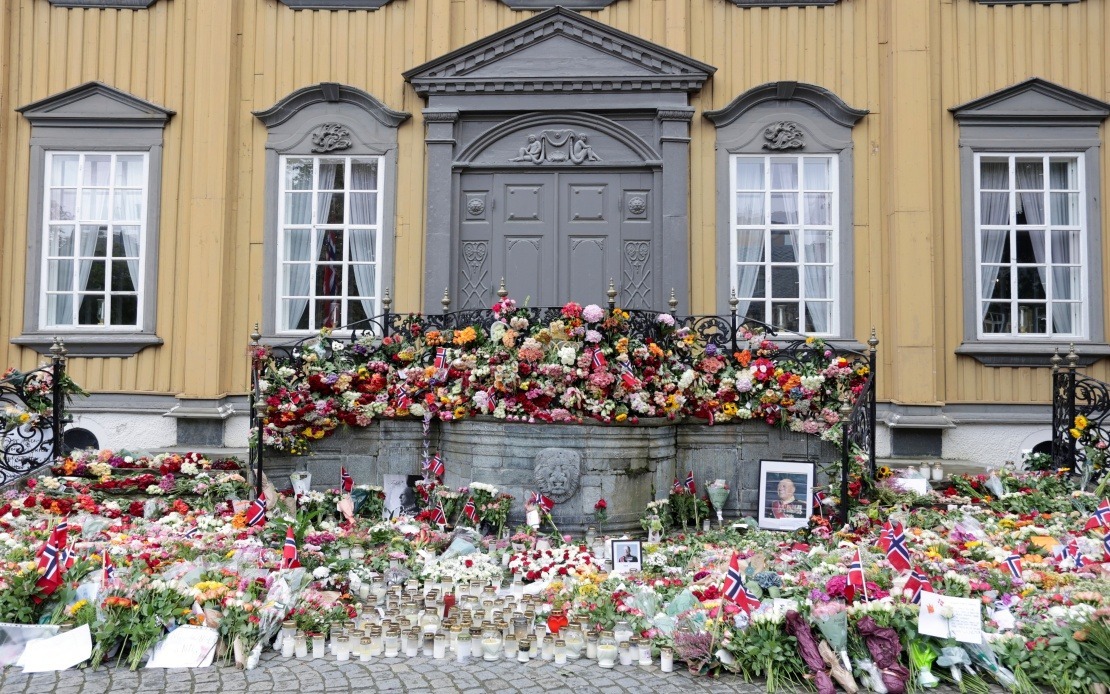
Norway came to a standstill on Sunday as the nation gathered in churches and cathedrals nationwide to pay respects to King Harald V, the beloved monarch who passed away on Friday at the age of 89. The coordinated memorial services represented an outpouring of grief from across the Scandinavian kingdom, with tens of thousands of citizens turning out to honour a ruler who had guided Norway through decades of transformation and modernisation. The Norwegian Royal House simultaneously announced that the formal state funeral would take place on September 9, establishing a solemn timeline for the nation's formal farewell to its late sovereign.
The spontaneous tributes that emerged across the country underscored the deep affection Norwegians held for their late king. Outside the Royal Palace in Oslo, crowds gathered to leave flowers, burning candles, and handwritten messages—a touching tableau of personal grief that reflected the monarch's significance in the national consciousness. Churches from the smallest rural communities to the largest urban centres opened their doors to accommodate the stream of mourners who wished to participate in the commemorative services, creating moments of collective reflection that transcended geographical and demographic boundaries.
Under Norway's established rules of succession, the transition of power occurred seamlessly upon Harald V's death. His son, aged 53, immediately ascended to the Norwegian throne, assuming the regnal name King Haakon VIII in accordance with traditional naming conventions for Norwegian monarchs. This succession marked a significant generational shift for the Nordic nation, transferring leadership from a figure who had reigned since 1991 to a new monarch entering his reign during a period of considerable geopolitical complexity and social change across Europe.
The death of King Harald V concludes a reign spanning more than three decades, a period during which Norway navigated substantial economic, social, and political developments. The late king had become an emblematic figure for Norwegian identity, particularly as the nation managed its relationship with the European Union, developed its oil wealth into one of the world's most substantial sovereign wealth funds, and addressed contemporary challenges ranging from climate change to technological disruption. His steady presence during these transformative decades had provided continuity and symbolic stability to Norwegian governance and national life.
For Malaysian and broader Southeast Asian observers, the Norwegian succession offers instructive parallels regarding constitutional monarchy and institutional stability. Like Malaysia's own constitutional framework centred on the Yang di-Pertuan Agong, Norway's system demonstrates how hereditary monarchy can function within modern democratic structures. The smooth transition of power, governed by clear legal precedent rather than political contestation, exemplifies the institutional robustness that constitutional monarchies can provide when succession rules are established and widely accepted. This contrasts sharply with uncertainty that sometimes accompanies leadership transitions in systems lacking such constitutional clarity.
The timing of King Haakon VIII's accession places him in an interesting historical position relative to other European monarchs and regional leaders. His assumption of the throne occurs at a moment when Nordic nations are reassessing their security arrangements, energy policies, and role in international affairs—particularly following Russia's invasion of Ukraine and the subsequent expansion of NATO membership. The new Norwegian king inherits not merely ceremonial responsibilities but also symbolic leadership during a period when Nordic stability and cohesion are subjects of considerable strategic interest to Western governments and international institutions.
Norway's approach to state mourning reflects deep cultural traditions rooted in both Lutheran Christian heritage and modern egalitarian values. The decision to hold simultaneous services across numerous churches rather than concentrating commemoration in a single location reflects Norwegian democratic sensibilities and commitment to inclusive civic participation. This distributed approach to national mourning stands in contrast to more hierarchical commemorative structures seen in certain other monarchies, revealing how different constitutional frameworks shape the ceremonial expression of grief and collective remembrance.
The designation of September 9 for the funeral provides time for international dignitaries, including other Scandinavian and European monarchs, to arrange attendance and for detailed ceremonial planning to proceed. Such state funerals typically serve multiple purposes beyond honouring the deceased: they provide occasions for reaffirming national identity, demonstrating constitutional continuity, and facilitating diplomatic exchanges among world leaders. For King Haakon VIII, his first major act as sovereign—overseeing the funeral rites for his predecessor—will set important tones regarding his approach to the monarchy's role and his personal style of leadership.
The transition also invites reflection on the Norwegian monarchy's broader role within Scandinavian institutions and the Nordic countries' collective identity. Throughout Harald V's reign, the Norwegian crown maintained close relationships with the Swedish and Danish monarchies, reinforcing cultural and institutional bonds among the Nordic nations. King Haakon VIII will presumably continue this diplomatic dimension of the monarchy, potentially strengthening coordination on regional issues including energy transition, security cooperation, and the Arctic Council's evolving responsibilities as climate change reshapes that region's geopolitical significance.
For those studying constitutional monarchies globally, the Norwegian experience demonstrates both the ceremonial importance and the practical limitations of modern kingship. While King Haakon VIII will assume substantial symbolic responsibilities and serve as head of state, executive governance remains concentrated in the office of the Prime Minister and parliamentary structures. This division between ceremonial sovereignty and administrative power represents a mature constitutional arrangement that has allowed Nordic monarchies to maintain public legitimacy while democratic institutions handle the contentious business of policymaking. As the new king prepares for his September 9 farewell to his father, he simultaneously begins the longer process of establishing his own relationship with a nation that has entrusted him with its highest symbolic office.

