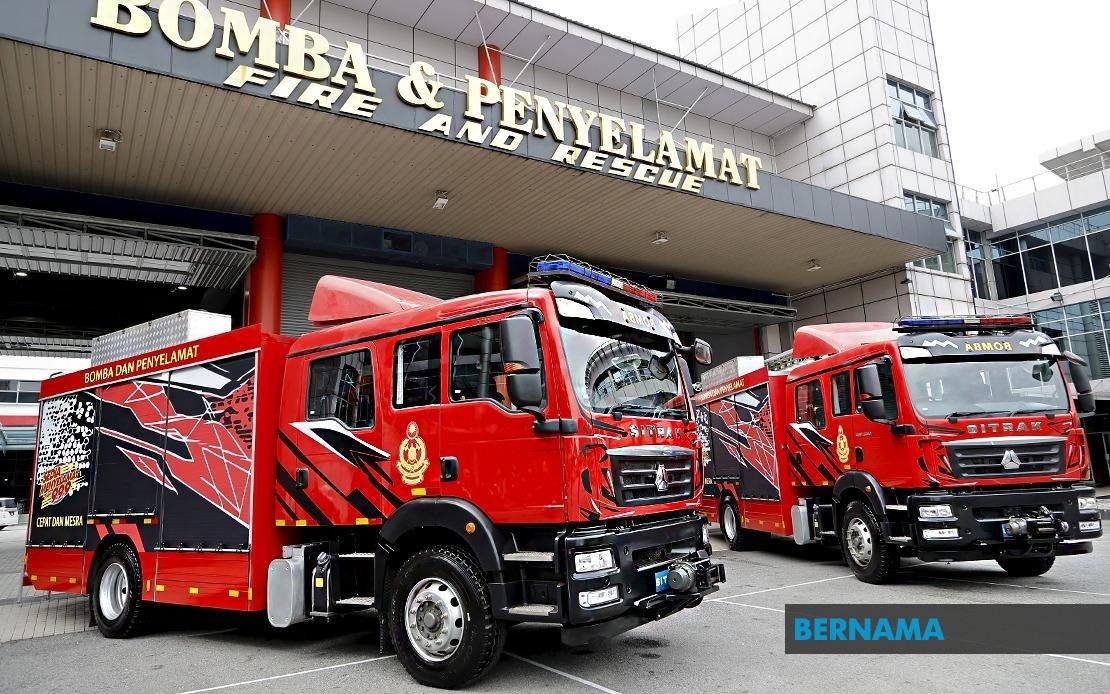
A moderate earthquake originating from North Sumatra sent tremors across Malaysia's densely populated Klang Valley on July 22, triggering multiple emergency responses and widespread public discussion on social media as residents sought confirmation of what they were experiencing. The Fire and Rescue Department of Malaysia (JBPM) received three formal reports of building tremors between 12.31 pm and 12.40 pm, roughly 13 minutes after seismic waves from the quake began propagating across the region at 12.18 pm local time.
According to Selangor JBPM assistant director of operations Ashrul Riezal Asbar, the initial alert came from the Kajang Municipal Council building just 13 minutes after the earthquake struck. A second report followed shortly thereafter from INTI International College Subang located along Jalan SS15, while simultaneously the Kuala Lumpur JBPM received an emergency call regarding tremors at Menara B2 Maju Link in Bandar Tasik Selatan. The rapid sequence of reports underscored how widely the seismic waves were felt across the metropolitan region, affecting structures ranging from municipal facilities to educational institutions and commercial properties.
Response teams dispatched from the Kajang and Subang Jaya fire stations arrived at their respective locations and conducted comprehensive structural assessments of both buildings. Their inspections revealed no visible cracks, fractures, or other indicators of structural compromise that might pose risks to occupants. The professional evaluation confirmed that both the municipal council building and the college facility remained entirely safe for continued use, allowing normal operations to resume without disruption.
At Menara B2 Maju Link, the situation developed somewhat differently as building occupants took immediate precautionary measures upon sensing the tremors. Witnesses reported that the shaking lasted approximately 15 seconds—a duration sufficiently alarming to prompt most people in the building to evacuate to designated safe gathering areas outside the structure. When the fire and rescue team from Sungai Besi station arrived to conduct their inspection, they found that building management and occupants had already taken sensible protective action, having exited the structure in an orderly fashion.
The structural inspection team performed a thorough examination of the Bandar Tasik Selatan building's framework and concluded that it too had sustained no damage from the seismic event. No cracks appeared in load-bearing columns or walls, and the building's overall structural integrity remained uncompromised. This assessment allowed occupants to return to their workspaces with full confidence that the structure remained secure and suitable for occupation.
The earthquake's epicentre was located approximately 55 kilometres southwest of Langsa in North Sumatra, with the United States Geological Survey and Indonesian authorities recording its magnitude as 5.7 on the Richter scale. While this was a substantial seismic event, its distance from Malaysia and the relatively moderate magnitude meant that damage across the border remained minimal. The quake's effects in Malaysia were felt primarily as perceptible tremors rather than destructive ground motion, though the distance and depth of the epicentre did not prevent the seismic waves from reaching the more densely populated areas of Selangor.
Social media platforms, particularly Threads, became an impromptu information hub as residents throughout the Klang Valley sought to understand and verify what they had just experienced. Users posted reports of shaking sensations from multiple locations around Shah Alam and surrounding areas, creating an informal but real-time network of seismic observations. This crowdsourced documentation reflected how modern communication technology enables rapid information sharing during unexpected natural events, often preceding or supplementing official emergency communications.
One Threads user documenting the incident from Section 26 posted about the tremors, noting how the disturbance seemed to dissipate within minutes. Another user, initially uncertain whether the vibrations were imagination or something tangible, reported discussing the sensation with colleagues and cross-referencing observations on social media platforms before confirming that an actual earthquake had occurred. This pattern of individual uncertainty followed by collective verification through social media demonstrates how people increasingly rely on peer confirmation and online communities when experiencing ambiguous natural phenomena.
The response by Malaysia's fire and rescue services reflected well-established emergency protocols for seismic events. The rapid deployment of inspection teams to affected locations and the systematic structural assessments provided objective reassurance to building occupants and management. By conducting thorough on-site examinations within minutes of receiving reports, the JBPM was able to definitively confirm the safety of major buildings within the Klang Valley, preventing prolonged disruption and unwarranted panic.
For Malaysia and Southeast Asia more broadly, earthquakes centred in neighbouring Indonesia remain a recurring reality due to the region's position along the Pacific Ring of Fire. While most seismic activity in Indonesia occurs along the fault lines and subduction zones that lie well to the south and east, tremors occasionally propagate northward to affect Malaysian territories. Building codes and emergency preparedness protocols have gradually evolved to account for these occasional seismic events, ensuring that structures designed and constructed according to modern standards can withstand moderate earthquake motion without suffering structural failure.
The incident serves as a useful reminder of the region's seismic context and the importance of maintaining functional emergency response systems. Although no significant damage occurred and no injuries were reported, the coordinated response by JBPM across three separate locations demonstrated readiness and coordination that would be critical were a more severe seismic event to occur. The systematic nature of the building inspections and the clear communication of findings also helped contain public concern and prevent overreaction to what was ultimately a minor tremor event.
Looking forward, the incident highlights the value of continued investment in earthquake monitoring infrastructure and emergency response training throughout Malaysia. As the Klang Valley continues to develop with increasingly tall commercial and residential structures, ensuring that these buildings meet appropriate seismic standards and that emergency responders maintain their capability to assess building safety remains a priority. The swift and professional response demonstrated on July 22 provided a measure of reassurance that Malaysia's disaster management systems are functioning effectively.

